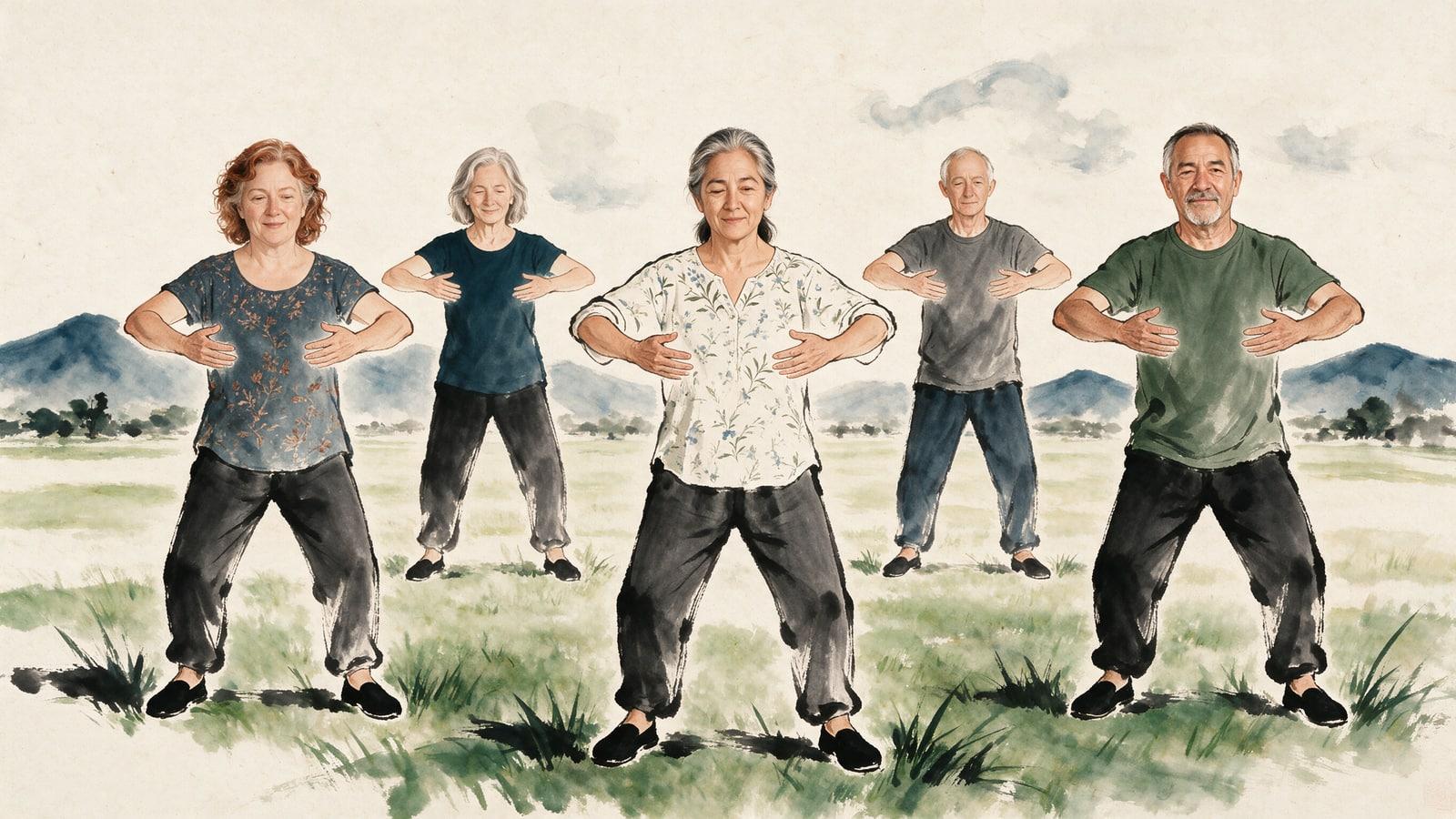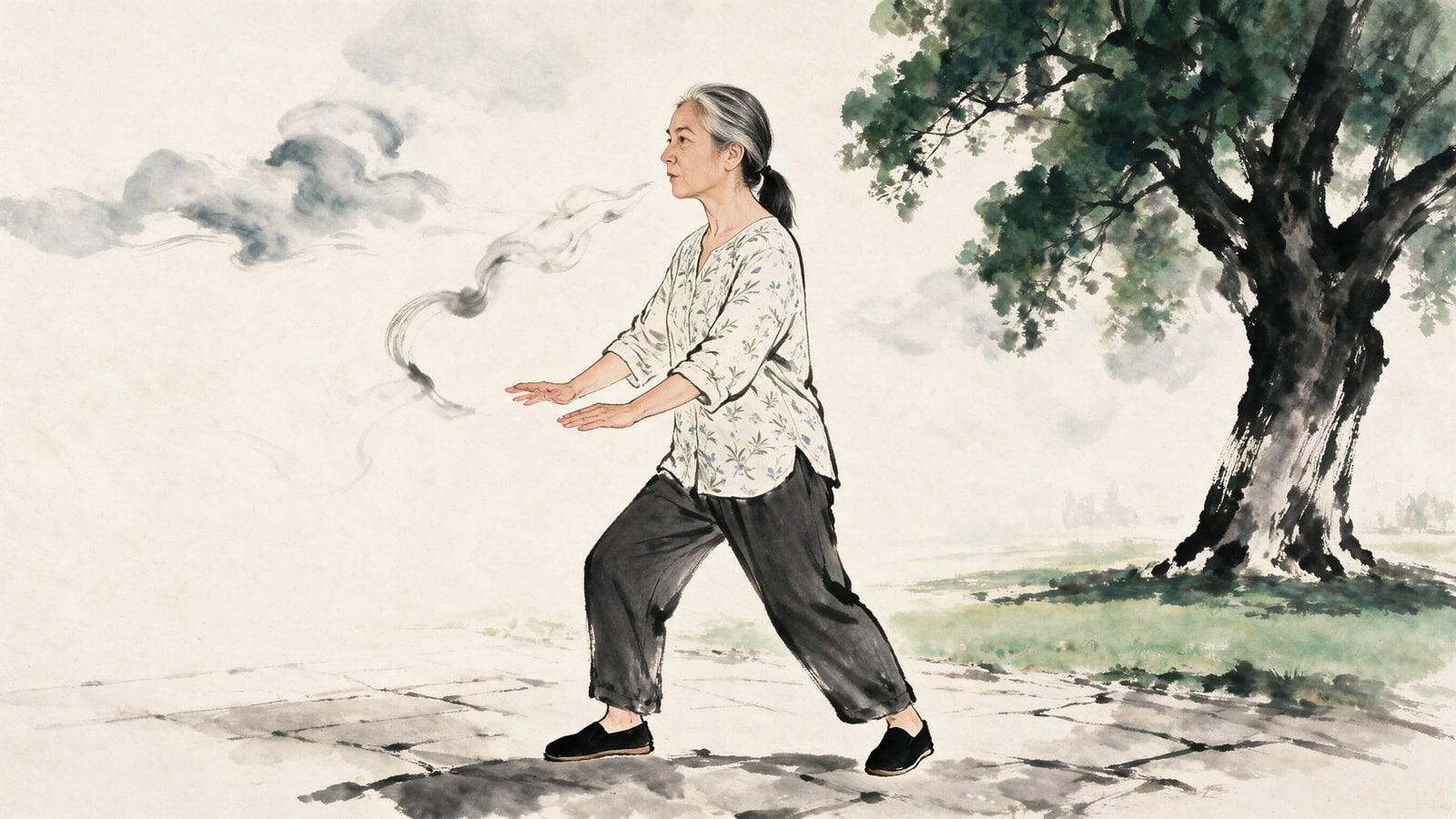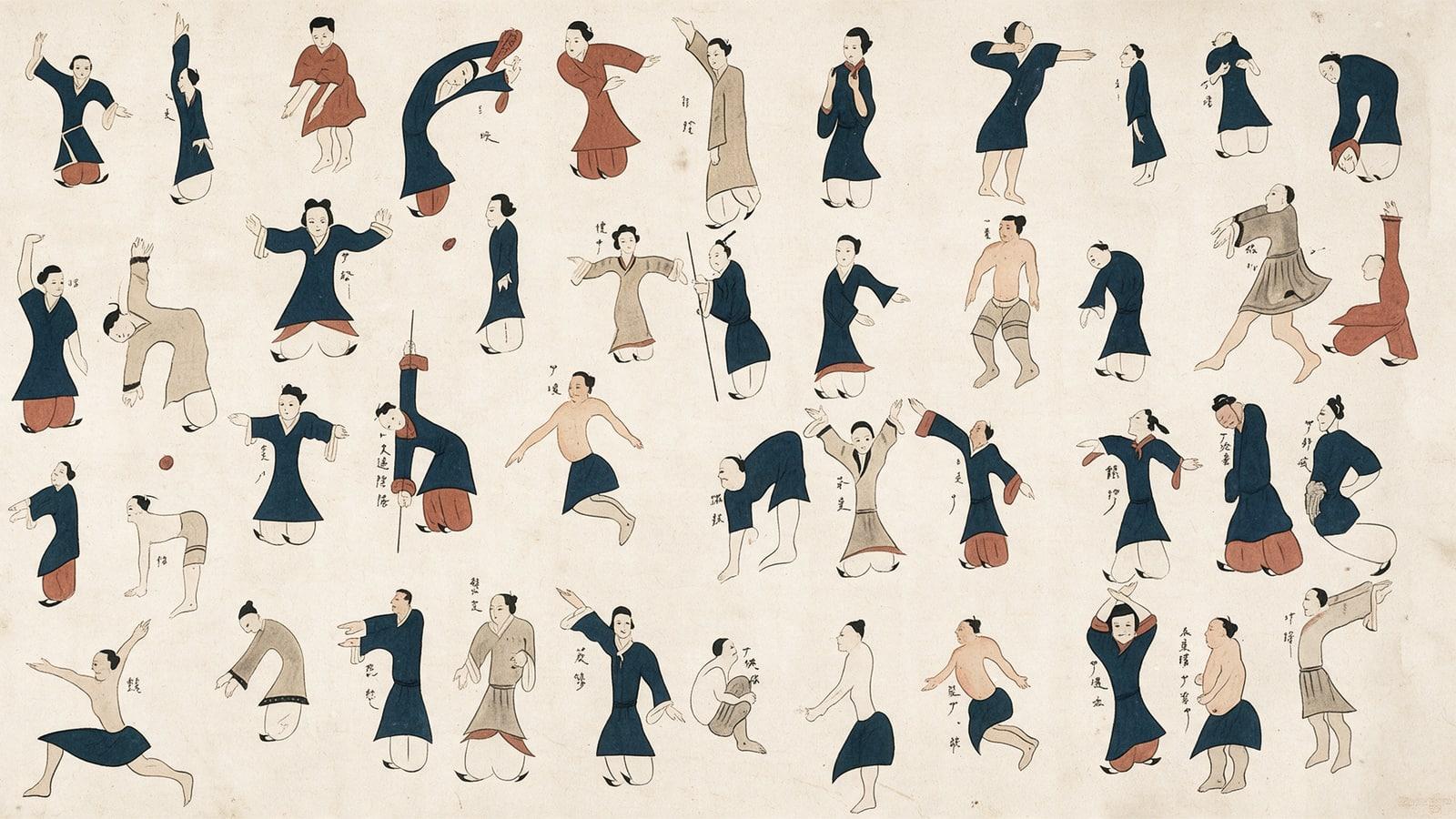
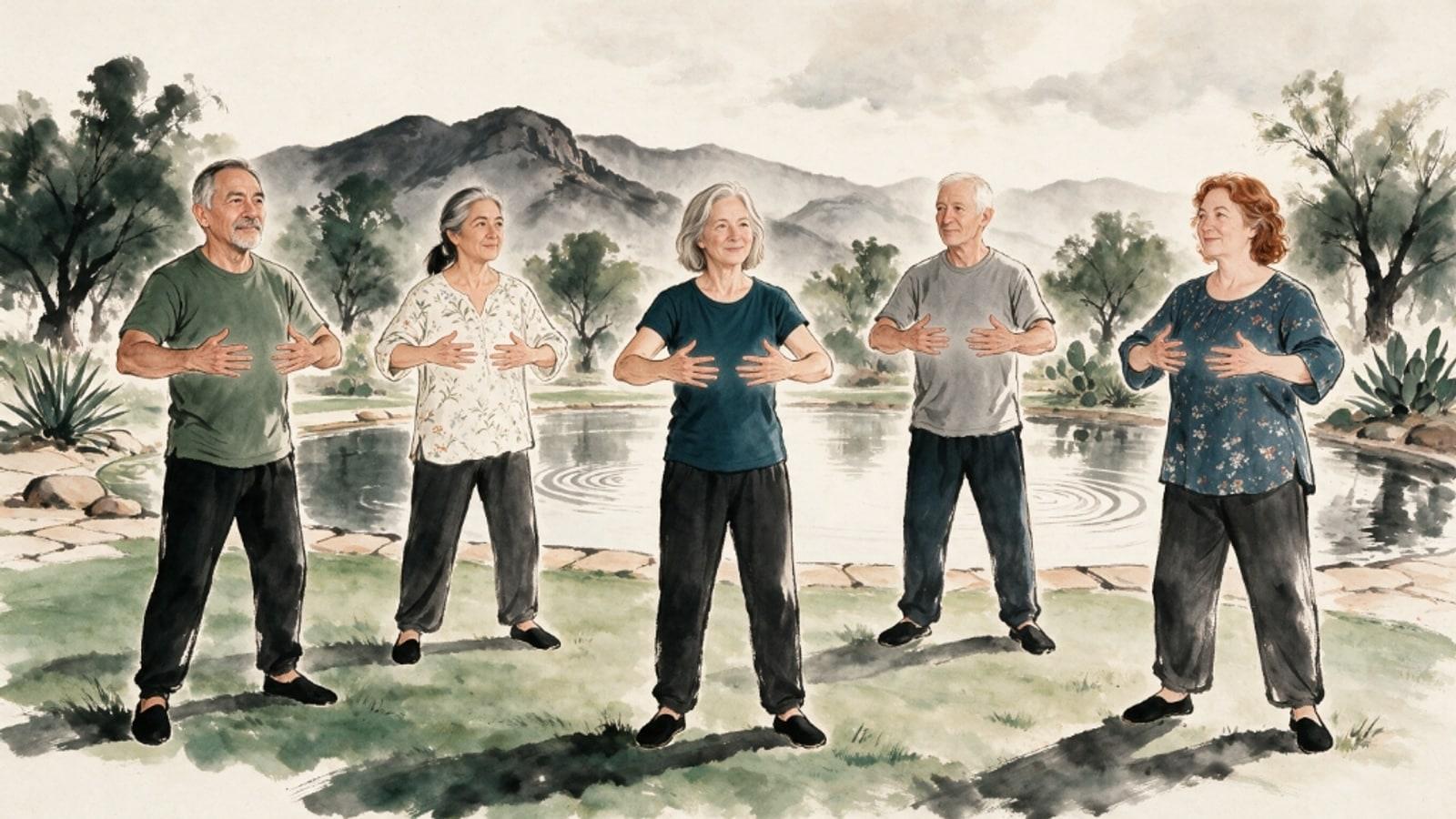
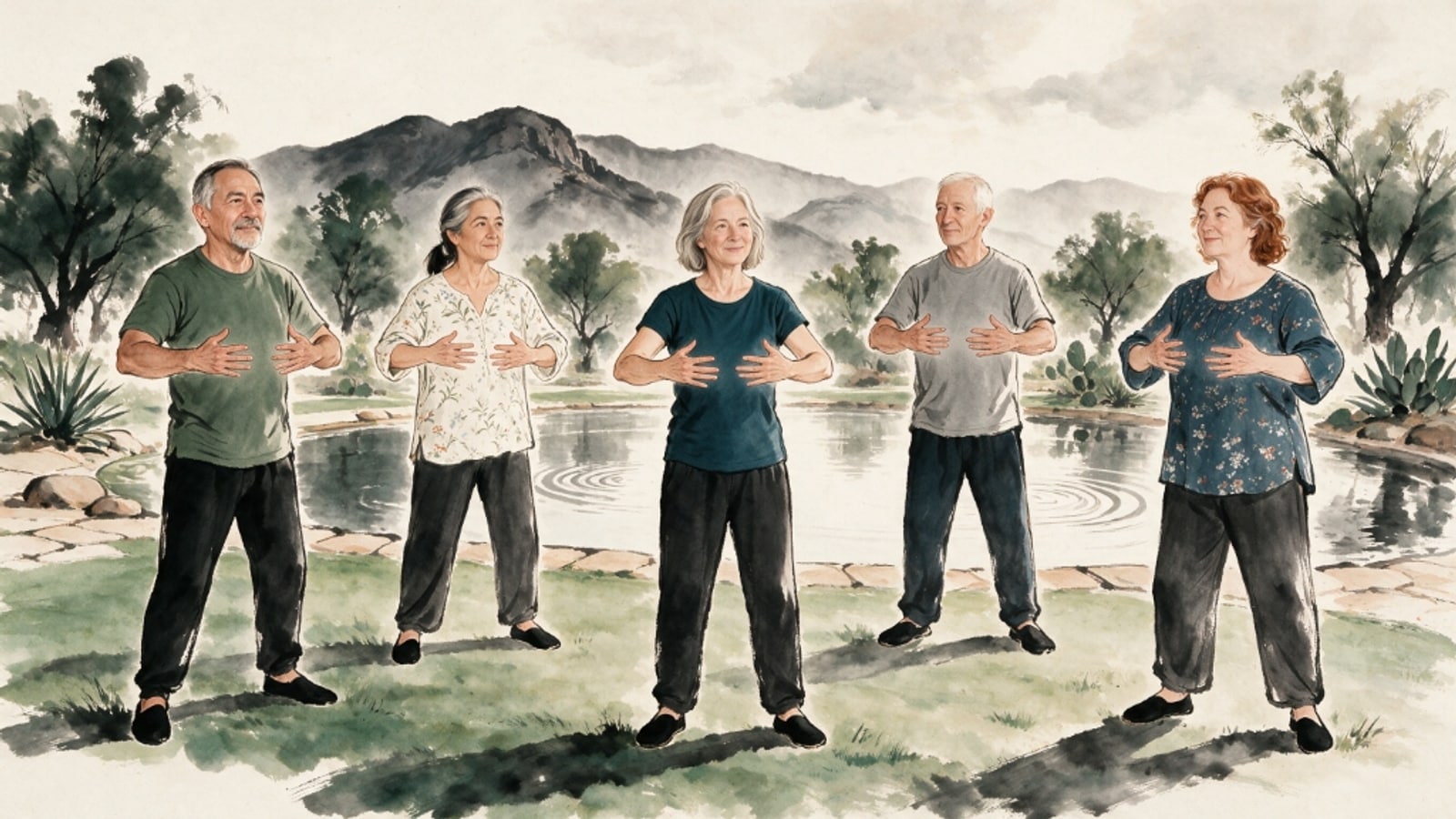
Before you ever learn a long, choreographed martial form, there is a quieter, even simpler doorway into the internal arts: a single breath paired with a single, unhurried movement. This is the heart of Qigong (氣功)—a classical Chinese practice that weaves together gentle movement, natural breathing, and settled attention to restore vitality and quiet a busy mind.
Unlike high-intensity exercise that leaves you depleted, Qigong is designed to leave you feeling clearer, looser, and more replenished than when you began. Whether practiced standing in a morning park or seated quietly in a chair at home, it invites the body to unwind habitual tension one breath at a time.
☯️ Cultivating Vital Breath & the Three Regulations
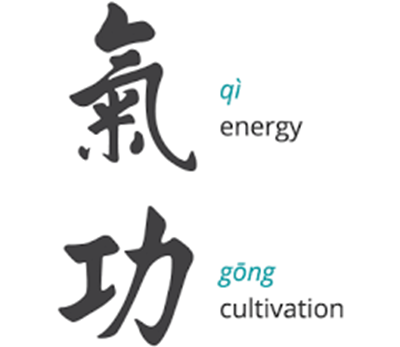
The word Qigong (氣功) joins two rich Chinese characters:
- Qi: Breath, vital air, and the animating life energy that circulates through all living things. Historically, the character depicts steam rising from nourishing grain.
- Gong: Skill, patient cultivation, or refined craft developed through unhurried, steady practice over time.
Across classic routines like the Eight Pieces of Brocade, Tendon-Renewal Qigong, the Six Healing Sounds, and the Five Animal Frolics, every Qigong practice rests upon three simple adjustments known as the Three Regulations:
- Regulating the Body: Aligning the spine upright, unlocking the knees, softening the hip creases, and releasing tight shoulders so your frame supports itself without strain.
- Regulating the Breath: Allowing your breathing to become slow, quiet, and unhurried, settling naturally into your lower belly.
- Regulating the Heart-Mind: Guiding gentle intention into the present sensation of movement so busy mental chatter settles like silt in clear water.
“Qigong is the skill of body-mind exercise that integrates the three adjustments of body, breath, and mind into one.”
— Dr. Tianjun Liu & Dr. Kevin W. Chen, Chinese Medical Qigong
🌿 How It Feels in Movement
To see how simple, repetitive movement, breath, and quiet attention blend together, watch this brief studio demonstration of Golden Ball Qigong:
1. The Comfort of Rhythmic Repetition
Instead of linking dozens of different postures into a long sequence, Qigong repeats a single graceful movement—such as Lifting the Sky, Drawing the Bow, or Gathering the Golden Ball—six to nine times in a row. Because you do not have to worry about what step comes next, your mind can relax completely into the rhythm of your breathing and the gentle opening of your ribs, shoulders, and spine.
🥋 Studio Cue: Let your breath begin a fraction of a second before your hands move. As your inhale gently expands the lower ribs, let that fullness float your arms upward; as you exhale, let your shoulders and elbows melt downward first.
2. How Qigong and Tai Chi Complement Each Other
Students often ask how Qigong differs from Tai Chi. In our Tucson classes, we practice them side by side as two branches of the same tree:
| Practice Aspect | Qigong | Tai Chi |
|---|---|---|
| Movement Structure | Individual, repetitive movements (or standing stillness) practiced in place | Continuous, flowing choreographed sequences (“forms”) that step and turn through space |
| Primary Emphasis | Breath regulation, joint opening, organ vitality, and deep internal quiet | Whole-body balance, weight-shifting footwork, spiraling coordination, and martial mindfulness |
| Learning Curve | Immediate—easy to follow along and feel on your very first day | Progressive—builds coordination, spatial memory, and leg stability over weeks and months |
🪑 Gentle Adaptation: Almost every Qigong set can be practiced either standing in a comfortable shoulder-width stance or seated upright on the front third of a sturdy chair with both feet flat on the floor. Always stay within 70% of your comfortable range of motion—never forcing a stretch or holding your breath.
✨ Key Reflections to Carry With You
- Presence matters more than perfection: When your body, breath, and attention settle into the same moment, even a single simple movement becomes deeply restorative.
- Repetition is where the quiet lives: Repeating a gentle movement several times frees your mind from overthinking so your whole body can genuinely rest.
- Small daily rhythms build lasting vitality: Five unhurried minutes of Qigong in the morning or before sleep is enough to nourish your joints and steady your breath.
Old Pueblo Tai Chi — Traditional Yang & Sun Style Classes
Culture Connects Studio • 3000 E. 22nd Street, Tucson, AZ 85713 • https://oldpueblotaichi.com
Questions about classes? Contact Dan Kimball at dan@oldpueblotaichi.com