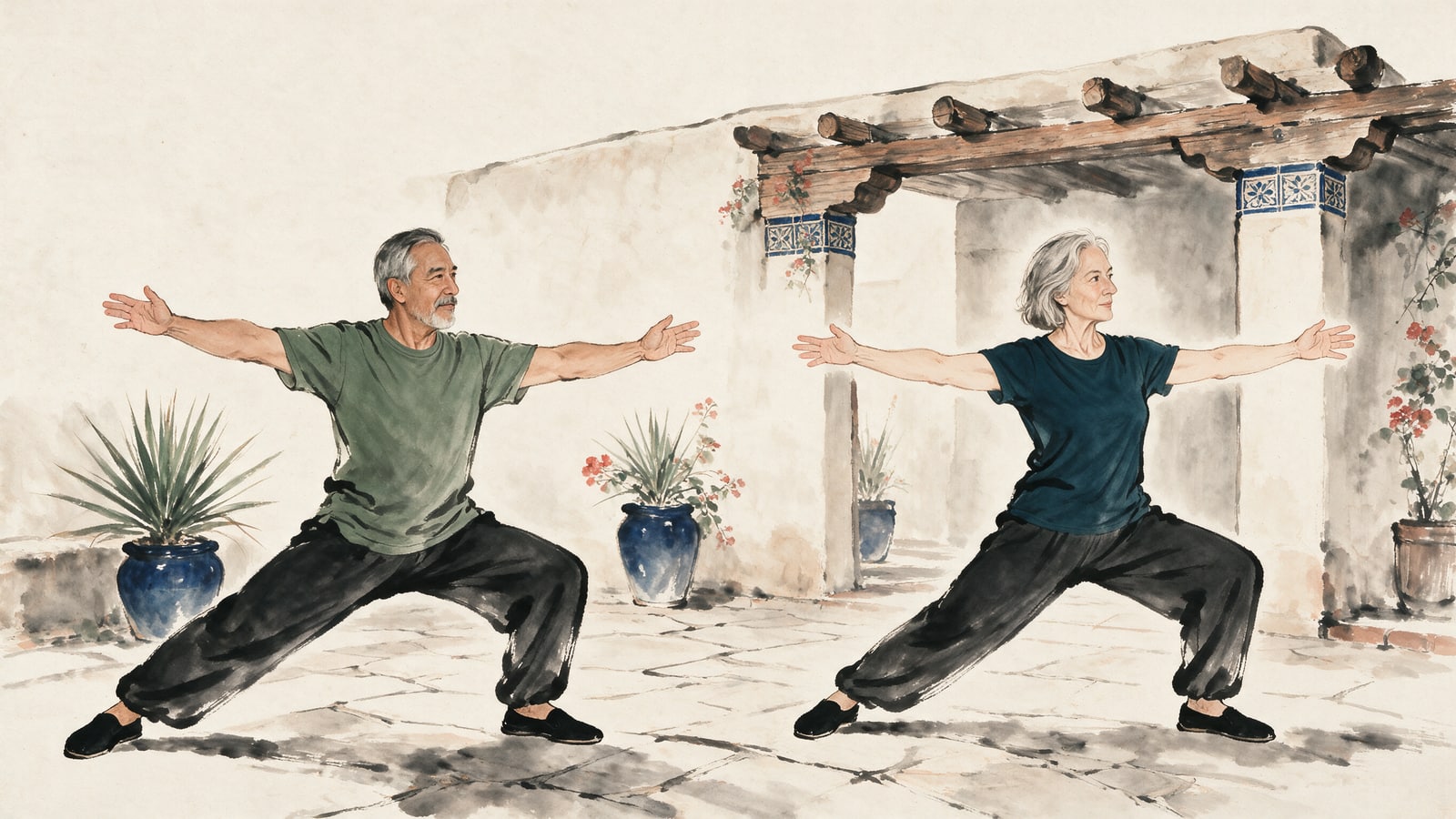
As the years pass, most of us notice that stiffness rarely lives in one isolated muscle. Instead, it gathers in the connective seams of the body—across the collarbones, along the sides of the ribs, down the lower back, and through the ankles and hips. Tendon-Renewal Qigong is a classic Chinese practice created specifically to restore gentle, springy comfort to those deep connective pathways.
Rather than isolating individual muscles through heavy lifting or repetitive strain, this routine links the entire body into one continuous, breathable arc from the soles of the feet to the tips of the fingers. Practiced gently, it invites stiff joints, tendons, and muscles to feel spacious, buoyant, and quietly strong again.
☯️ Bodhidharma & the Classic of Renewing Tendons
Known in Chinese as Yi Jin Jing (易筋經)—traditionally translated as the Muscle-Tendon Changing Classic—the three characters of its name illuminate how Qigong understands lasting strength:
- Yi: Gentle renewal or positive change.
- Jin: Tendons, ligaments, and the continuous web of connective tissue that wraps around your bones and joints.
- Jing: A classic guide or pathway.
In traditional lore, this practice is associated with the fifth-century monk Bodhidharma at the Shaolin Temple. According to temple tradition, Bodhidharma noticed that monks who sat for long hours in motionless meditation often grew stiff-jointed and tired. To unite a calm mind with a healthy body, he shared a series of gentle tendon-lengthening postures that have been practiced across China for centuries.
“Spine movement softly, like a silken whip, while coordinating with your concentrated mind and breath, heals and rebuilds strength.”
— Dr. Yang, Jwing-Ming, The Pain-Free Back
When we gently lengthen, turn, and release our connective tissue in rhythm with the breath, we replace tight, braced muscles with natural, spring-like support.
🌿 How It Feels in Movement: Whole-Body Lengthening and Release
Watch this demonstration of the 12 classic movements to see how slow reaching, gentle spinal turns, and quiet breathing flow together:
1. Whole-Body Lengthening Instead of Muscle Bracing
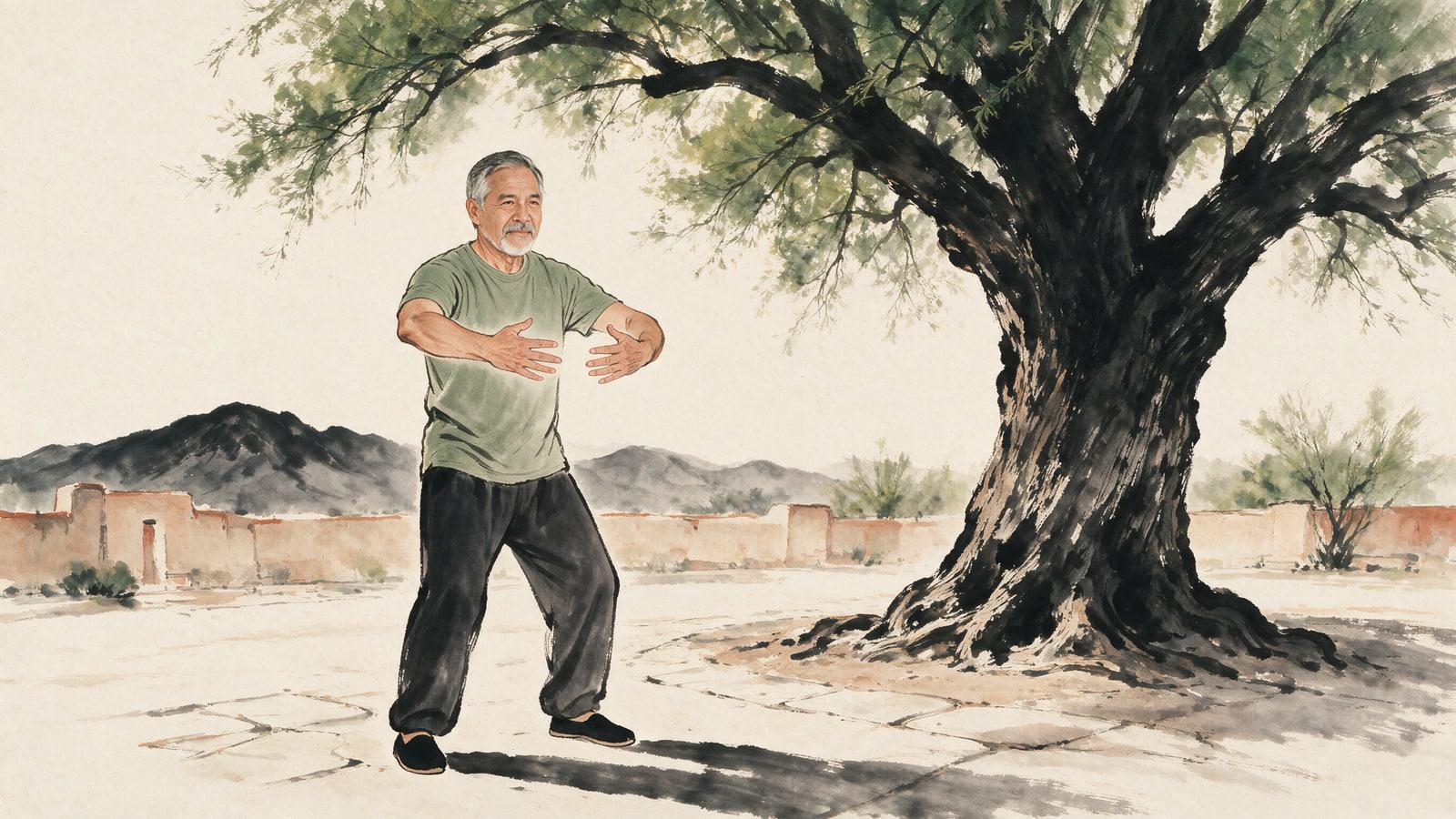
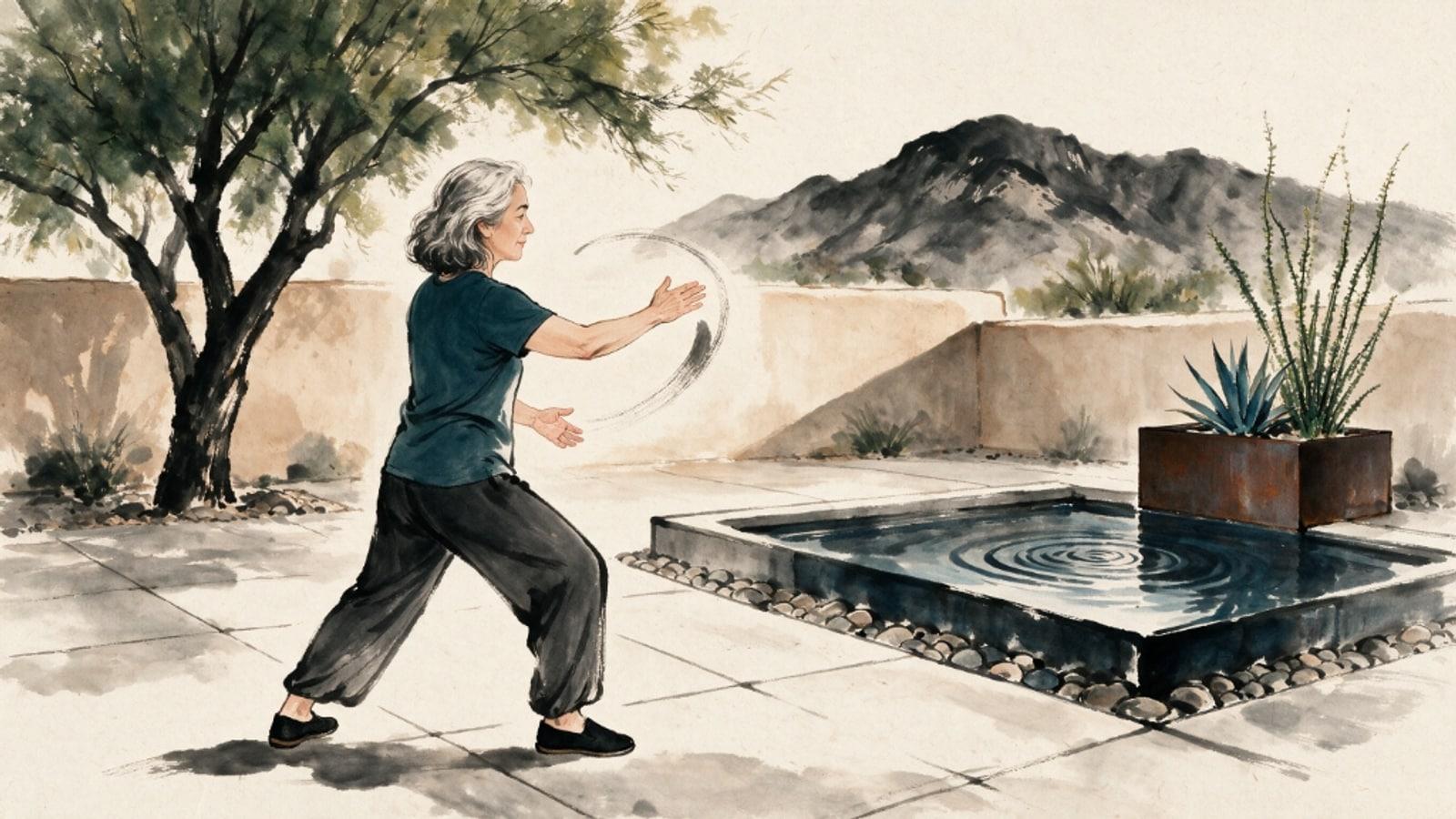
In Tendon-Renewal Qigong, you never lock a joint or clench your jaw to force a stretch. Instead, you stand rooted through the soles of your feet, let the crown of your head rise tall, and gently reach through your palms or fingertips as if opening an umbrella from the inside out. As you exhale, you soften back into stillness and feel a pleasant warmth flow into your hands and shoulders.
🥋 Studio Cue: When reaching your palms outward or overhead, imagine creating comfortable space inside your shoulder, wrist, and hip joints rather than tightening your muscles. Keep your breathing smooth and easy—never hold your breath to push further.
2. Exploring the 12 Traditional Movements
The twelve-part sequence unfolds as a complete head-to-toe conversation with the body—beginning with three calm chest-and-shoulder openings, moving into gentle diagonal reaches and bow-stance stretches, and finishing with soothing spinal waves.
📜 View All 12 Movements of Tendon-Renewal Qigong (Click to Expand)
- Presenting the Pestle I: Gathering the palms in front of the chest to quiet the breath and center your balance.
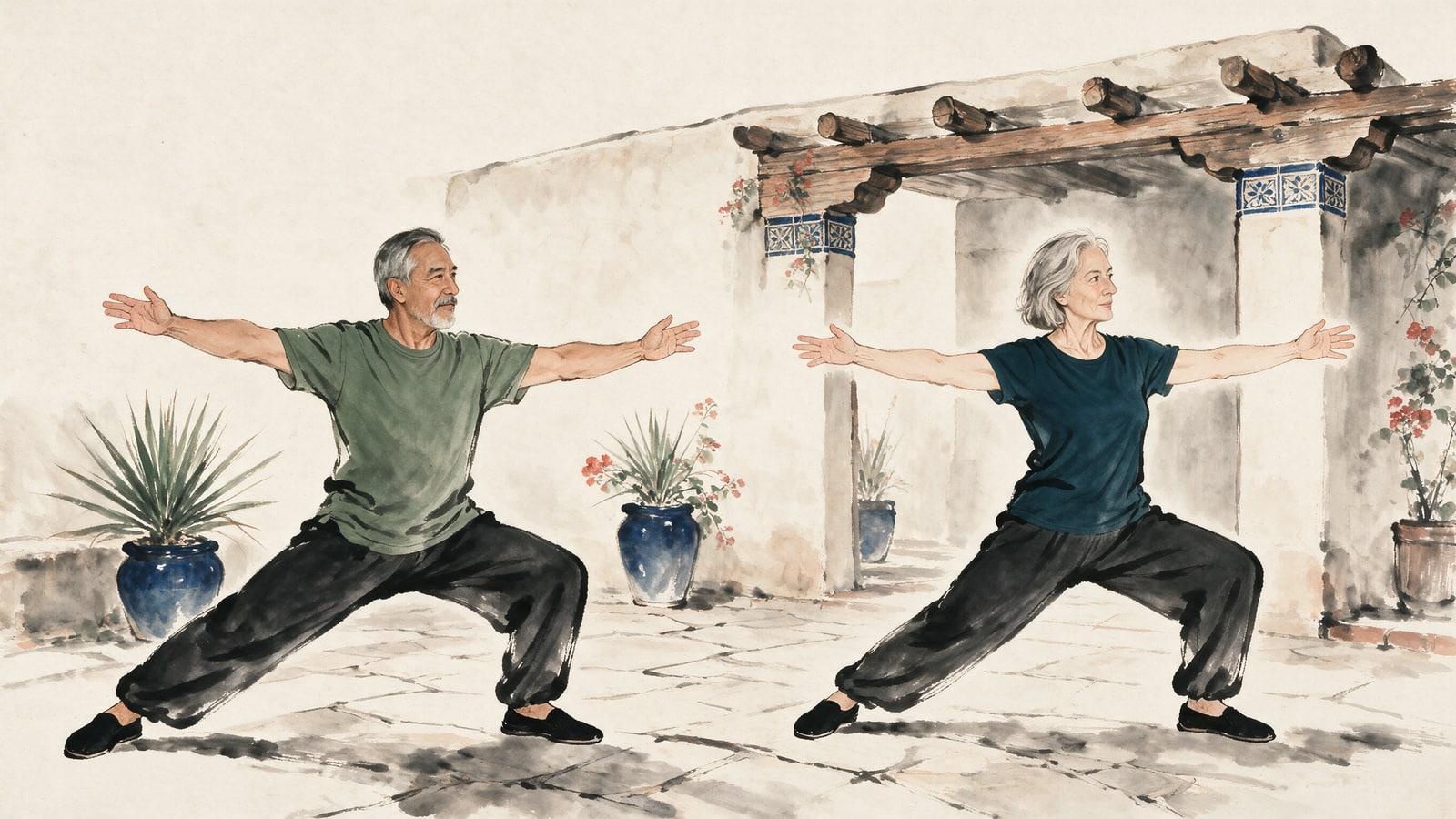
- Presenting the Pestle II: Opening the arms wide to the sides to broaden the chest and shoulders.
- Presenting the Pestle III: Reaching both palms overhead as if supporting the sky while lifting gently onto the balls of the feet.
- Plucking a Star from the Sky: A gentle one-handed overhead reach paired with a soft turn of the waist to lengthen the side ribs.
- Pulling Nine Cows by Their Tails: A steady bow stance that connects the back heel through the waist to the front arm.
- Spreading Wings Wide: Pressing forward and drawing back through the palms to wake up the shoulder blades and upper back.
- Nine Ghosts Drawing Sabers: Wrapping one hand behind the head and the other behind the lower back to gently rotate the neck and ribs.
- Three Plates Settling Toward the Floor: Bending the knees and hips smoothly in a wide stance to build quiet leg strength.
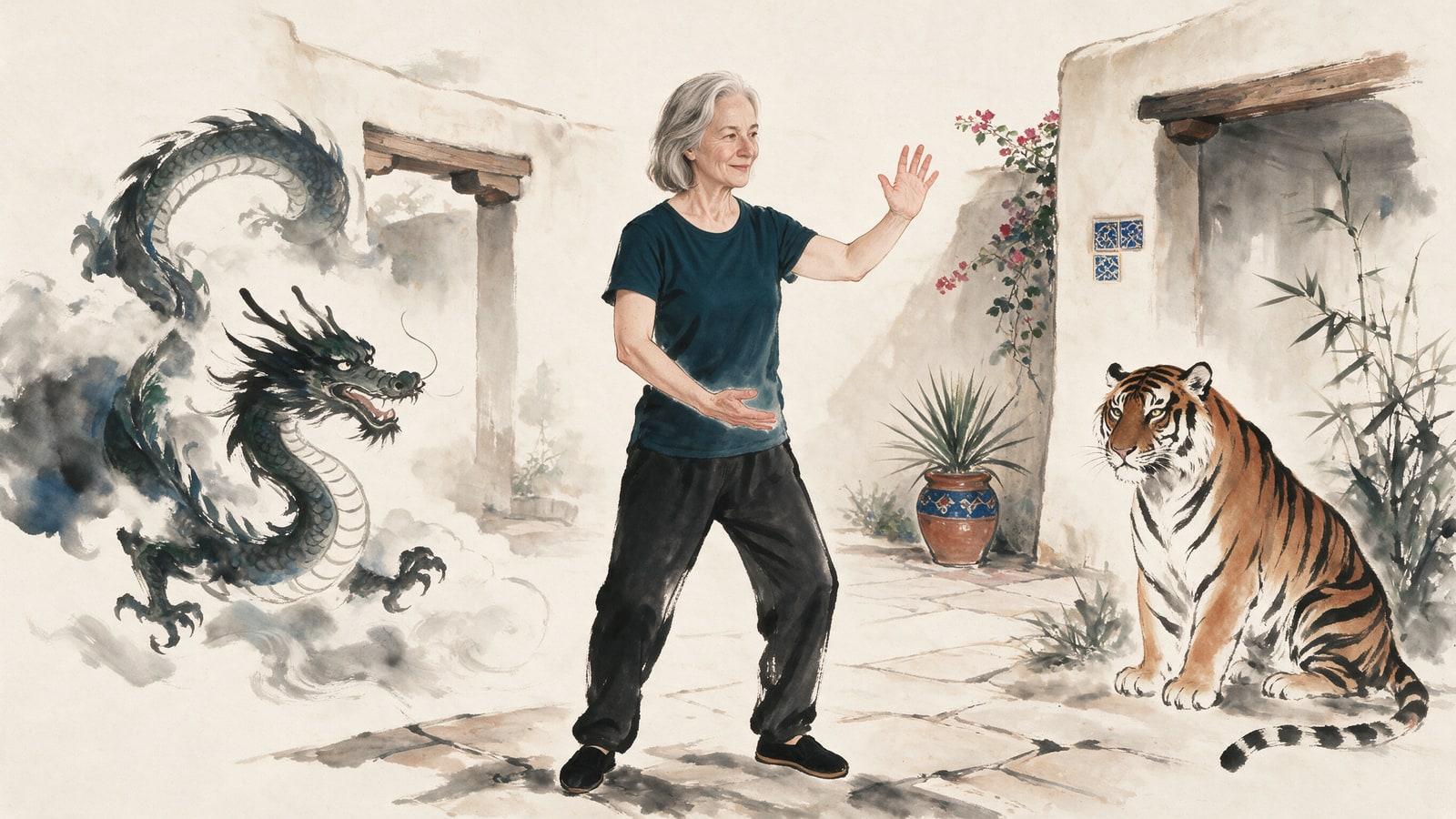
- Black Dragon Reaches Out: Sweeping side-to-side reaches across the waist to open tight hips and ribs.
- Tiger Stepping Forward: A supple wave through the back and hips that strengthens the legs.
- Gentle Forward Bow: Slowly rounding and uncurling the spine vertebra by vertebra like a string of pearls.
- Swaying the Tail: Gentle side-to-side releases of the lower back and hips to close the practice in calm balance.
🪑 Gentle Adaptation: If you have tender knees, hips, or lower back, always keep your stances comfortable and your forward bends shallow. Stand a little taller in wide stances, rest your hands on your thighs or the back of a sturdy chair during forward folds, and stay well within a comfortable, pain-free range.
✨ Key Reflections to Carry With You
- True strength is supple, not stiff: Like green bamboo in the desert breeze, healthy tendons and connective tissue support your balance through gentle elasticity rather than tension.
- The release matters just as much as the reach: The moment you soften back into stillness after a stretch is when fresh warmth and circulation flow through your joints.
- Meet your body where it is today: Practicing with kindness and an unhurried breath turns even a small, comfortable stretch into lasting vitality.
Old Pueblo Tai Chi — Traditional Yang & Sun Style Classes
Culture Connects Studio • 3000 E. 22nd Street, Tucson, AZ 85713 • https://oldpueblotaichi.com
Questions about classes? Contact Dan Kimball at dan@oldpueblotaichi.com