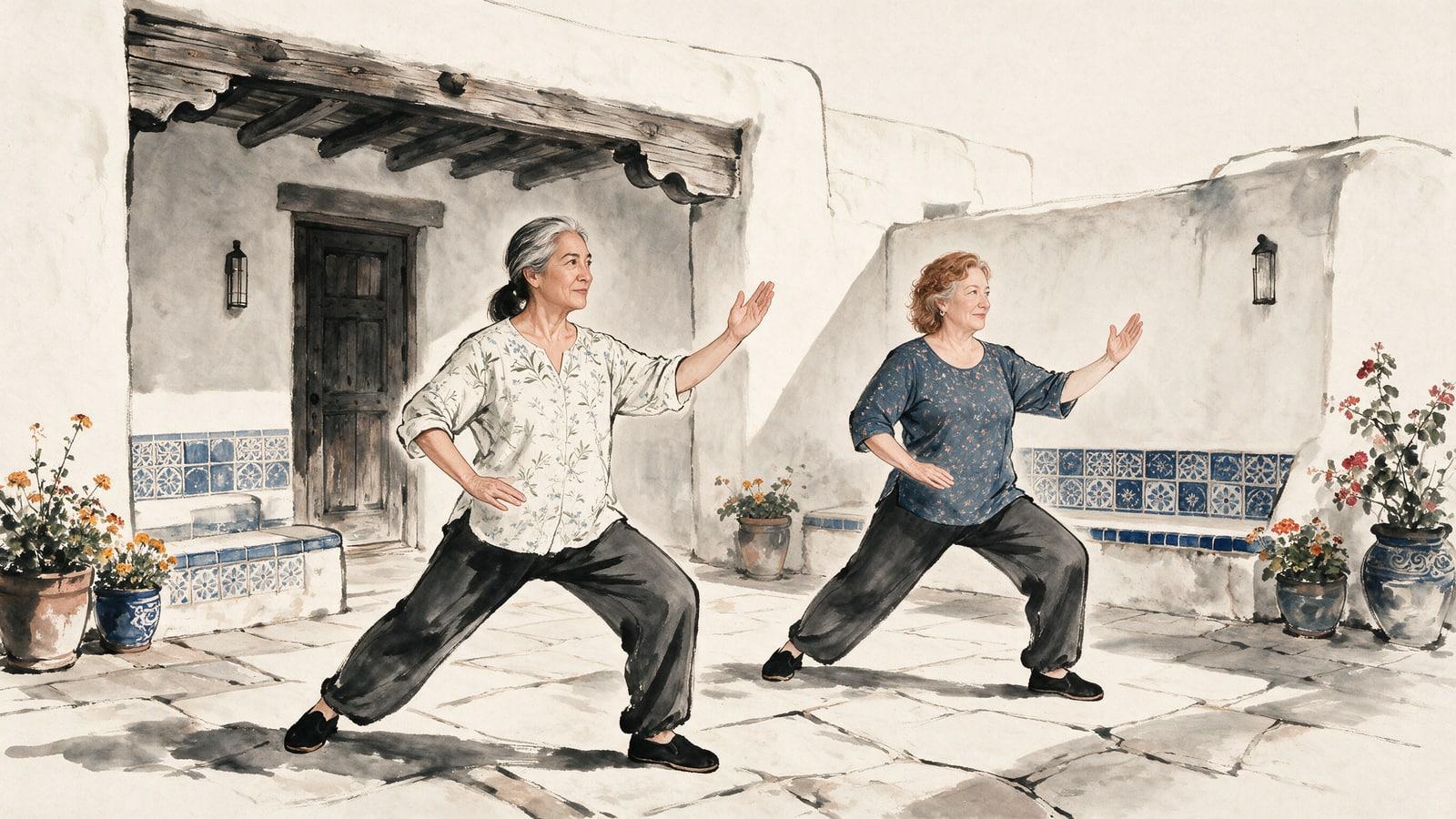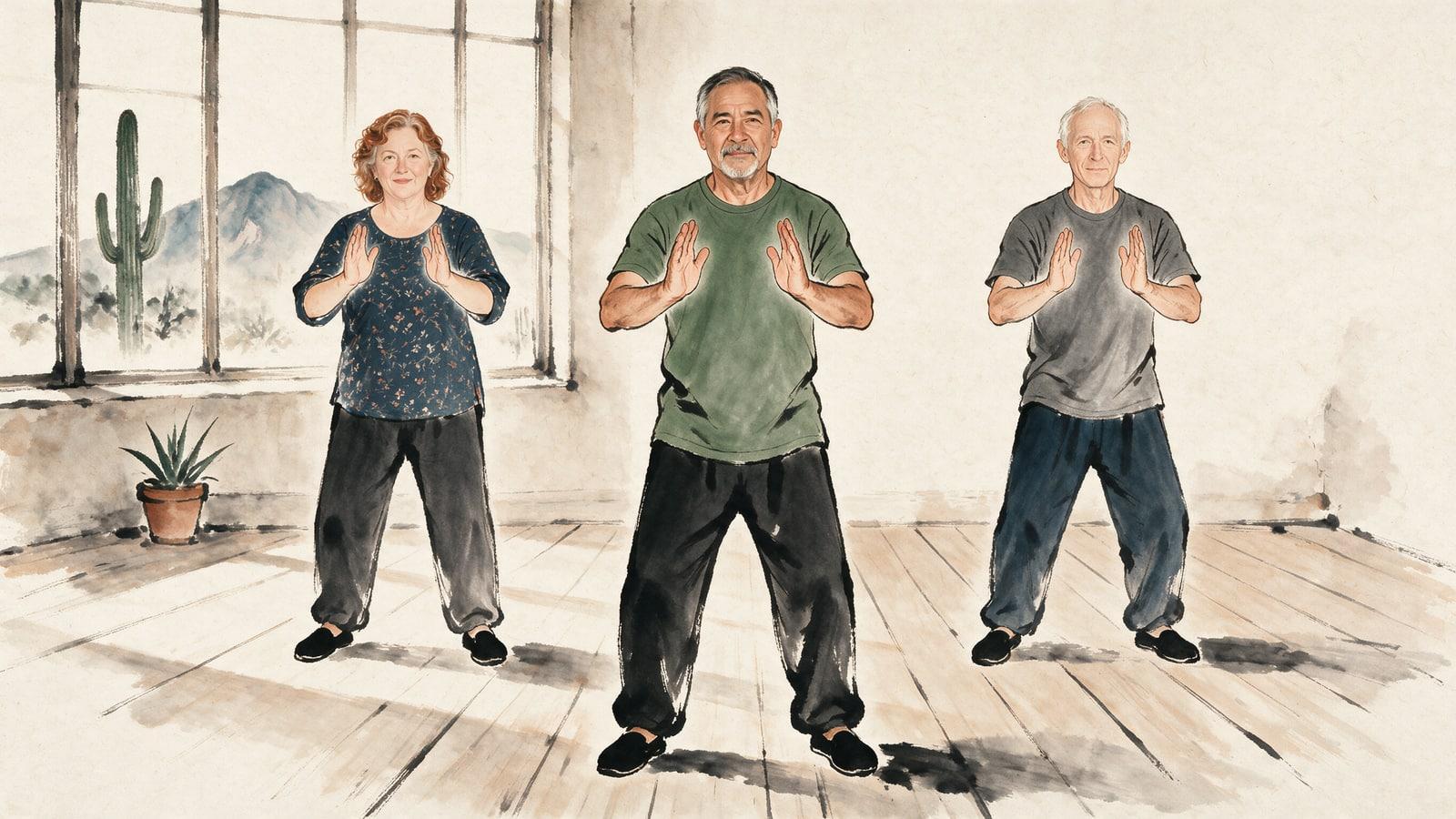

Have you visited Reid Park Zoo here in central Tucson lately, or followed the excitement around the new Pathway to Asia habitat? Watching animals move in real life is captivating. A wading bird balances effortlessly on one slender leg, while a big cat steps across rocks without making a sound. Those natural movements inspired the earliest teachers of Tai Chi and Qigong.
Just two blocks from 22nd Street at our studio, we borrow those exact same qualities every week. We use playful imagery from the Tiger, Deer, Bear, Monkey, and Crane to help our bodies move with more grace and less stiffness.
☯️ 1,800 Years of Learning From Nature
Nearly two thousand years ago, a pioneering Chinese physician named Hua Tuo noticed a simple truth. People who sat indoors all day grew stiff and tired, while wild animals stayed supple by stretching naturally every morning. To help his patients feel better, he created an exercise set modeled on the Five Animals (Wu Qin 五禽).
“Stand like a tree, sit like a mountain, flow like a river.”
— Dr. Zibin Guo, Adaptive Tai Chi
Why do animal images work so much better than dry posture instructions? If someone tells you to shift 95 percent of your weight and lift your arm 30 degrees, your mind tenses up. If you simply picture a Crane spreading one light wing in the morning sun, your chest opens and your shoulders relax automatically.
🌿 How It Feels in Movement: Five Animal Movements You Can Try Today
To see how the Five Animals flow in practice, follow along with our outdoor Five Animal Frolics session filmed among the red rocks of Boynton Canyon in Sedona, Arizona:
1. The Tiger (Soft Paws and a Supple Spine)
Watch a tiger walk and you will see its whole spine ripple smoothly while its paws touch the ground silently. In Qigong, Tiger movements gently stretch the back and ribs while teaching us to place our feet down without thudding.
2. The Deer (Gentle Waist Turns That Loosen the Back)
A deer in the forest turns its head and torso smoothly to look behind itself. Practicing gentle Deer turns opens the sides of the waist and keeps the middle back mobile for everyday tasks like backing out of a driveway.
3. The Bear (Steady, Grounded Weight Shifting)
The Bear reminds us to let our hips and feet feel heavy, warm, and stable. You rock smoothly from one leg to the other from the center of your torso with zero rush.
4. The Monkey (Light Hands and Alert Coordination)
In both Five-Animal Qigong and Tai Chi’s Step Back and Repulse Monkey, the Monkey brings quick, playful alertness to the eyes, wrists, and fingertips while keeping the shoulders light and buoyant.
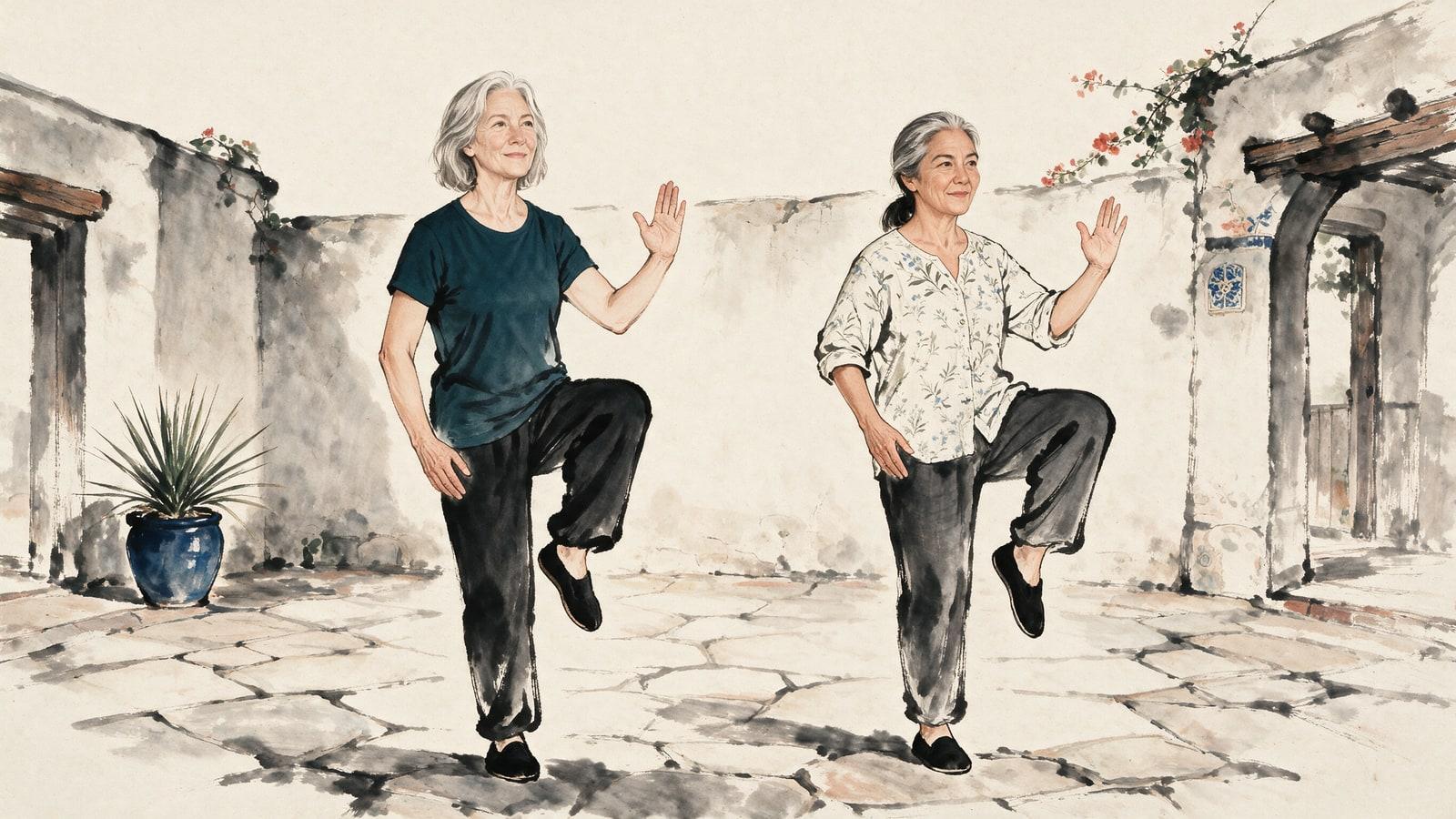
5. The Crane (Light Wings and Calm One-Legged Poise)
In the classic posture Crane Spreads Its Wings, your weight settles securely into your back leg while your front toes touch the floor lightly. Your arms open like wide, unhurried wings, expanding your breathing and training effortless balance.
🥋 Studio Cue: Next time you stroll through Reid Park or the zoo, watch how a heron or crane shifts its weight before lifting a foot. Its head stays completely still while its body glides over the standing leg. Try that same quiet head posture in your next Tai Chi class!
🪑 Gentle Adaptation: Seated Animal Qigong is a favorite for every level. You can spread your Crane wings on a deep inhale, gently arch and round your back like a stretching Tiger, and turn softly like a peaceful Deer, all from a sturdy chair.
✨ Key Reflections to Carry With You
- Pictures beat overthinking: Imagining a graceful animal helps your body coordinate dozens of muscles without mental strain.
- Every animal teaches a different gift: The Crane brings lightness, the Bear brings stability, and the Deer brings gentle flexibility.
- Keep practice playful: A sense of curiosity and play makes healthy movement something you look forward to all week.
Old Pueblo Tai Chi — Traditional Yang & Sun Style Classes
Culture Connects Studio • 3000 E. 22nd Street, Tucson, AZ 85713 • https://oldpueblotaichi.com
Questions about classes? Contact Dan Kimball at dan@oldpueblotaichi.com