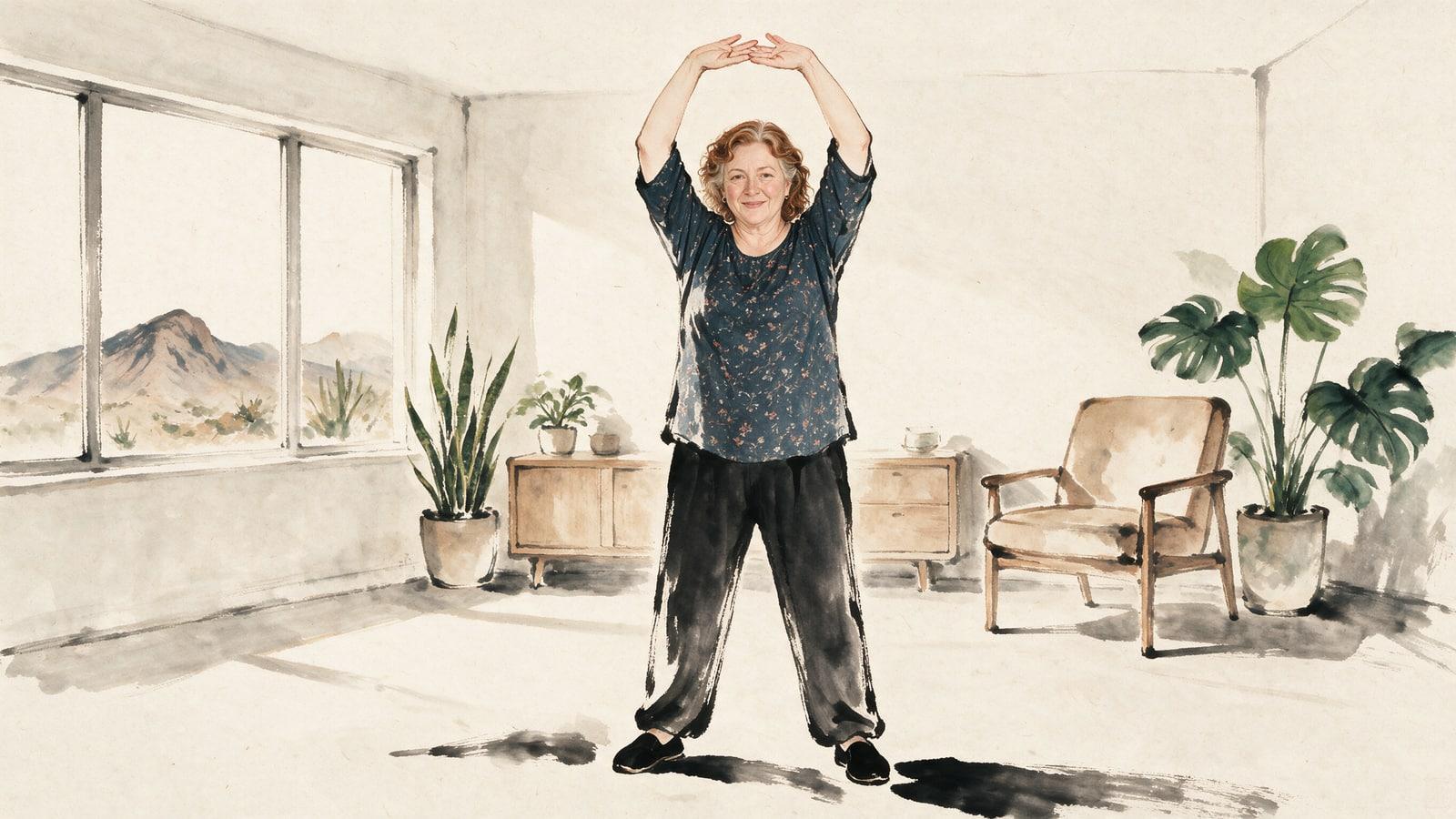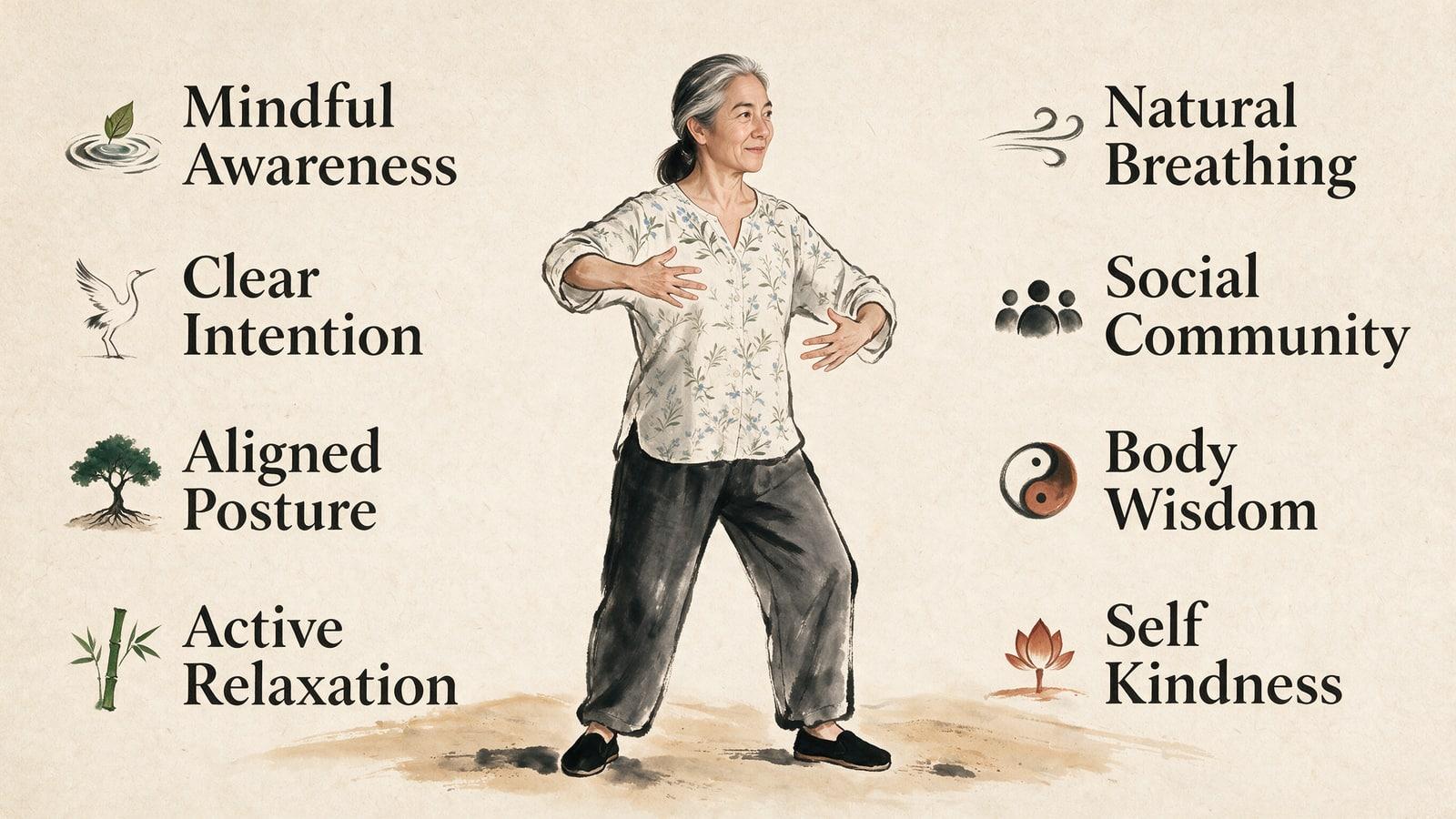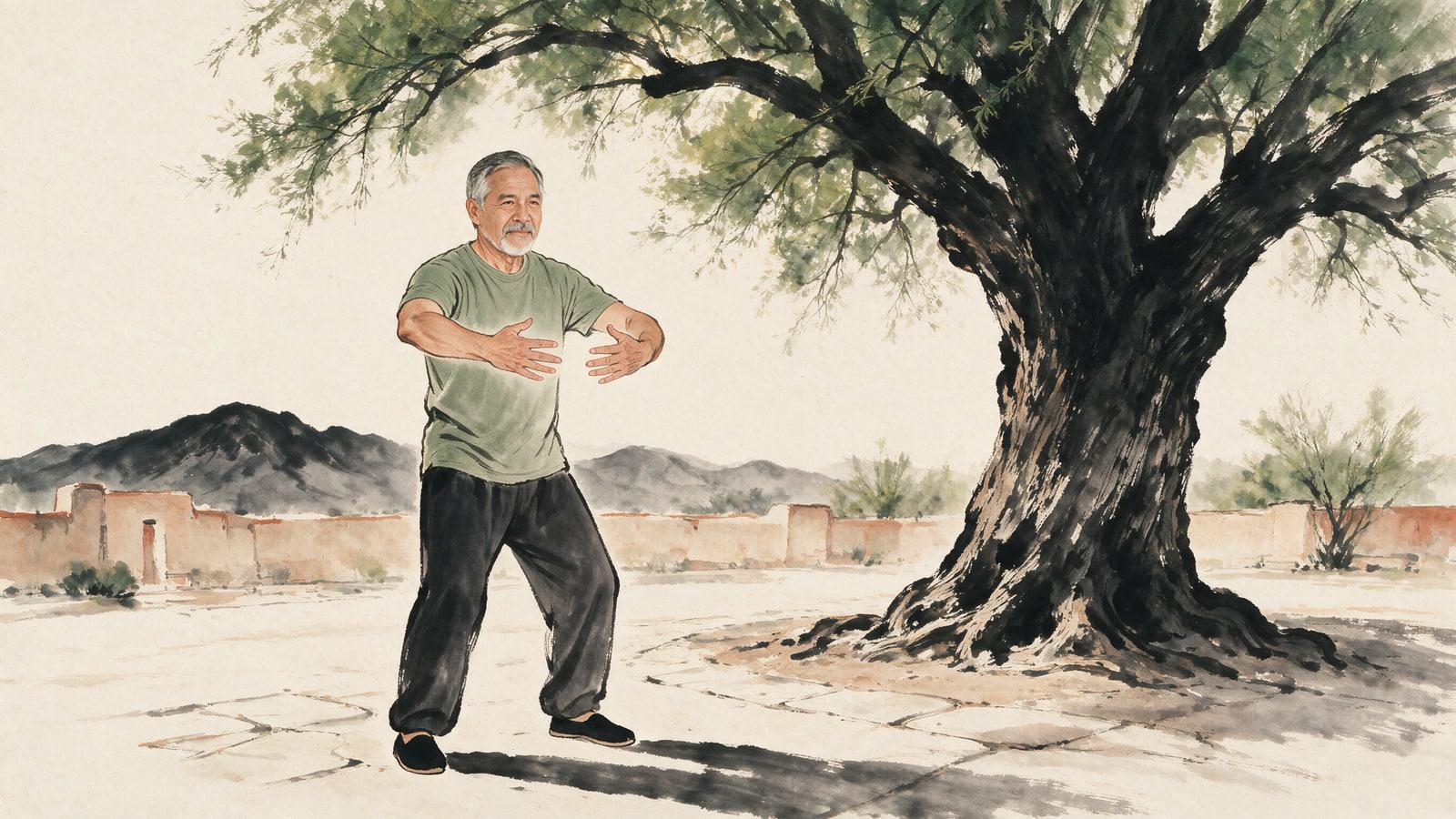

Among all the practices of traditional Chinese wellness, few routines are as welcoming to a first-time student as the Eight Pieces of Brocade. Practiced in parks, courtyards, and studios every morning around the world, this classic Qigong sequence gathers centuries of gentle movement wisdom into eight unhurried exercises.
Why compare a movement routine to brocade? In classical China, brocade was the finest woven silk, prized for its warmth, strength, and beauty. In the same way, these eight movements weave together upright posture, slow belly breathing, and quiet focus to care for your spine, joints, and energy from head to toe.
☯️ From Ancient Silk Scrolls to a Daily Morning Practice
Known in Chinese as Ba Duan Jin (八段錦), the Eight Pieces of Brocade grew out of the ancient healing tradition of guiding and stretching the body with the breath. As early as 168 BCE, the famous Mawangdui silk scroll illustrated men and women stretching their ribs, reaching toward the sky, and imitating nature to ease stiffness.
By the Song Dynasty (960–1279 CE), those older stretches had come together as an eight-part daily routine. In folklore, the set is often linked with the general Yue Fei, who wanted a simple sequence to keep his soldiers’ backs and tendons supple and their spirits calm.
“Double hands hold up the heavens to regulate the Sanjiao; Sanjiao passes Qi freely and smoothly, illnesses disappear.”
— Eight Pieces of Brocade (quoted in Dr. Yang, Jwing-Ming, Eight Simple Qigong Exercises for Health)
🌿 How It Feels in Movement: The Eight Brocades
Here is a complete demonstration of the Eight Pieces of Brocade so you can see the unhurried rhythm of the full sequence before exploring each movement below:
1. Two Hands Hold Up the Heavens
Standing with your feet shoulder-width apart, interlace or turn your fingers inward in front of your lower belly. As you inhale, float your hands upward along the midline and turn your palms to press gently toward the sky while your feet stay heavy on the floor. As you exhale, soften your wrists and sweep your arms down in a wide, relaxing circle to your sides.
2. Drawing the Bow to Shoot the Hawk
Settle into a comfortable wide stance and cross your wrists softly in front of your chest. Draw one hand across your chest like pulling a bowstring while extending the opposite hand toward the horizon, looking calmly past your fingertips. Return to center and draw to the other side to open the chest and upper back.
3. Separating Heaven and Earth
One palm floats overhead to press gently toward the sky while the opposite palm presses softly down beside your hip toward the floor. This creates a pleasant diagonal stretch across your ribs and belly before you alternate sides with your breath.
4. Wise Owl Gazes Backwards
As you inhale, grow tall through the crown of your head and gently turn your palms outward while looking softly over one shoulder. As you exhale, glide your head and palms back to center before looking over the opposite shoulder to ease neck and shoulder tension.
🥋 Studio Cue: In Wise Owl Gazes Backwards, never force your chin past your shoulder. Let the turn begin with your eyes and upper chest while keeping the back of your neck long and relaxed.
5. Sway the Head and Shake the Tail
With your hands resting lightly above your knees in a comfortable wide stance, arc your upper torso smoothly from one side to the other. Keep your spine long from tailbone to crown so tension drains out of your shoulders and down into your feet.
6. Two Hands Hold the Feet to Warm the Lower Back
Sweep your arms overhead on an inhale, then trace your palms warmly down your lower back and the backs of your legs on an exhale. Fold only as far as feels comfortable with soft, unlocked knees before rising smoothly back to standing.
7. Punching with Clear Eyes
From a steady stance with soft fists resting at your waist, extend one hand smoothly forward as you exhale with a bright, clear gaze. Open and spiral your fingers gently to draw the hand back to your hip, then repeat on the other side.
8. Bouncing Gently on the Heels
Inhale as you rise lightly onto the balls of your feet, lifting the crown of your head toward the sky. Exhale as you let your heels settle onto the floor with a soft, rhythmic tap that sends a soothing wave of relaxation through every joint.
🪑 Gentle Adaptation: You do not need to memorize or practice all eight movements at once. Choosing just two or three favorites for five minutes in the morning is a wonderful daily habit. Every single movement can also be practiced seated on a sturdy chair, using smaller forward bends and gentle heel taps.
✨ Key Reflections to Carry With You
- Stretch with breath, never with force: Stay within an easy 70 percent of your reach; when your joints feel safe, your muscles and connective tissue open naturally.
- Pause in stillness at the close: After the eighth movement, stand quietly for a few breaths so the warmth you stirred can settle into your center.
- A few movements go a long way: Even five minutes of Two Hands Hold Up the Heavens and Drawing the Bow can change how your back and shoulders feel all day.
Old Pueblo Tai Chi — Traditional Yang & Sun Style Classes
Culture Connects Studio • 3000 E. 22nd Street, Tucson, AZ 85713 • https://oldpueblotaichi.com
Questions about classes? Contact Dan Kimball at dan@oldpueblotaichi.com