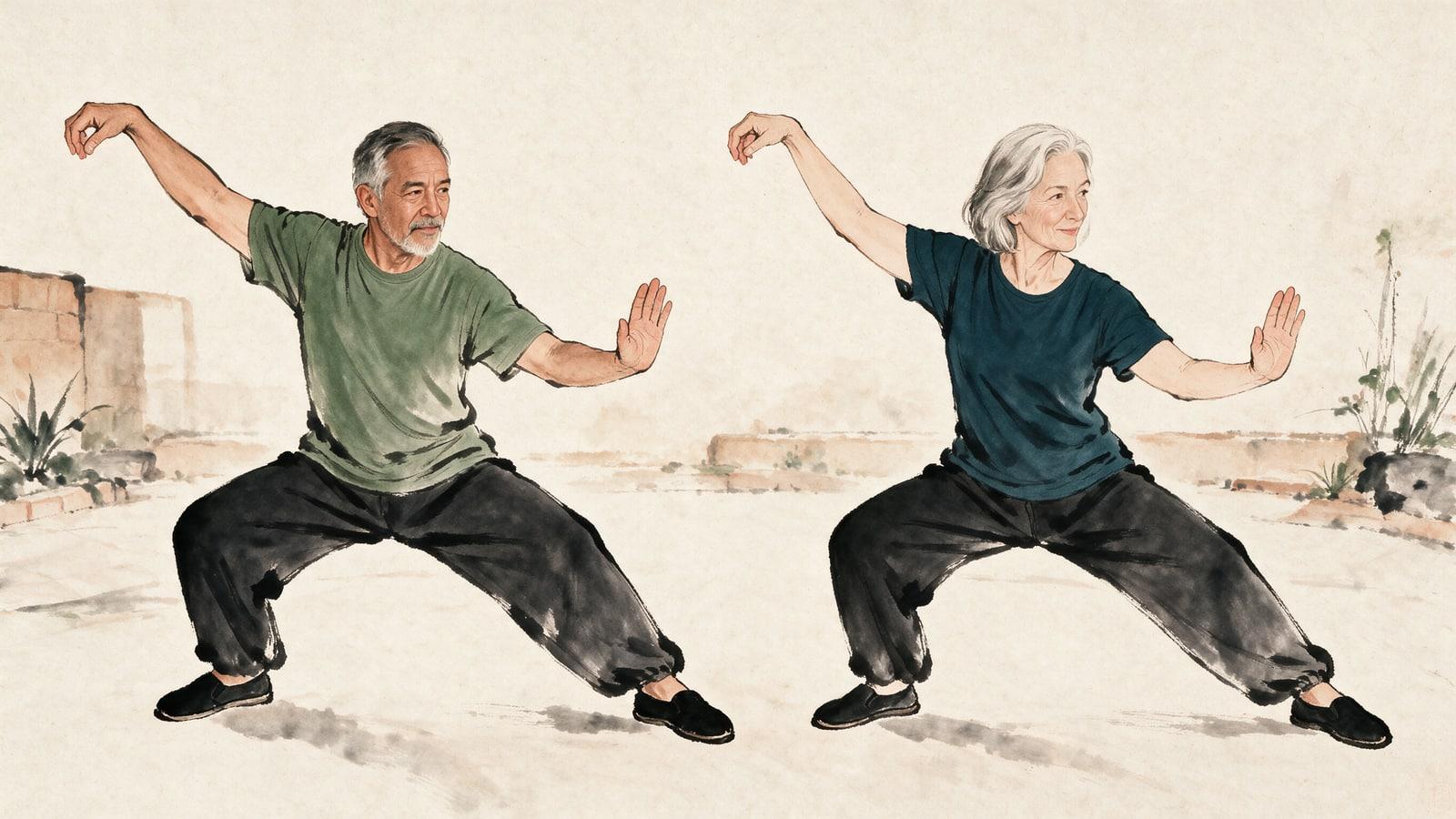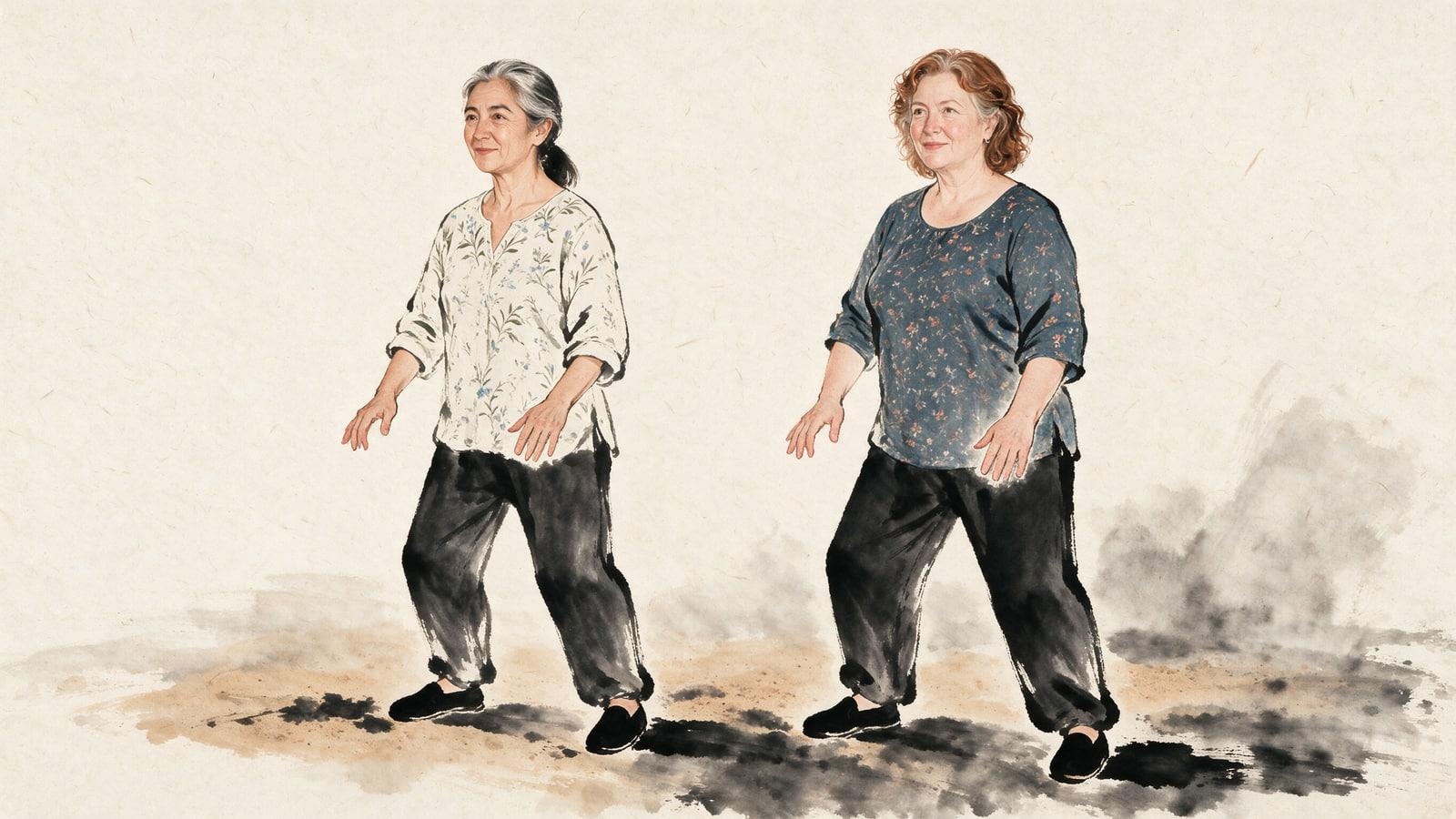
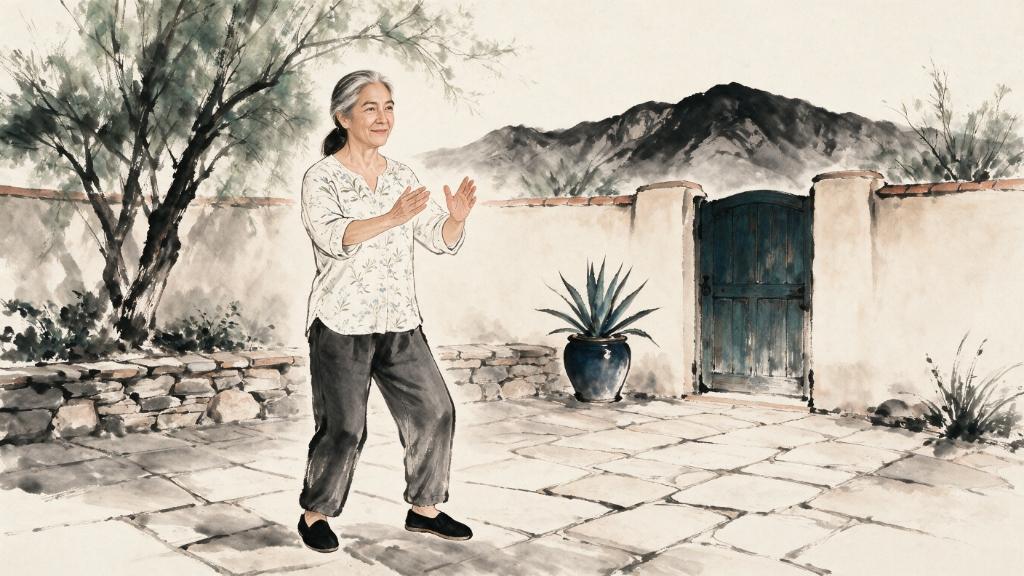
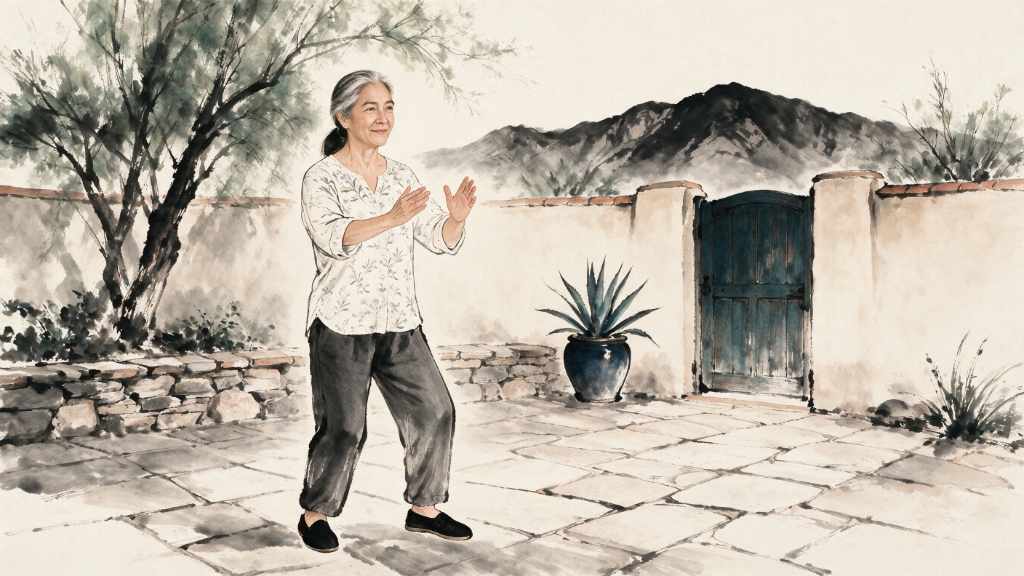
Watch a group practicing Tai Chi in a quiet courtyard or park, and you will notice a familiar shape returning again and again. Between the wider, sweeping movements, everyone rounds both arms softly in front of the torso—one palm floating near the chest, the other resting near the belly—before gliding into the next step. Nothing dramatic is happening in that brief pause, yet it is the secret behind why Tai Chi looks so unhurried and connected.
Known simply as “Holding the Ball,” this gentle posture is one of the very first skills you learn in class, and one you never outgrow. Whenever your hands gather into that light, rounded shape, your shoulders soften, your weight settles cleanly onto one standing leg, and your arms and feet stop competing for attention—moving together as one calm, balanced piece.
☯️ A Quiet Home Base Between Movements
In traditional Chinese, teachers call this transition Bào Qiú (抱球), which simply means “cradling” or “embracing a ball.” Some students also like to picture the bottom hand as gently “holding a bowl” from underneath while the top hand floats lightly above it.
“As you carry the ball, be sure your knees are slightly bent. Use your waist to direct the movement as you turn to the side.”
— Dr. Paul Lam & Nancy Kaye, Tai Chi for Beginners and the 24 Forms
Instead of rushing awkwardly from one posture into the next, Holding the Ball acts like a peaceful reset button. Whether you are gathering the ball at your side before stepping into Part the Wild Horse’s Mane in Yang Style, or holding a smaller sphere between both palms at chest height during Sun Style’s Open and Close Hands, that simple rounded shape keeps your arms connected to your center so you never lean or overreach.
🌿 How It Feels in Movement: Three Easy Habits
1. Cradle a Beach Ball With Soft Shoulders
Bring one palm to chest height facing down, and let your other palm rest near your belly button facing up, as if holding a light beach ball between them. Let your shoulders drop away from your ears and keep a little breathing room under your armpits so your elbows feel heavy and relaxed rather than stiff.
2. Keep Your Two Palms Facing Each Other
Let your fingers curve naturally—never held poker-straight and never limp. Simply picturing the centers of your two palms facing each other gives a busy mind something calm and steady to focus on, while keeping both hands working as a team whenever you change sides.
3. Turn From Your Waist Before You Step
Here is what makes Holding the Ball such great balance practice: your arms don’t swing the ball from side to side on their own. Instead, you settle your weight comfortably onto one standing leg and turn smoothly from your waist and hips, carrying both hands together as one piece. Because your weight is already steady on your standing leg, your other foot feels light and free to step out onto the heel without a wobble.
🥋 Studio Cue: Try this 20-second Beach Ball Check right where you are. Hold an imaginary beach ball in front of your torso—right hand on top at chest height, left hand underneath near your belly. Keeping your arms quiet, turn your belly button just two inches to the right. Notice how both hands travel smoothly together without your shoulders doing any extra work.
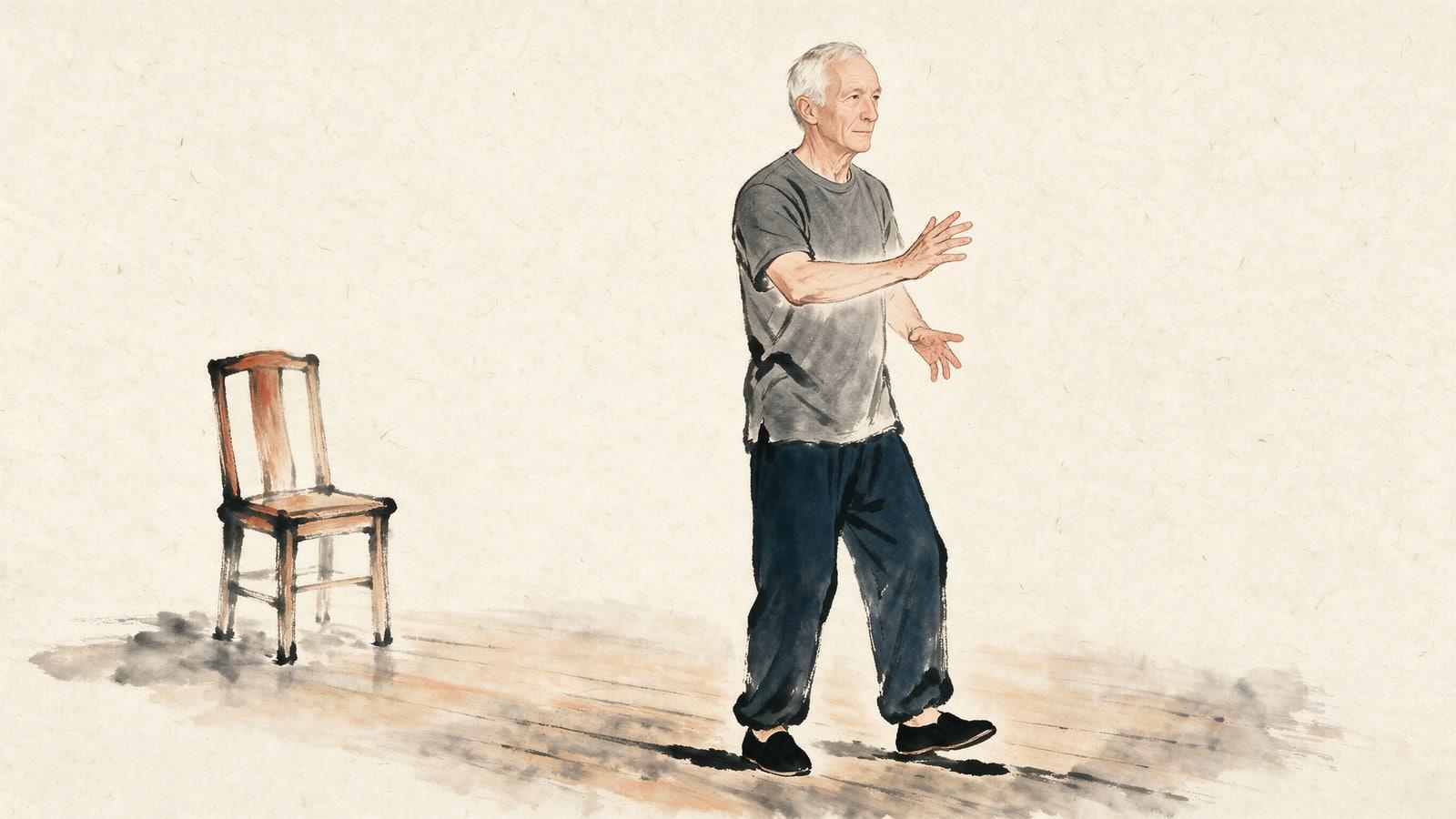
🪑 Gentle Adaptation: Holding the Ball feels wonderful standing tall or practicing Seated Tai Chi from a sturdy chair. Following our studio’s 70 percent comfort rule, if holding your top hand at chest height tires your shoulder, simply cradle a smaller “cantaloupe-sized” ball lower in front of your ribs—or hold both palms side by side at chest level, breathing in as your hands open an inch wider and breathing out as they float back toward center.
✨ Key Reflections to Carry With You
- Gather before you step: Pausing for one calm breath to hold the ball over your standing leg keeps you from leaning or rushing into your next step.
- Soft curves beat stiff arms: Relaxed shoulders and gently rounded elbows support your posture without putting tension in your neck.
- Let your waist carry the ball: When your waist turns the ball as one unit, your hands and feet naturally move together in easy balance.
Old Pueblo Tai Chi — Traditional Yang & Sun Style Classes
Culture Connects Studio • 3000 E. 22nd Street, Tucson, AZ 85713 • https://oldpueblotaichi.com
Questions about classes? Contact Dan Kimball at dan@oldpueblotaichi.com