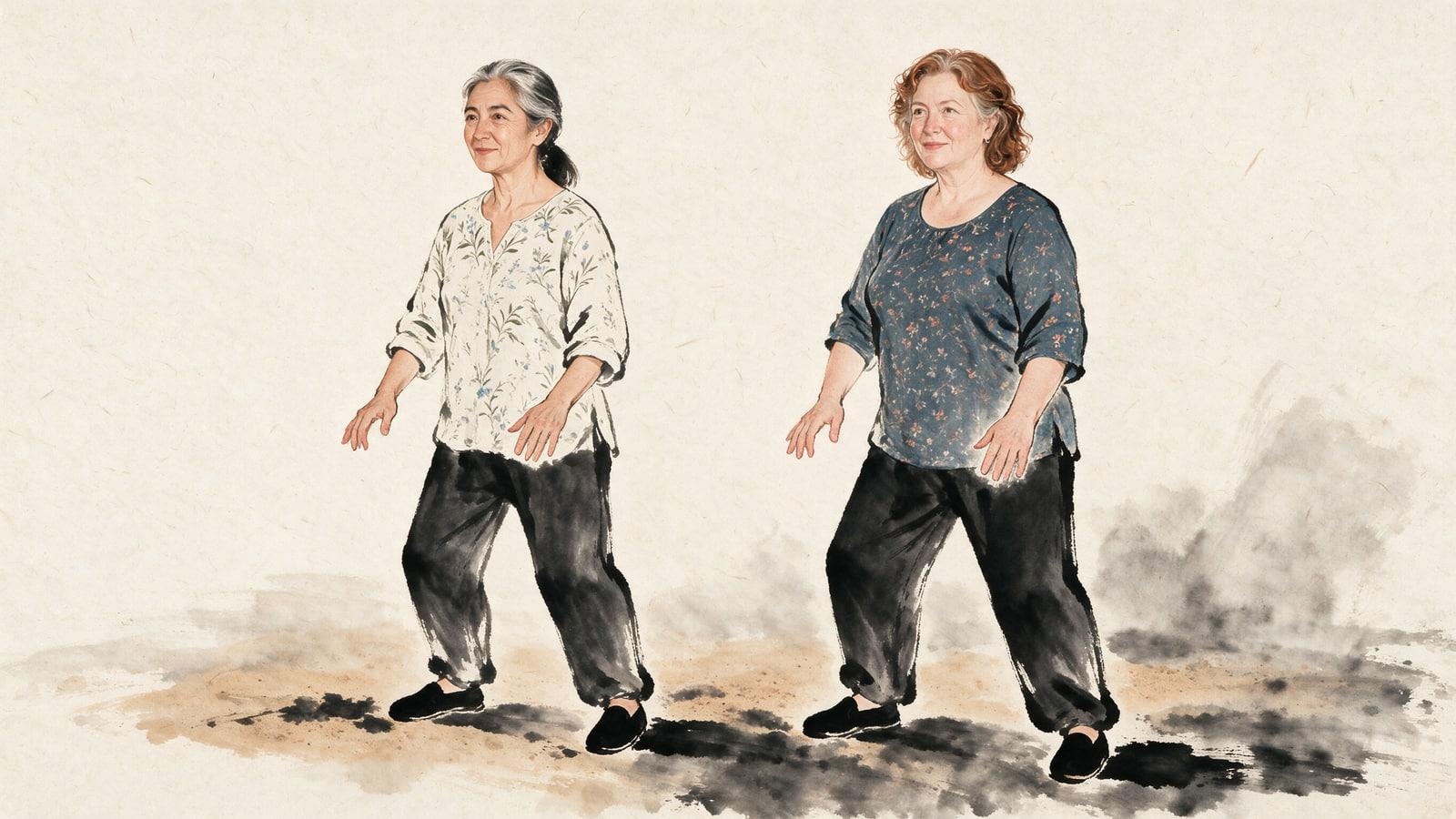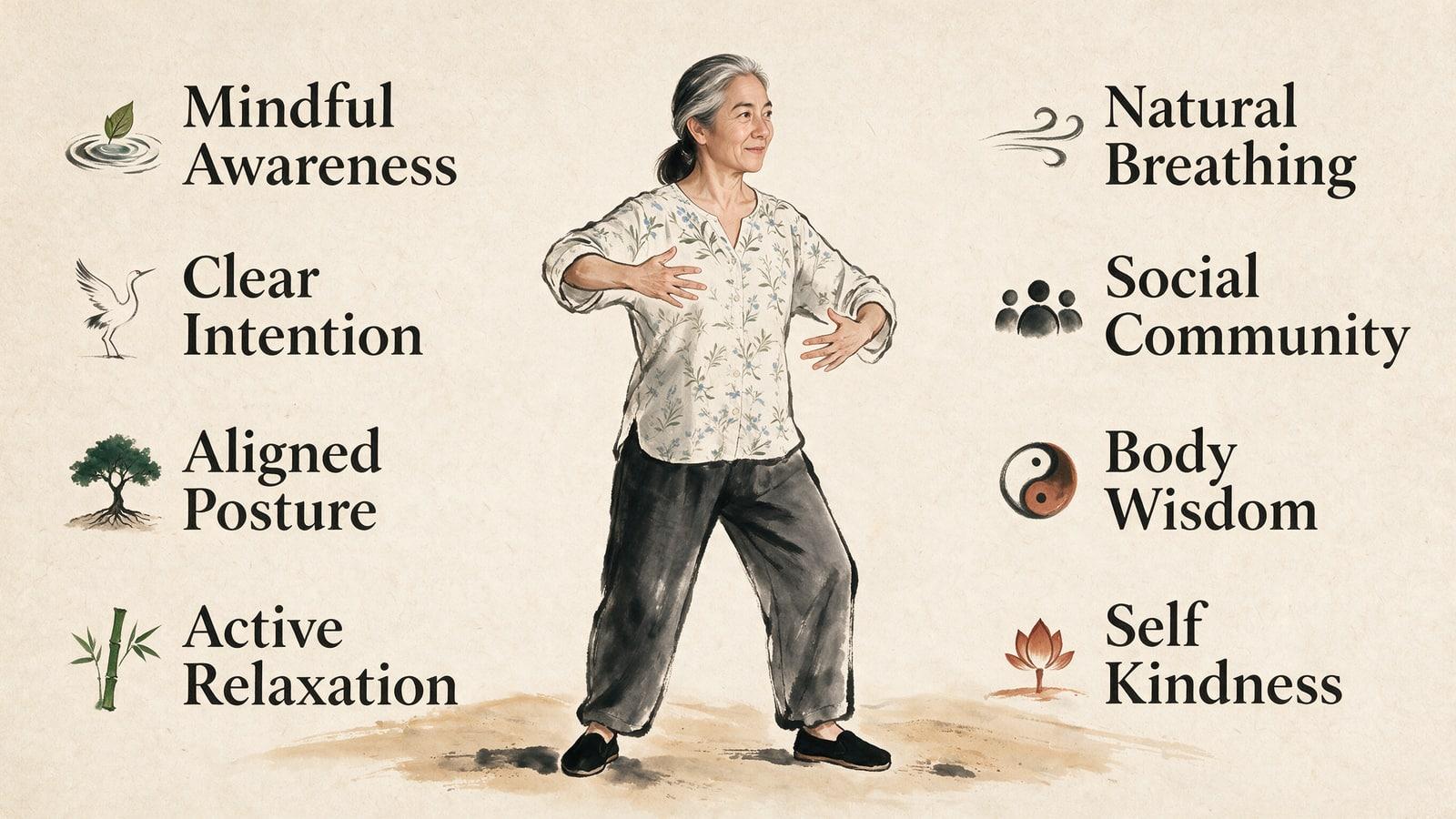

One of the questions we hear most often from new callers in Tucson is: “Can I still come to Tai Chi class if I can’t stand for a full hour?” Our answer is always a warm, immediate yes.
Whether you are recovering from a knee or hip replacement, managing neuropathy or dizziness, or simply having a day when your legs want a rest, Seated Tai Chi and Chair Qigong are not “watered-down” versions of practice. Sitting on a sturdy chair simply lets the chair hold your legs so you can enjoy the full breathing, posture, waist-turning, and arm movements with complete peace of mind.
☯️ A Centuries-Old Practice of Seated Qigong
Many people assume that seated movement is a modern invention created for senior centers. In reality, seated practice—known traditionally as Seated Qigong (Zuo Gong 坐功), including the classic Seated Eight Pieces of Brocade—has been practiced and illustrated in Chinese wellness manuals for more than eight hundred years.
“Root to rise: Rooting in Tai Chi Chuan allows the practitioner to effectively use the ground or chair to empower flowing movements.”
— Dr. Zibin Guo, Adaptive Tai Chi
Why does Tai Chi translate so naturally to a chair? Because in traditional Tai Chi, every arm movement begins in the waist and spine, not the knees. When your feet rest flat on the floor and you sit near the front edge of your chair, your waist, ribs, shoulders, and hands move through the exact same graceful circles as someone standing right beside you.
🌿 How It Feels in Movement: Three Keys to Great Chair Practice
1. The “Front-Third” Perch (Your New Base of Support)
Instead of leaning back against the backrest, scoot forward onto the front third of a sturdy, non-rolling chair with your feet flat on the floor shoulder-width apart. Sitting upright under your own power gently wakes up the postural muscles of your back and core.
2. Shifting Weight Between Your Sitting Bones
Whenever a standing movement shifts weight from the left foot to the right foot, you can mirror that exact shift by gliding your torso a couple of inches from your left sitting bone to your right sitting bone—training the very same hip and core balance needed for steady walking.
3. Mixing Standing and Sitting Whenever You Like
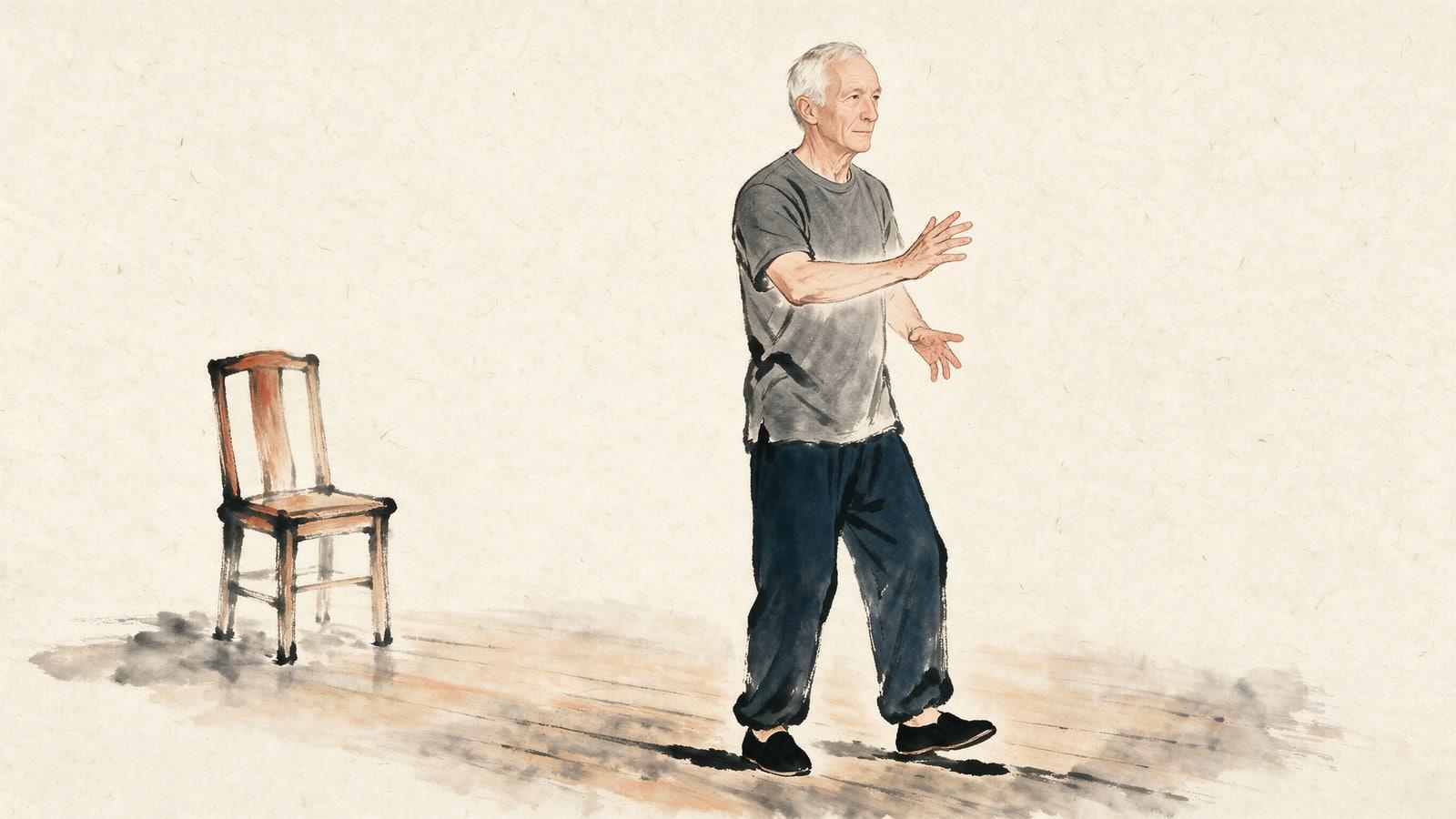
In our Tucson studio classes, many students keep a chair right behind them. They might stand for ten minutes of Qigong warm-ups, sit down for a few minutes to rest their legs while continuing the arm movements, and stand back up whenever they feel ready.
🥋 Studio Cue: Try “Seated Wave Hands Like Clouds”: sit tall near the front of your chair with your feet flat. Gently shift a little weight onto your left sitting bone as your waist turns left and your hands float across like clouds; then shift to your right sitting bone and turn right.
🪑 Gentle Adaptation: If your lower back gets tired sitting away from the backrest for a full class, place a firm cushion or rolled towel behind your lower back so your spine stays tall and supported while your shoulders and arms move freely.
✨ Key Reflections to Carry With You
- You belong in class right now: You don’t have to wait until your knees or balance are “100 percent” to start enjoying Tai Chi.
- Your waist and breath do the real work: Seated practice trains core stability, shoulder mobility, and calm breathing just as deeply as standing practice.
- Stand, sit, or alternate freely: Every class at Old Pueblo Tai Chi welcomes chair modifications at any time.
Old Pueblo Tai Chi — Traditional Yang & Sun Style Classes
Culture Connects Studio • 3000 E. 22nd Street, Tucson, AZ 85713 • https://oldpueblotaichi.com
Questions about classes? Contact Dan Kimball at dan@oldpueblotaichi.com