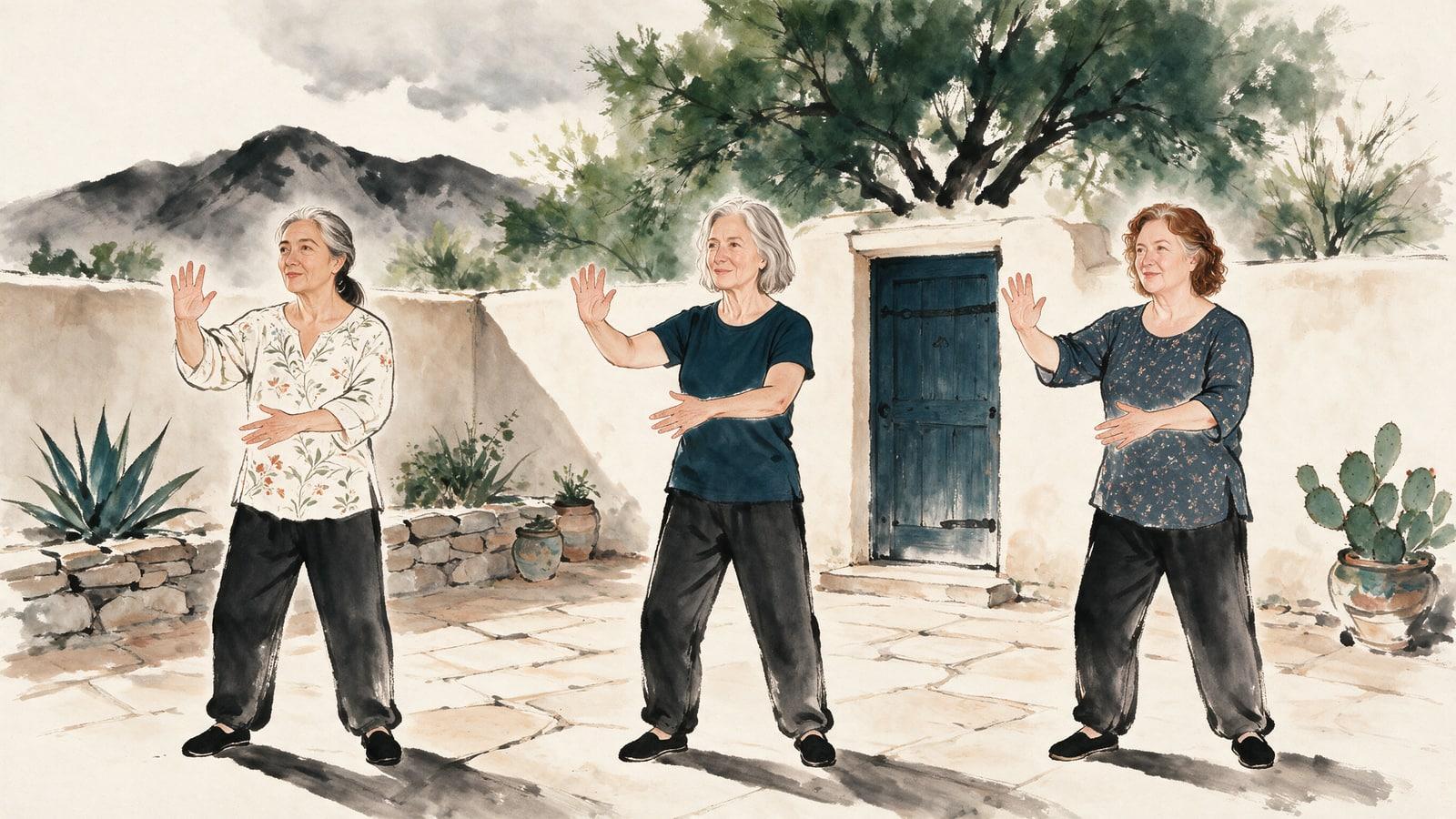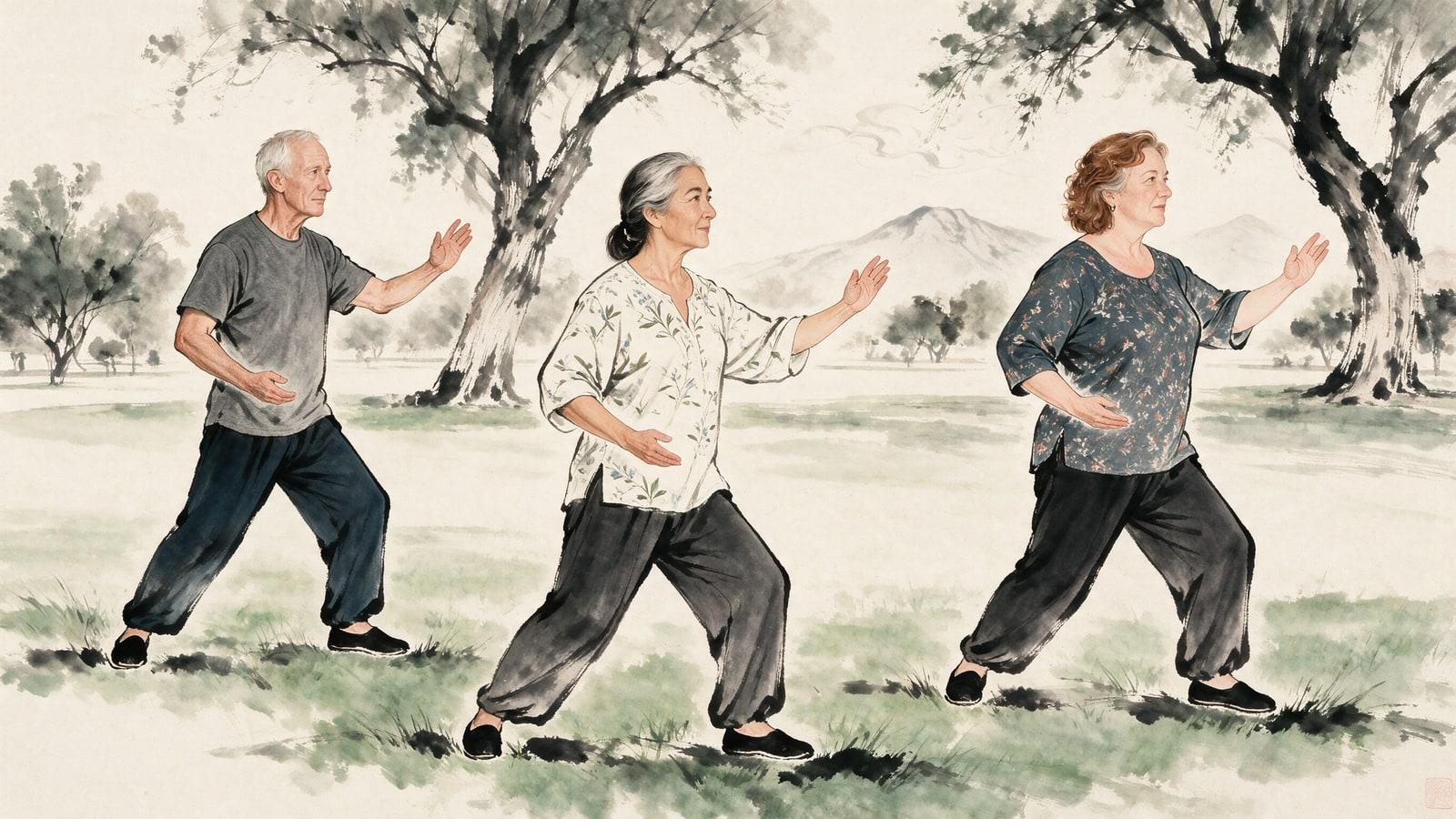

If you have ever seen a photograph of a young martial arts competitor performing Snake Creeps Down, they are usually crouched just inches above the floor on one deeply bent leg. Understandably, many adults look at that photo and think: “My knees would never forgive me for trying that!”
Here is the reassuring truth we share in every class at Old Pueblo Tai Chi in Tucson: you never need to crouch low to practice a true, traditional Snake Creeps Down. In fact, practicing our comfortable High-Stance variation protects your knees while giving your hips, legs, and spine a wonderful, flowing stretch.
☯️ Smooth Transitions Over Deep Squats
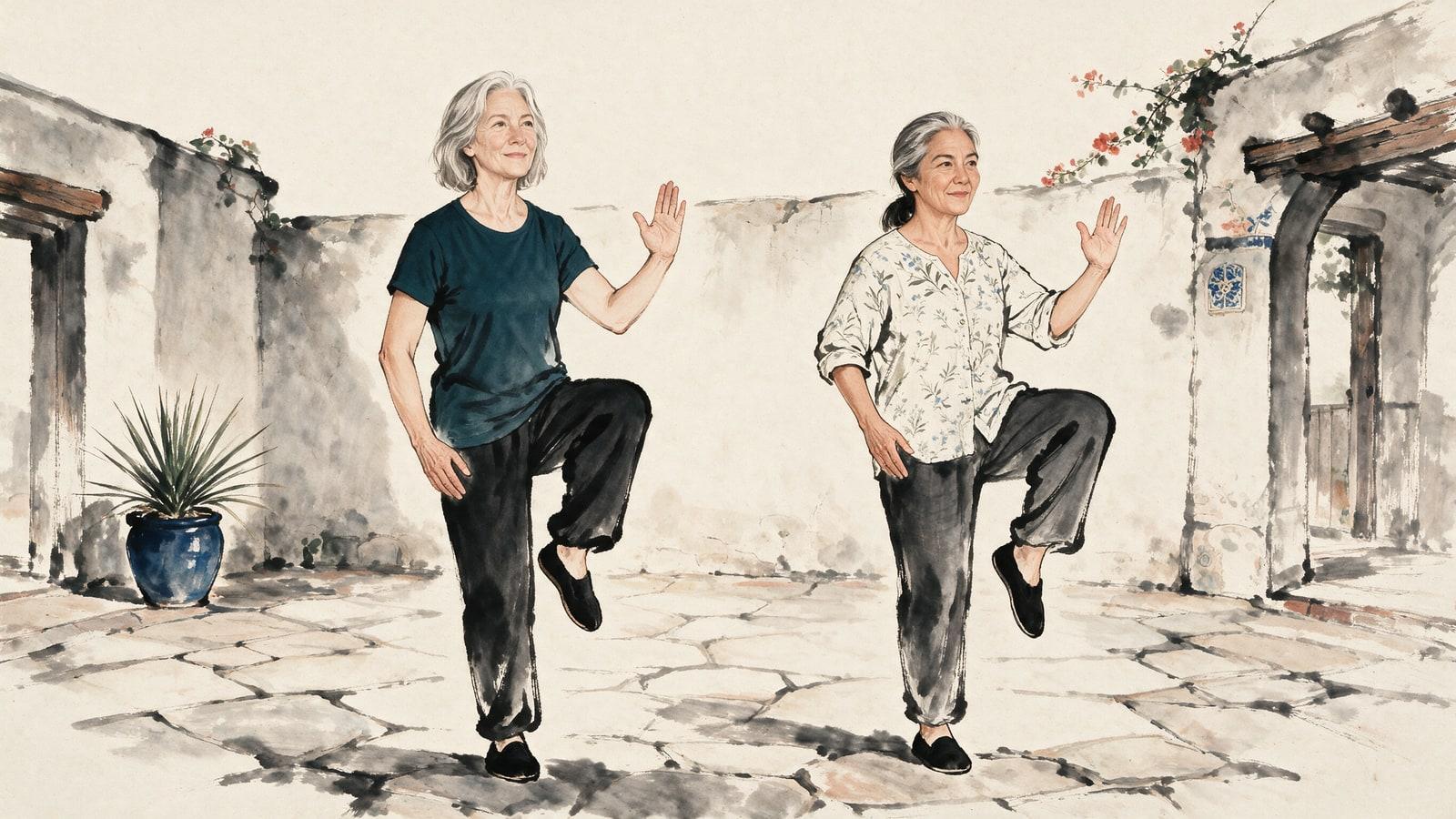
In traditional Yang-style Tai Chi, this posture is simply called Downward Posture (Xia Shi 下勢), and is poetically nicknamed Snake Creeps Down because your lead hand glides smoothly down and forward along your front leg like a snake moving through tall grass before rising into Golden Rooster Stands on One Leg.
“Obey the 70% rule: stay at about 70% of your effort, intensity, or range of motion. Never force a movement beyond about 70%.”
— Peter M. Wayne, PhD, An Introduction to Tai Chi
Why did classical teachers include this movement? Not to test how low you can squat, but to train how smoothly you can shift your weight from your back hip crease into your front leg while keeping both feet flat on the floor.
🌿 How It Feels in Movement: Three Keys to a Knee-Safe “Snake Creeps Down”
1. Keep Both Heels Flat on the Floor
Starting from Single Whip (where your right hand holds a soft “beak” hook to the side), shift your weight back onto your right leg. Keep both soles and heels resting completely flat on the floor—if a stance is so low that your heel lifts up, simply stand taller!
2. Align Your Back Knee Directly Over Your Back Toes
Your right (back) foot is angled outward at roughly 45 degrees. As you sit back into your right hip crease, make sure your right kneecap points in that exact same 45-degree direction—never letting the knee tip inward.
3. Glide Forward by Turning Your Front Foot In, Then Out
In our High-Stance version, you only lower your hips an inch or two—just like sitting slightly back into a tall stool. Sweep your left hand smoothly down beside your hip and forward toward your left knee; then pivot your left toes outward 45 degrees and shift your weight smoothly onto your left leg to rise into Golden Rooster.
🥋 Studio Cue: Think “back into the hip crease” rather than “down into the knee.” Even a two-inch sit into your back hip while your spine stays tall captures the entire spirit and balance benefit of Snake Creeps Down.
🪑 Gentle Adaptation: While seated near the front of a sturdy chair, extend your left leg comfortably forward with your heel on the floor, shift your torso slightly over your right hip as your left hand sweeps down and forward along your thigh, and then glide upright again.
✨ Key Reflections to Carry With You
- Skip the deep crouch: A comfortable High Stance gives you all the coordination and leg strength without knee strain.
- Watch your knee alignment: Your supporting knee should always track right over the middle of your foot.
- Flow into the rise: Use the forward weight shift to float naturally up into Golden Rooster Stands on One Leg.
Old Pueblo Tai Chi — Traditional Yang & Sun Style Classes
Culture Connects Studio • 3000 E. 22nd Street, Tucson, AZ 85713 • https://oldpueblotaichi.com
Questions about classes? Contact Dan Kimball at dan@oldpueblotaichi.com