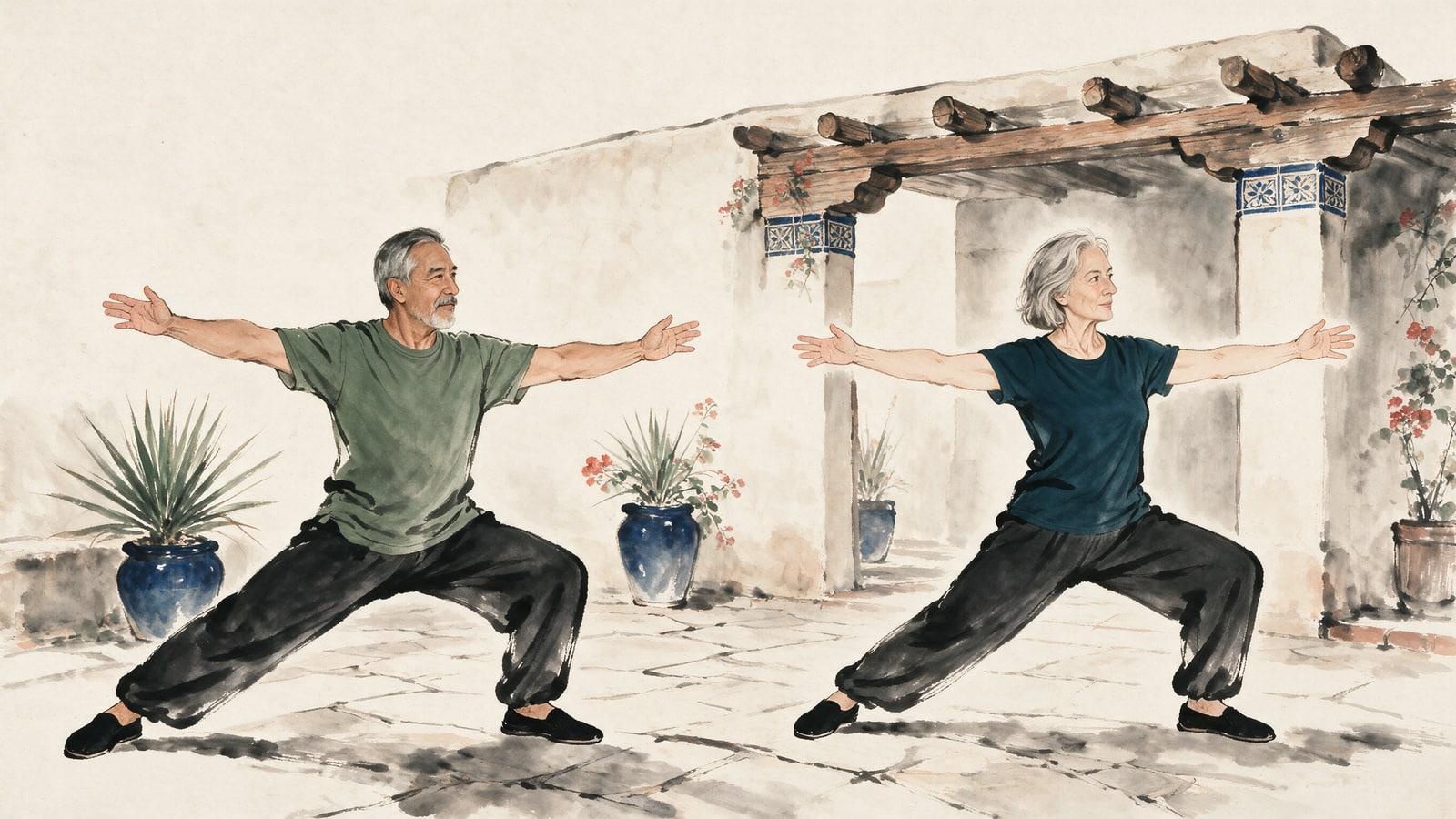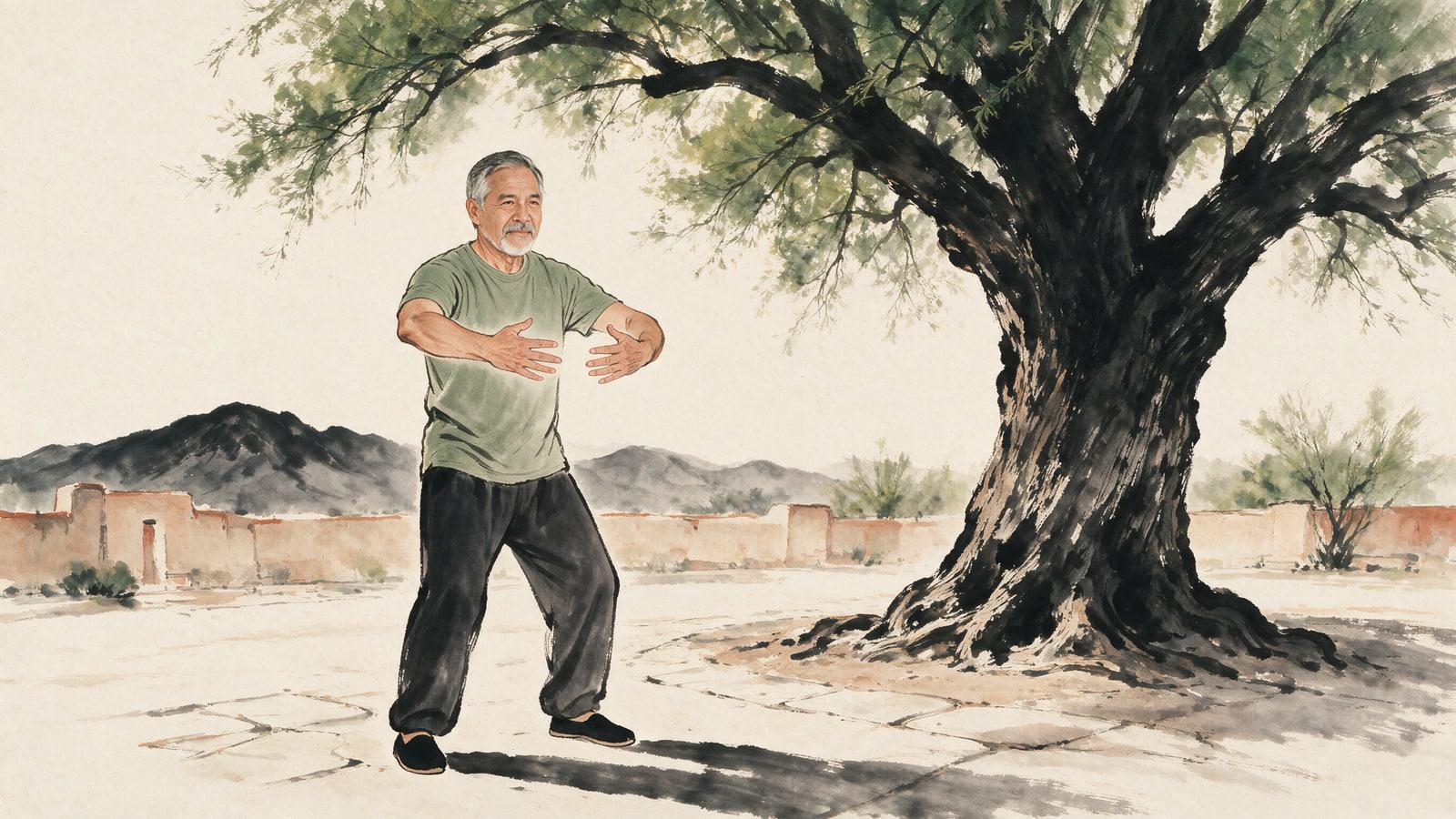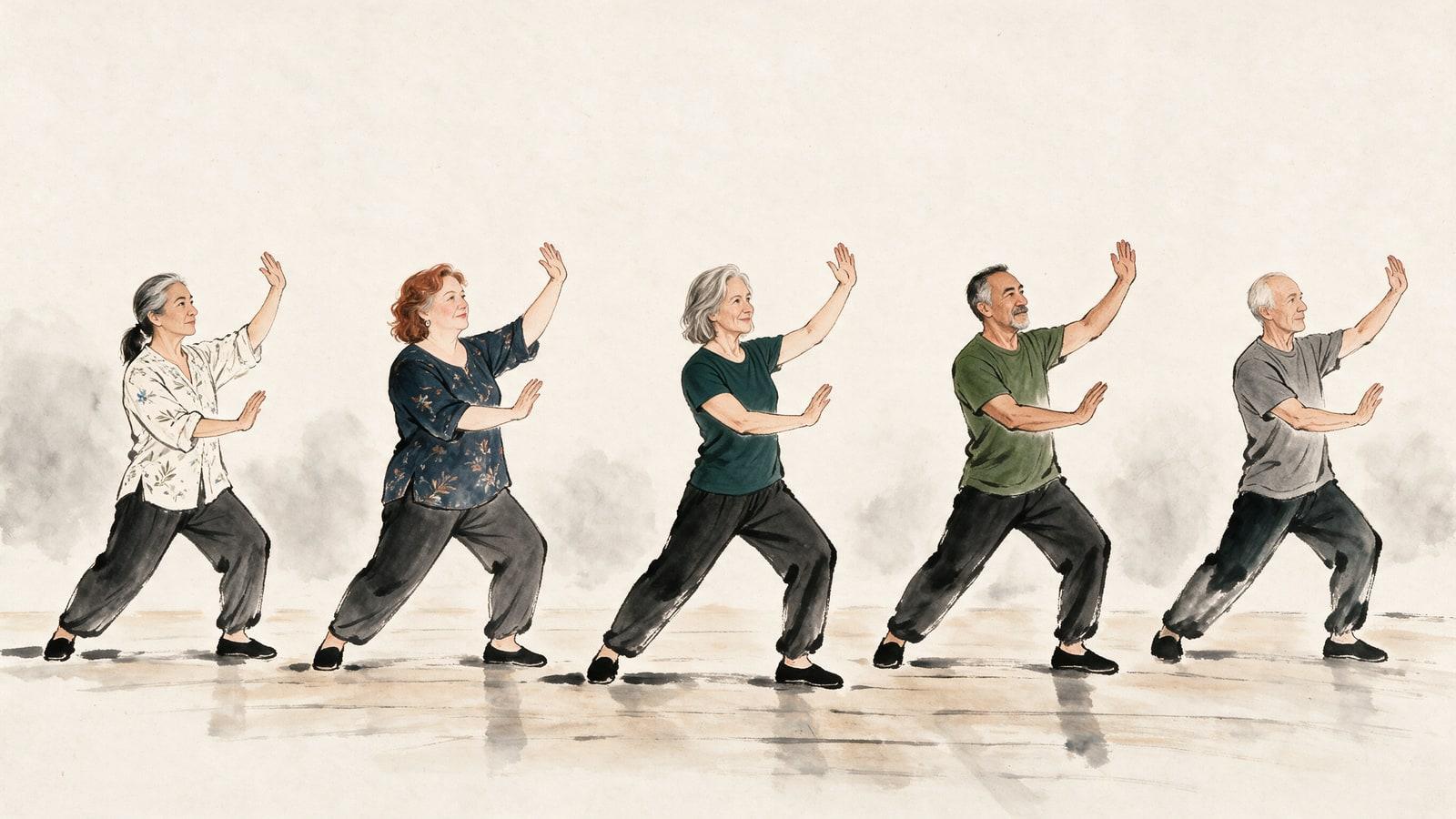

Have you ever wished for a complete morning movement routine you could memorize in just a few classes? You do not need to remember dozens of complicated turns to enjoy the full benefits of practice. Dragon and Tiger Qigong is a wonderful place to start.
The form uses just seven flowing movements that repeat rhythmically on the left and right sides of your body. It pairs gentle weight shifting with soft waist turns and sweeping hand motions. After a few minutes, your whole body feels awake, loose, and balanced.
☯️ Pairing Fluid Grace With Quiet Strength
Practiced in China for more than a thousand years, Dragon and Tiger Qigong takes its name from the classic pairing of Dragon and Tiger (Long Hu 龍虎):
“The key to healing and relaxation is to lead the excess Qi out of the body through the limbs.”
— Dr. Yang, Jwing-Ming, Back Pain Relief
- The Dragon Quality: Smooth, continuous spiraling of the wrists, spine, and waist that loosens stiff joints and encourages easy breathing.
- The Tiger Quality: Soft, steady rooting through the legs and feet so your lower body feels calm and supported.
🌿 How It Feels in Movement: What Makes the 7-Movement Routine So Refreshing
1. “Tracing the Sides” With Soft Palms
In the opening movement, Dragon and Tiger Meet, your palms glide smoothly up and down about six inches from your sides. As your hands move, you shift your weight gently from foot to foot. This easy rhythm stretches the ribs and shoulders while warming up the hands.
2. Gentle Weight Shifting and Heel Lifts
As one hand floats up to chest height, the heel of your opposite foot lifts lightly off the floor. This gentle rocking trains natural left-right coordination and ankle stability without any impact on your joints.
3. Exhaling Tension Out Through the Hands and Feet
Several of the seven movements include a gentle diagonal reach of the palm or foot on a slow exhale. Reaching softly as you breathe out helps release pent-up tightness in the neck, shoulders, and hips.
📋 Quick Reference: The 7 Movements of Dragon and Tiger Qigong
- Dragon and Tiger Meet: Alternating palms trace up and down the sides of the body with gentle heel lifts.
- Dragon Looks Around: A soft turn of the waist and neck as the palms float out to the side.
- Tiger Crouches and Leaps: Settling softly into the hips and rising smoothly to refresh the legs and spine.
- Dragon Parts the Clouds: Sweeping the arms open across the chest to deepen the breath.
- Tiger Pounces on Prey: A calm forward shift of weight with soft, rounded palms.
- Dragon Rides the Wind: Light side-to-side weight shifts with flowing, circular arms.
- Dragon Returns to the Sea: Gathering the breath and settling the hands quietly over the lower belly.
🥋 Studio Cue: Keep your palms about the width of a softball away from your body as your hands trace up and down your sides. Move slowly enough that you can feel a pleasant warmth in your fingertips.
🪑 Gentle Adaptation: All seven movements of Dragon and Tiger Qigong can be practiced standing in a small two-foot space or seated in a sturdy chair. Simply lift one heel or shift gently between your sitting bones as your hands trace their smooth arcs.
✨ Key Reflections to Carry With You
- Easy to learn, rewarding for life: With only seven movements, your mind can relax and enjoy the rhythm instead of worrying about what comes next.
- Symmetric left-and-right balance: Every movement exercises both sides of the body equally.
- Gentle on every joint: Soft knees, relaxed wrists, and unhurried breathing make it ideal for morning or evening practice.
Old Pueblo Tai Chi — Traditional Yang & Sun Style Classes
Culture Connects Studio • 3000 E. 22nd Street, Tucson, AZ 85713 • https://oldpueblotaichi.com
Questions about classes? Contact Dan Kimball at dan@oldpueblotaichi.com