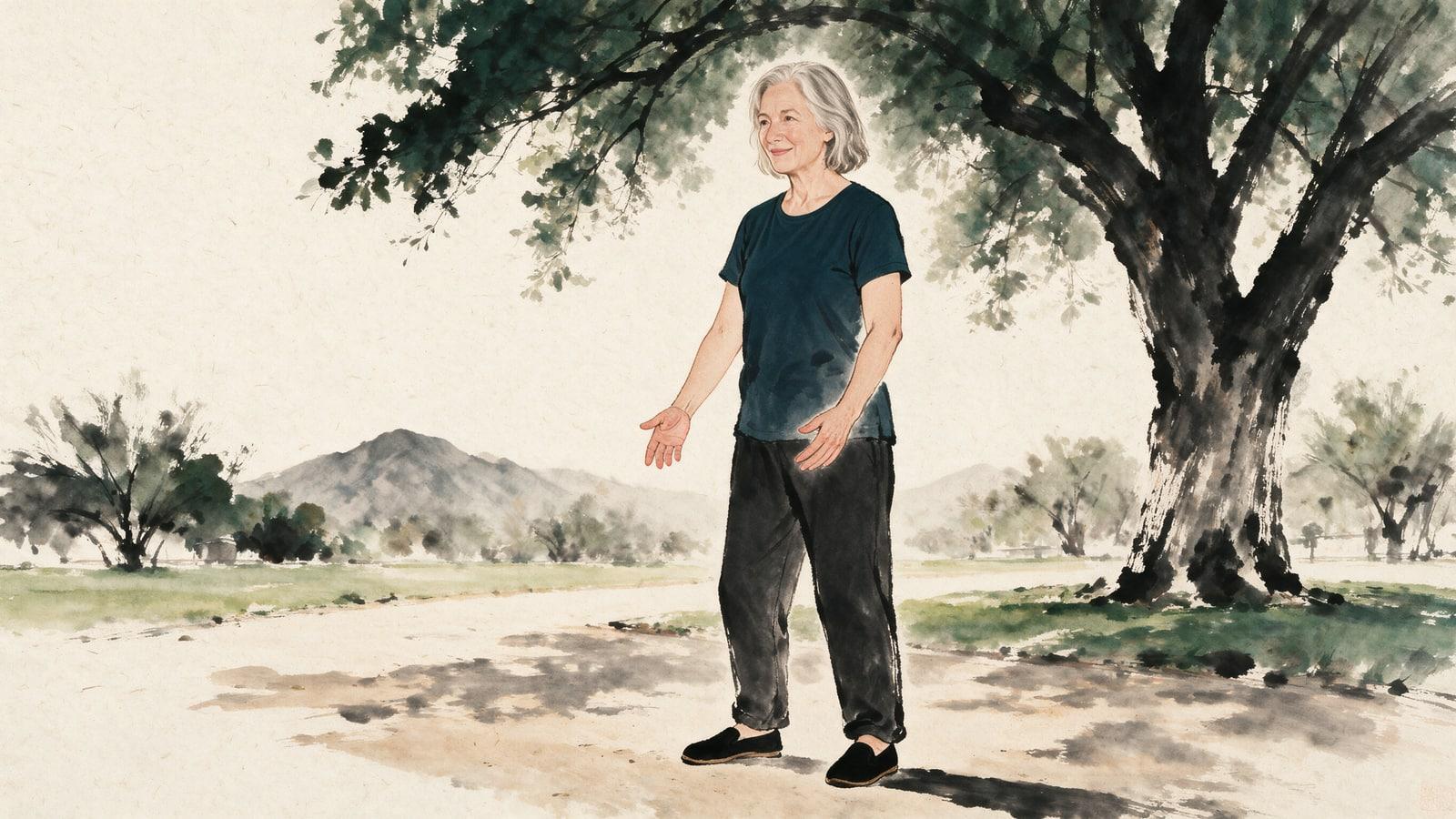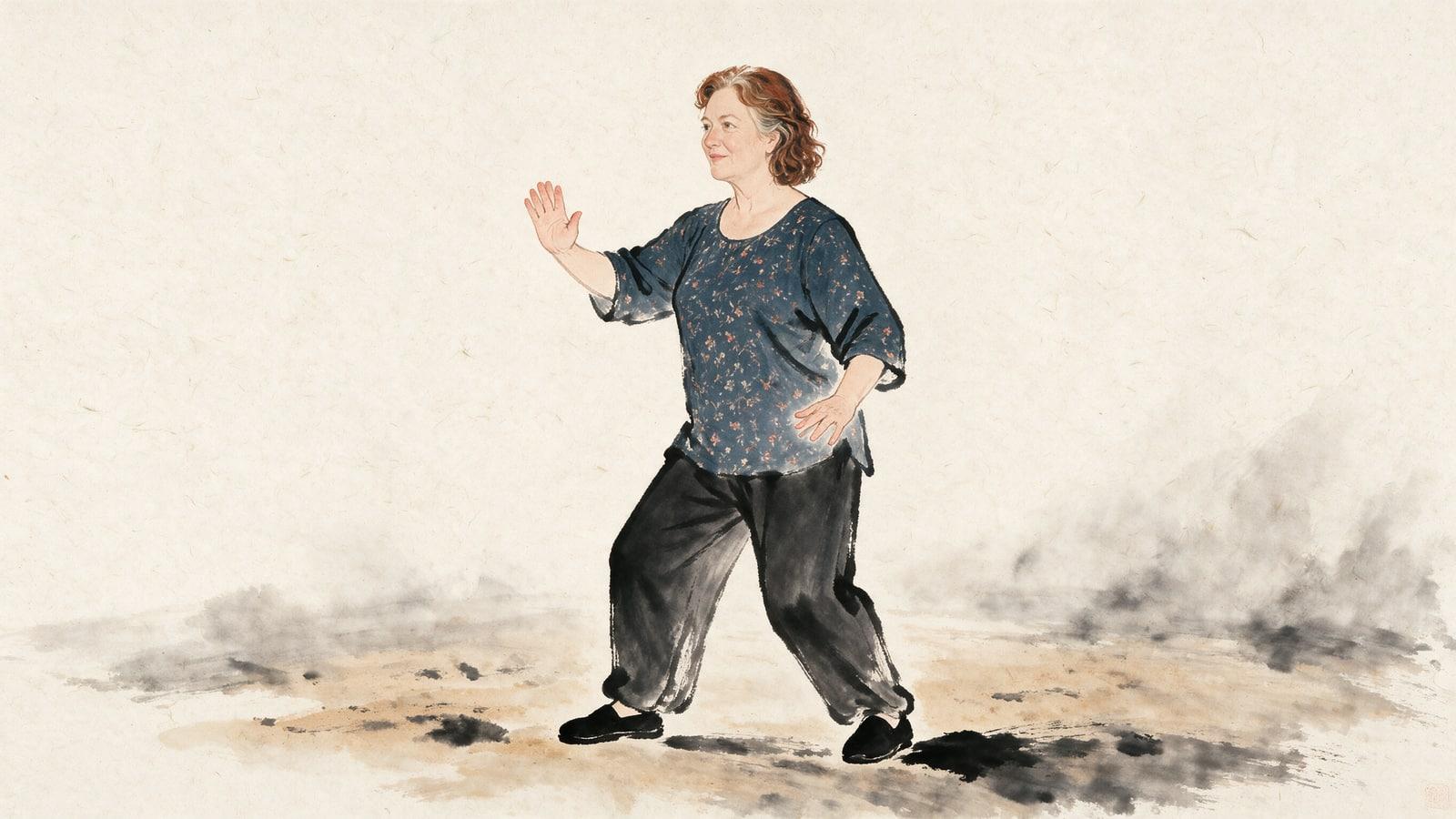

When your knees, hips, or hands feel stiff with arthritis—or when you’ve had a close call catching your toe on an uneven curb—conventional exercise advice can feel frustrating. Impact workouts hurt your joints, yet sitting still all week only makes stiffness and unsteadiness worse.
That is why physical therapists, rheumatologists, and organizations like the CDC and the Arthritis Foundation consistently place Tai Chi at the very top of their recommendations for healthy aging. It gives you a way to strengthen your legs and oil your joints without a single jump, jar, or floor exercise.
☯️ Why Slow Circles Soothe Stiff Joints
In classical Chinese wellness, there is a simple saying: “A door hinge that moves smoothly every day never rusts.” Traditional Tai Chi (太極) and Qigong were designed over centuries to move every joint in the body—from the fingers and wrists to the shoulders, spine, hips, knees, and ankles—through soft, unhurried circles.
“Just as a door hinge will not rust if it is used, so the body will achieve health by gently moving and exercising all of the limbs.”
— Kenneth S. Cohen, The Essential Qigong Training Guide
Modern joint science confirms why this feels so good. The cartilage inside our knees, hips, and shoulders doesn’t have direct blood vessels of its own; it relies on gentle, rhythmic movement to circulate the natural lubricating fluid inside the joint. Slow, low-impact weight shifts act like squeezing and releasing a soft sponge—bathing stiff joints in fresh nourishment without grinding them down.
🌿 How It Feels in Movement: Four Ways Tai Chi Builds Confidence on Your Feet
1. Stronger Thighs and Hips in Comfortable High Stances
By standing with softly unlocked knees and shifting your weight slowly from leg to leg, your thighs and hips build quiet endurance—making everyday tasks like climbing stairs or rising from a chair feel noticeably easier.
2. Waking Up Your Natural Balance Sensors
Because we move slowly and feel our weight roll across the heel, arch, and toes, the nerves in your feet and ankles become much quicker at sensing and correcting a wobble before it ever turns into a fall.
3. Stepping in All Directions (Not Just Straight Ahead)
Most slips happen when we turn around in the kitchen, step backward out of a doorway, or step sideways. Tai Chi gently practices forward, backward, and diagonal steps so your body stays comfortable moving in any direction.
4. Letting Go of the “Fear of Falling”
When we worry about tripping, we stiffen our shoulders and look down at the floor—which actually makes us less balanced. Moving calmly in a supportive group helps replace tension with quiet confidence.
🥋 Studio Cue: Practice the “Comfort-Zone Rule” in every class: move within roughly 70 percent of your comfortable range of motion. If a smaller step or higher stance keeps your knees completely pain-free, that is the perfect stance for today.
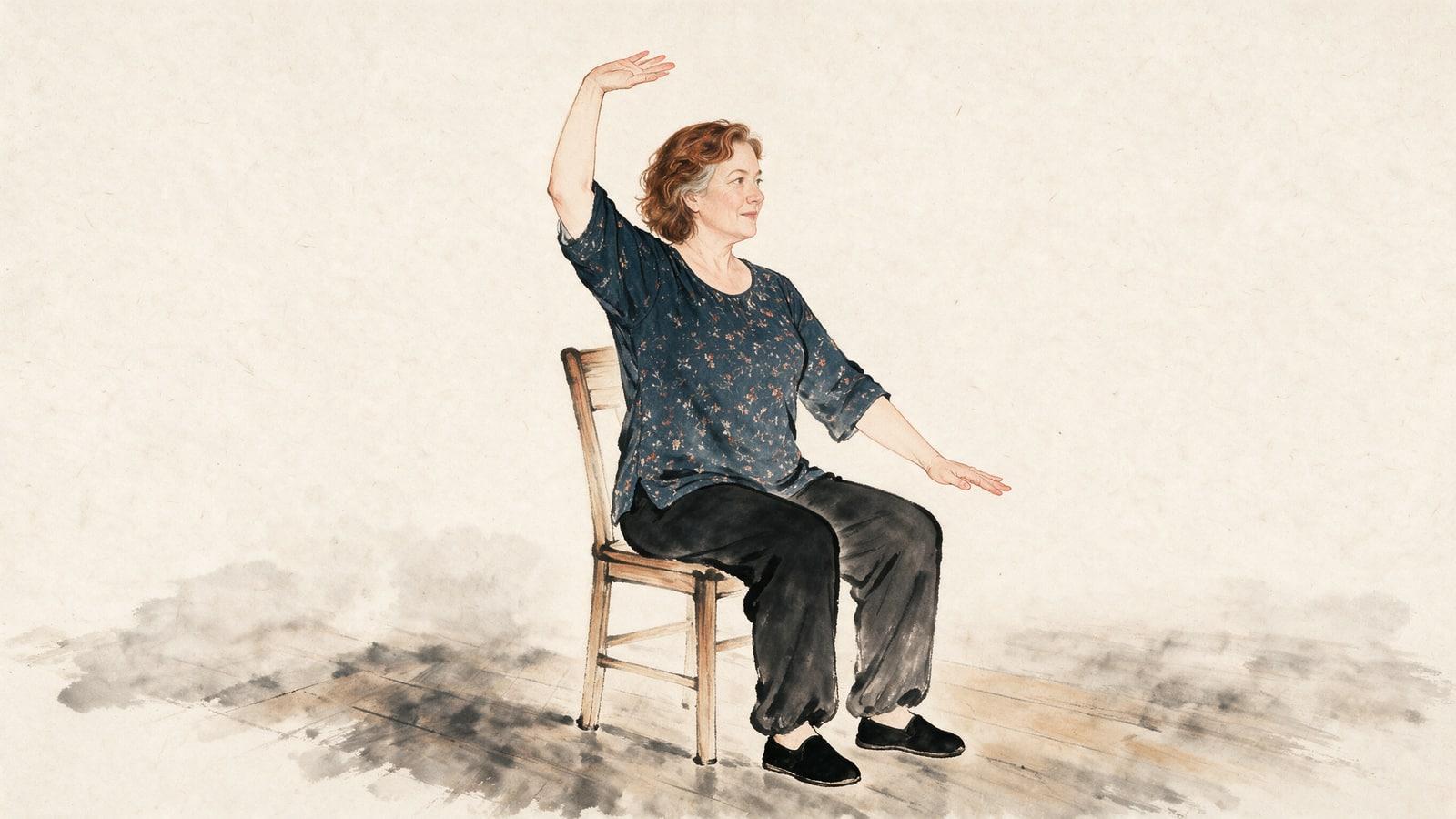
🪑 Gentle Adaptation: For days when arthritis flares up in your hands or knees, keep your fingers softly relaxed instead of stretching them wide, and feel free to keep a sturdy chair right beside you for light fingertip support during single-leg balance moments.
✨ Key Reflections to Carry With You
- Motion is lotion for stiff joints: Gentle, unhurried circles lubricate knees, hips, and shoulders without wear and tear.
- Balance is a trainable skill: At any age, slow weight-shifting wakes up the balance pathways between your feet and brain.
- No floor work required: Every movement in our Tucson classes is practiced standing or seated—never getting down on the floor.
Old Pueblo Tai Chi — Traditional Yang & Sun Style Classes
Culture Connects Studio • 3000 E. 22nd Street, Tucson, AZ 85713 • https://oldpueblotaichi.com
Questions about classes? Contact Dan Kimball at dan@oldpueblotaichi.com