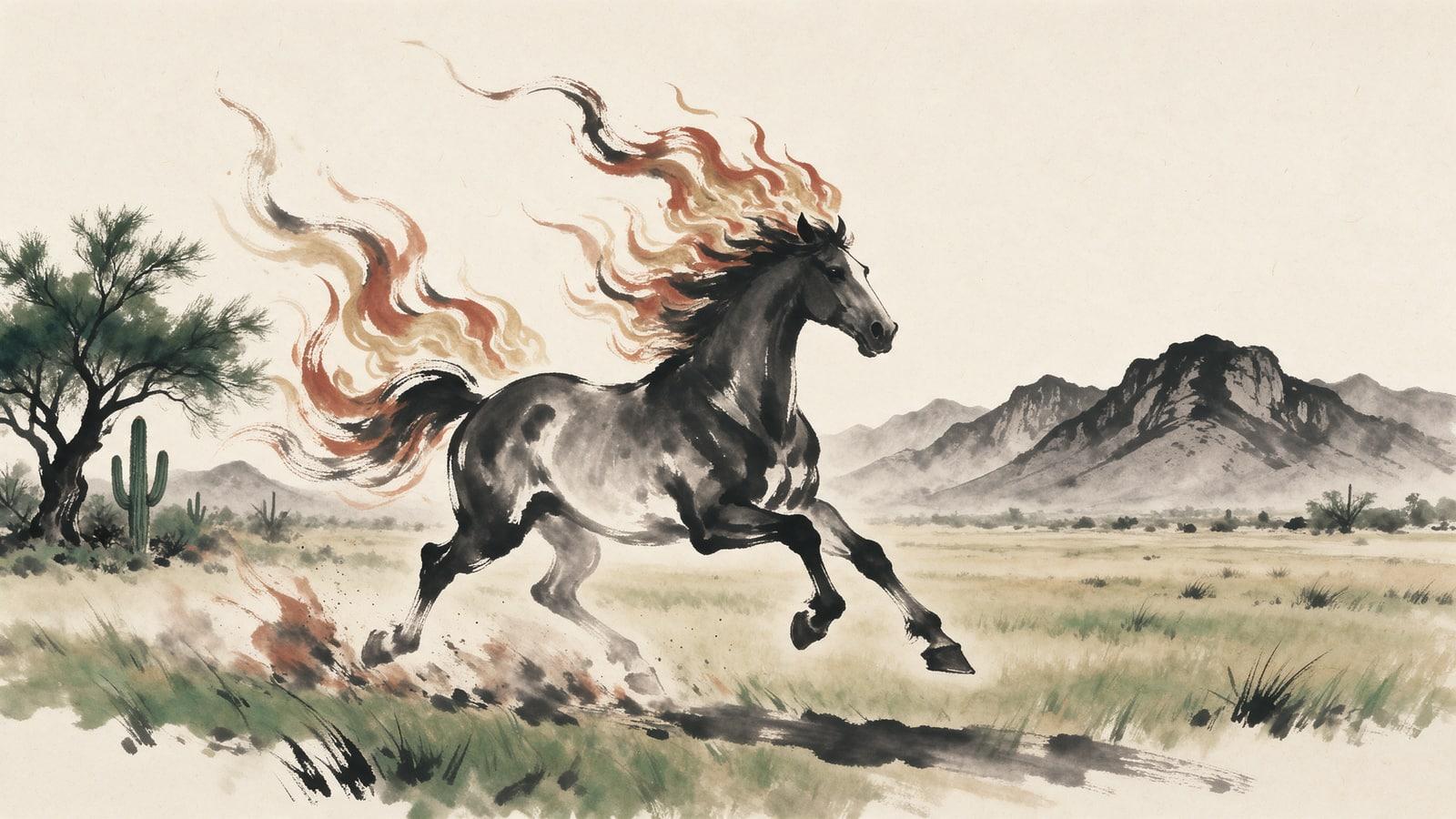

Right after the quiet opening breath of the Yang 24-Posture Tai Chi routine comes the very first stepping movement of the form: Part the Wild Horse’s Mane. Repeated three times as you glide across the floor, its sweeping arm motion feels like smoothing a horse’s flowing mane in a fresh morning breeze.
This posture combines two of our most important foundation skills: “Holding the Ball” with your hands and stepping into a steady Bow Stance with your feet. Once you feel comfortable with these two habits, the rest of Tai Chi feels like an old friend.
☯️ Gathering Into a Sphere Before Opening Wide
In traditional Yang Style Tai Chi, known in Chinese as Part the Wild Horse’s Mane (Yema Fenzong 野馬分鬃), every step alternates between two simple phases. First you gather your hands together as if cradling a beach ball. Then you turn your waist as your two hands separate smoothly in opposite directions.
“The entire body should always move as one connected unit.”
— Ramel Rones & David Silver, Sunset Tai Chi
🌿 How It Feels in Movement: Three Simple Steps to Practice
1. “Hold the Ball” With Soft Shoulders
Shift your weight onto your back leg and cradle an imaginary beach ball to one side. Your top palm rests at chest height facing down, and your bottom palm rests at belly height facing up. Keep both elbows relaxed and softly rounded.
2. Step Out on “Railroad Tracks” Instead of a Tightrope
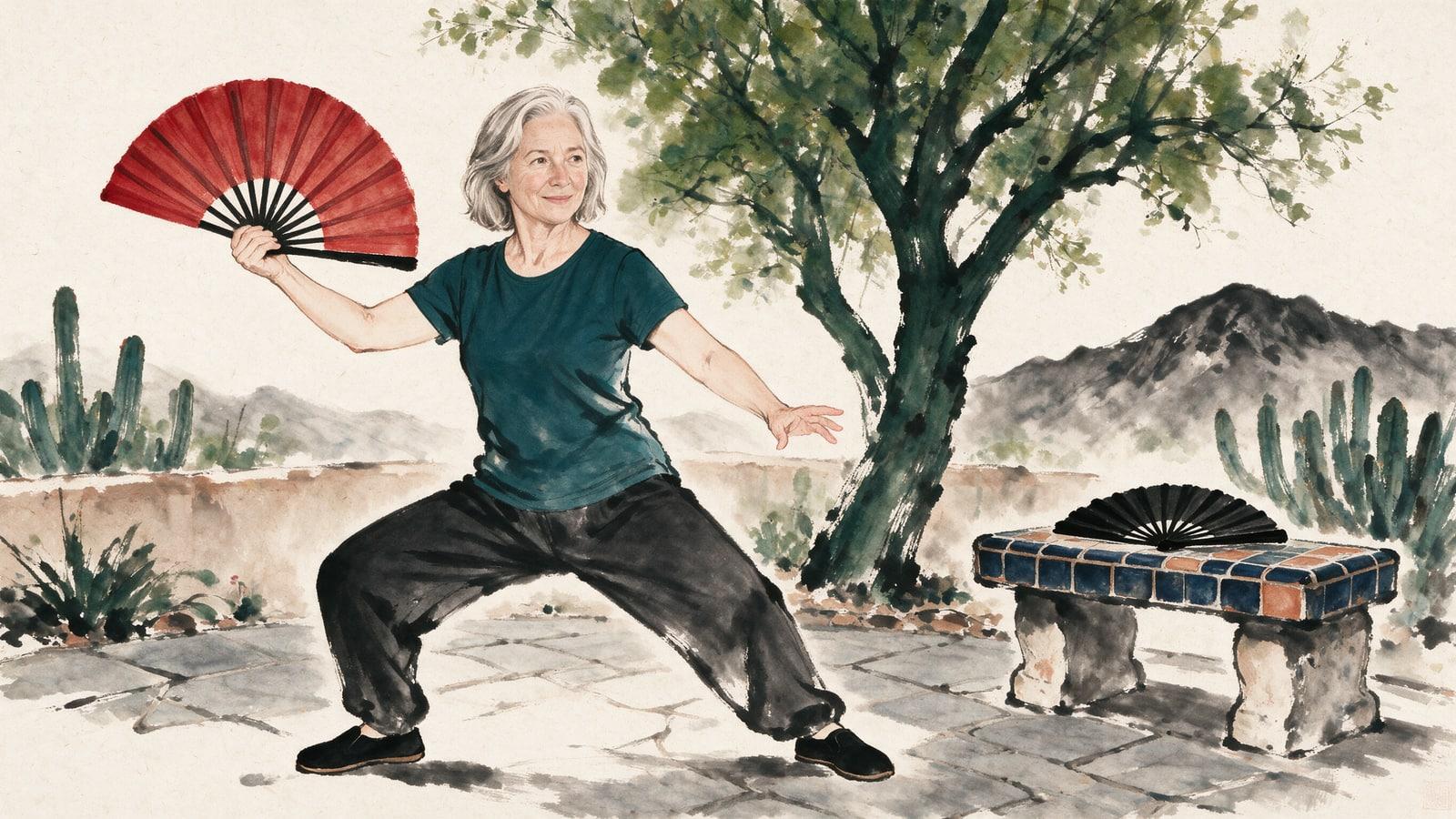
Touch your front heel down on a comfortable shoulder-width track. If your front foot lands directly in front of your back heel like a tightrope, you will feel tippy from side to side. Keeping hip-width space between your heels gives you a rock-solid Bow Stance, with 70 percent of your weight forward and 30 percent back.
3. Turn Your Waist to Part the Hands
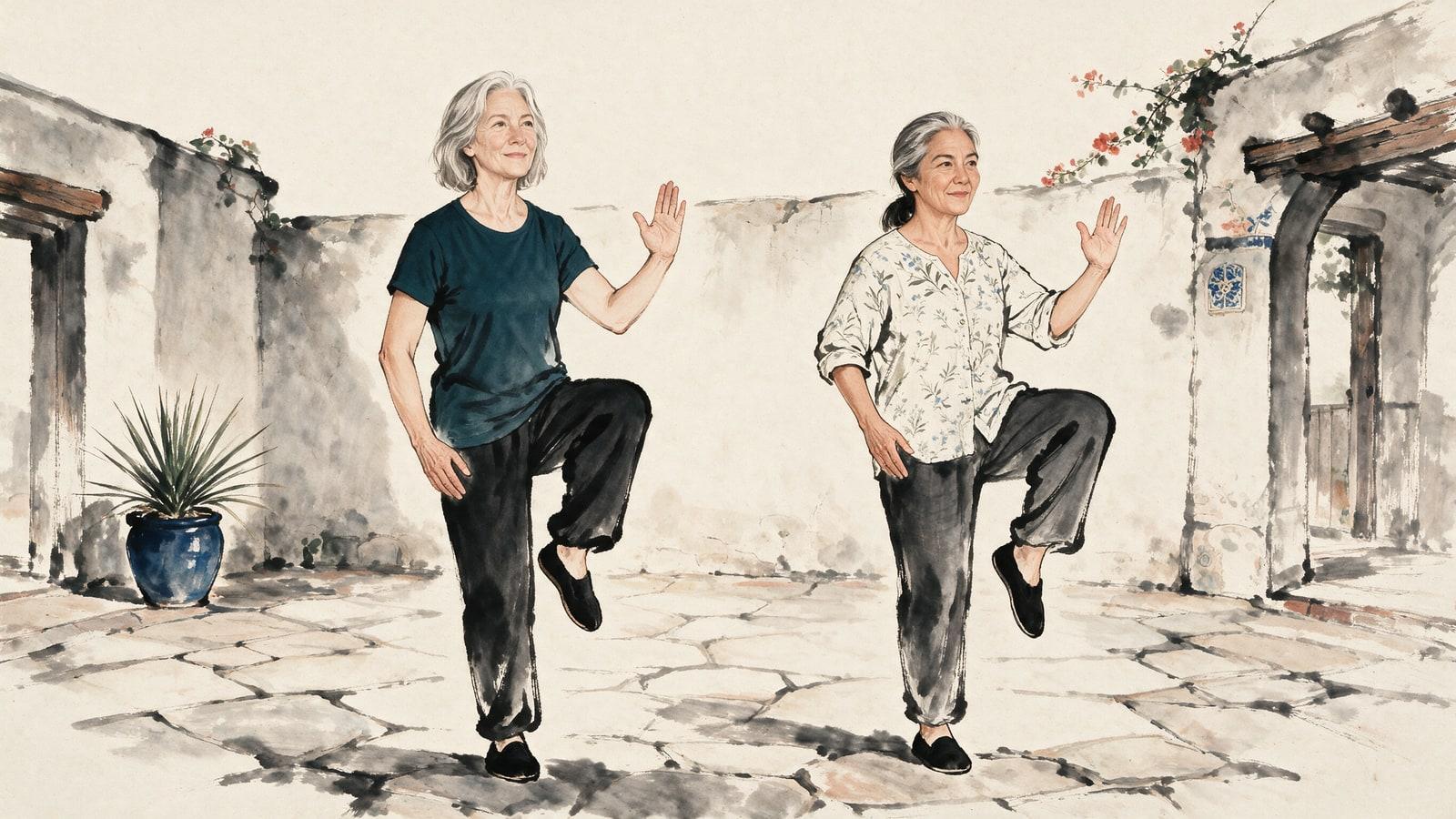
As your weight pours smoothly onto your front leg and your waist turns forward, let your two hands glide past each other. As shown in our courtyard illustration, your front forearm and palm float diagonally upward to shoulder height while your rear hand settles calmly beside your hip for balance.
🥋 Studio Cue: Imagine gently sliding your front forearm under a soft curtain to lift it open while your back hand rests beside your hip. Let the smooth turn of your waist move both hands at the exact same time.
🪑 Gentle Adaptation: Practicing “Holding the Ball” and parting the hands while seated in a chair is one of the best upper-back and shoulder warm-ups in Tai Chi. Inhale as you gather the ball to one side, and exhale as you turn your waist and open your arms diagonally.
✨ Key Reflections to Carry With You
- Keep hip-width space between your feet: Stepping on railroad tracks keeps your 70/30 Bow Stance steady and balanced.
- Both hands move together: Your lower hand settling beside your hip is just as important for balance as your upper hand rising forward.
- Keep your front knee comfortable: Make sure your front knee stays right over your ankle and never pushes out past your toes.
Old Pueblo Tai Chi — Traditional Yang & Sun Style Classes
Culture Connects Studio • 3000 E. 22nd Street, Tucson, AZ 85713 • https://oldpueblotaichi.com
Questions about classes? Contact Dan Kimball at dan@oldpueblotaichi.com