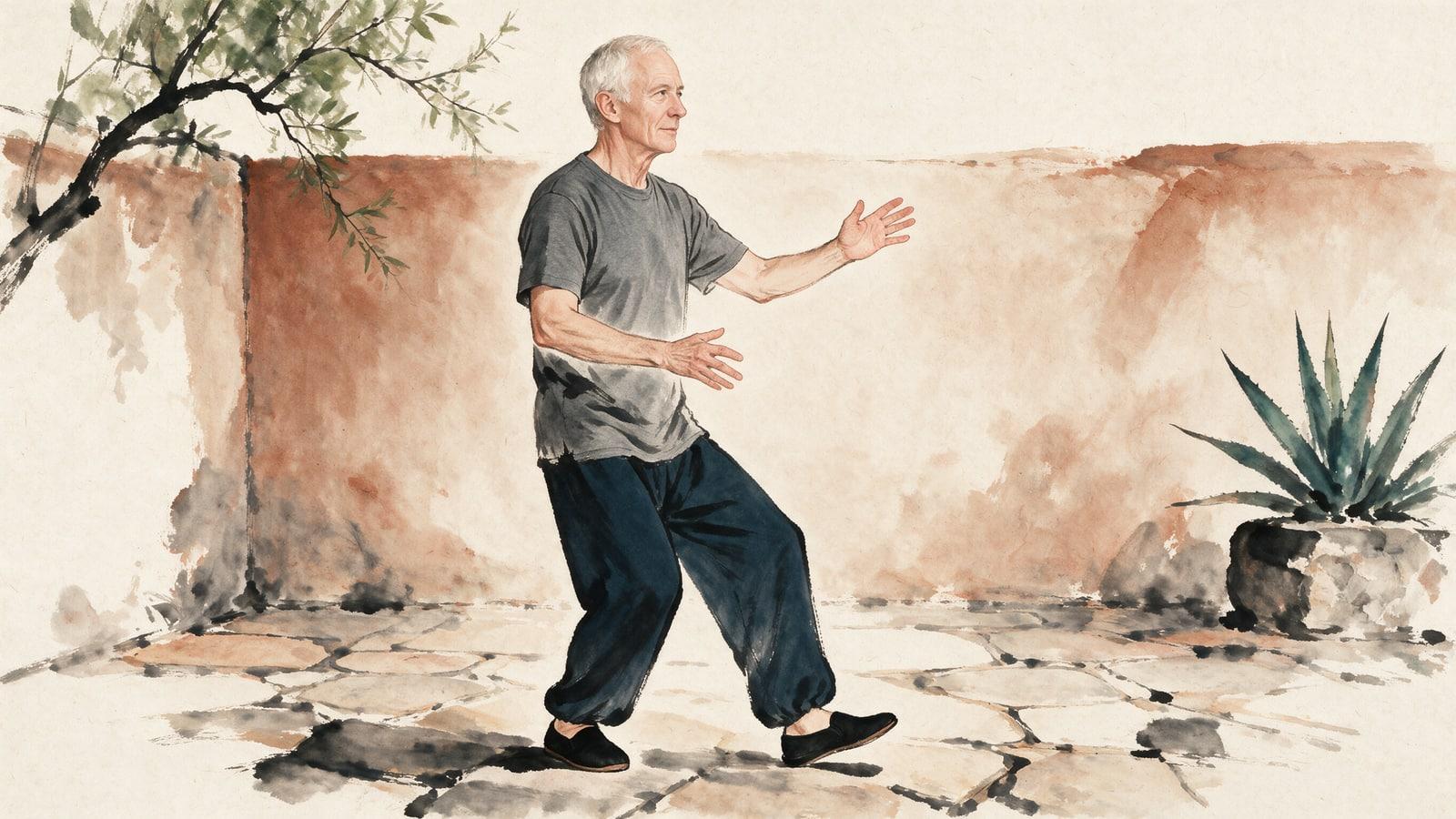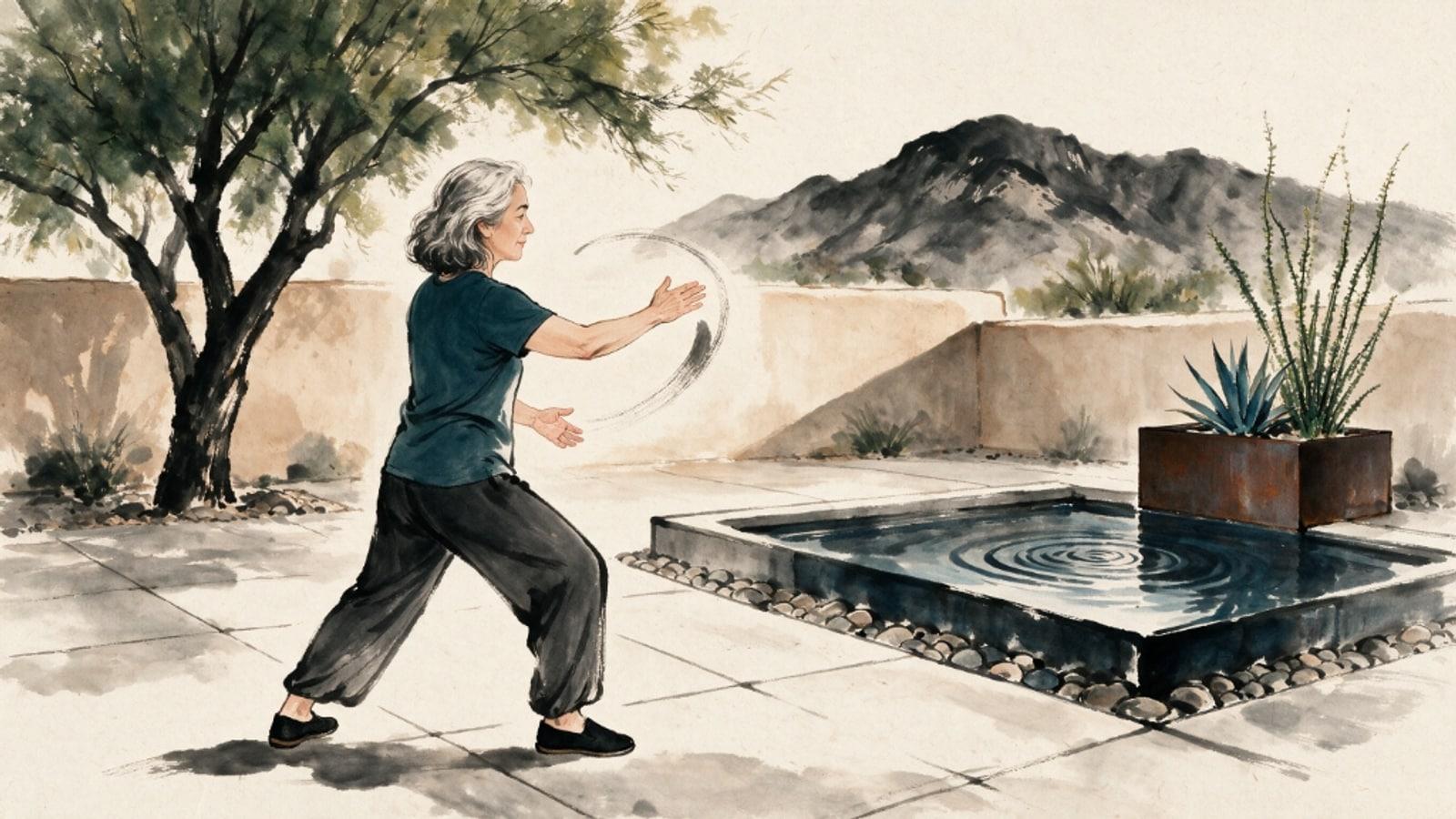

When we feel off-balance or rushed in daily life, our posture shows it right away: our breath moves up into our chest, our shoulders tense, and we lean slightly ahead of our feet. Even a small bump or uneven sidewalk can make us feel top-heavy.
In Tai Chi, steady balance comes from pairing two simple sensations at the exact same time: growing gently tall through the crown of your head while letting your weight settle comfortably into your feet.
☯️ Central Equilibrium and Sinking Your Weight
Classical Tai Chi teachers describe this balanced posture with two partner ideas: Central Equilibrium (Zhongding 中定)—keeping a calm, upright center line through your head, spine, and hips—and Sinking Your Weight—allowing gravity to settle your weight smoothly into the floor.
“The spine should be like a necklace of pearls hanging from heaven.”
— Tai Chi Classics (quoted in Peter M. Wayne, PhD, An Introduction to Tai Chi)
Think of a buoy floating in the ocean or a classic weighted roly-poly toy: because its weight rests low in its base while its top stays light, it naturally returns to upright balance no matter which way the waves rock it.
🌿 How It Feels in Movement: Three Posture Checkpoints You Can Feel Immediately
1. The Golden Thread at the Crown of Your Head
Instead of stiffening your neck like a soldier at attention, imagine a light silk thread gently lifting the very top of your head toward the ceiling. Your chin tucks back just a fraction of an inch, and the back of your neck feels long and relaxed.
2. Stacking Nose, Navel, and Hips
Whether you are shifting forward, sitting back, or turning to the corner, keep your head and torso stacked upright over your hips—rather than leaning your shoulders out past your toes to reach for a movement.
3. Melting Your Weight Into Your Soles
Each time you exhale, imagine warm water settling down from your shoulders through your ribs, hips, and legs right into the centers of both feet. When your lower body feels pleasantly grounded, your arms can float effortlessly.
🥋 Studio Cue: Next time you step forward in class, imagine balancing a paperback book flat on the top of your head. Notice how keeping that book level automatically stops you from lunging or bobbing up and down.
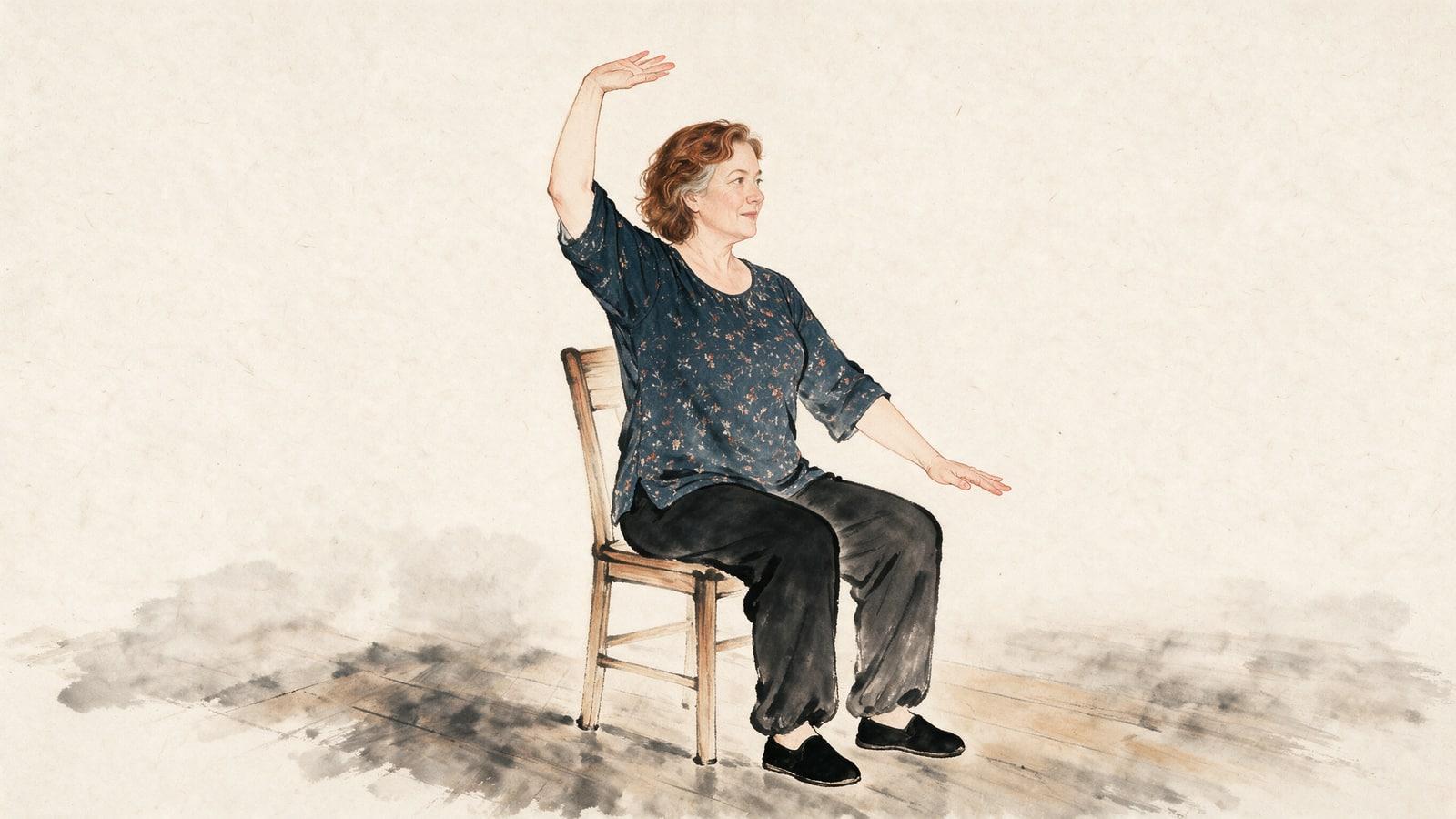
🪑 Gentle Adaptation: While seated in a chair, feel your two sitting bones resting evenly on the seat like roots while the crown of your head floats gently toward the ceiling. You can practice turning your waist left and right around that tall, peaceful center line without any strain.
✨ Key Reflections to Carry With You
- Reach in two directions at once: Let your head float lightly upward while your shoulders and hips settle downward.
- Move your center, don’t lean: Keep your nose aligned over your navel so you never tip past your base of support.
- Let gravity help you: You don’t have to push into the floor—simply letting go of upper-body tension makes your feet feel rooted.
Old Pueblo Tai Chi — Traditional Yang & Sun Style Classes
Culture Connects Studio • 3000 E. 22nd Street, Tucson, AZ 85713 • https://oldpueblotaichi.com
Questions about classes? Contact Dan Kimball at dan@oldpueblotaichi.com