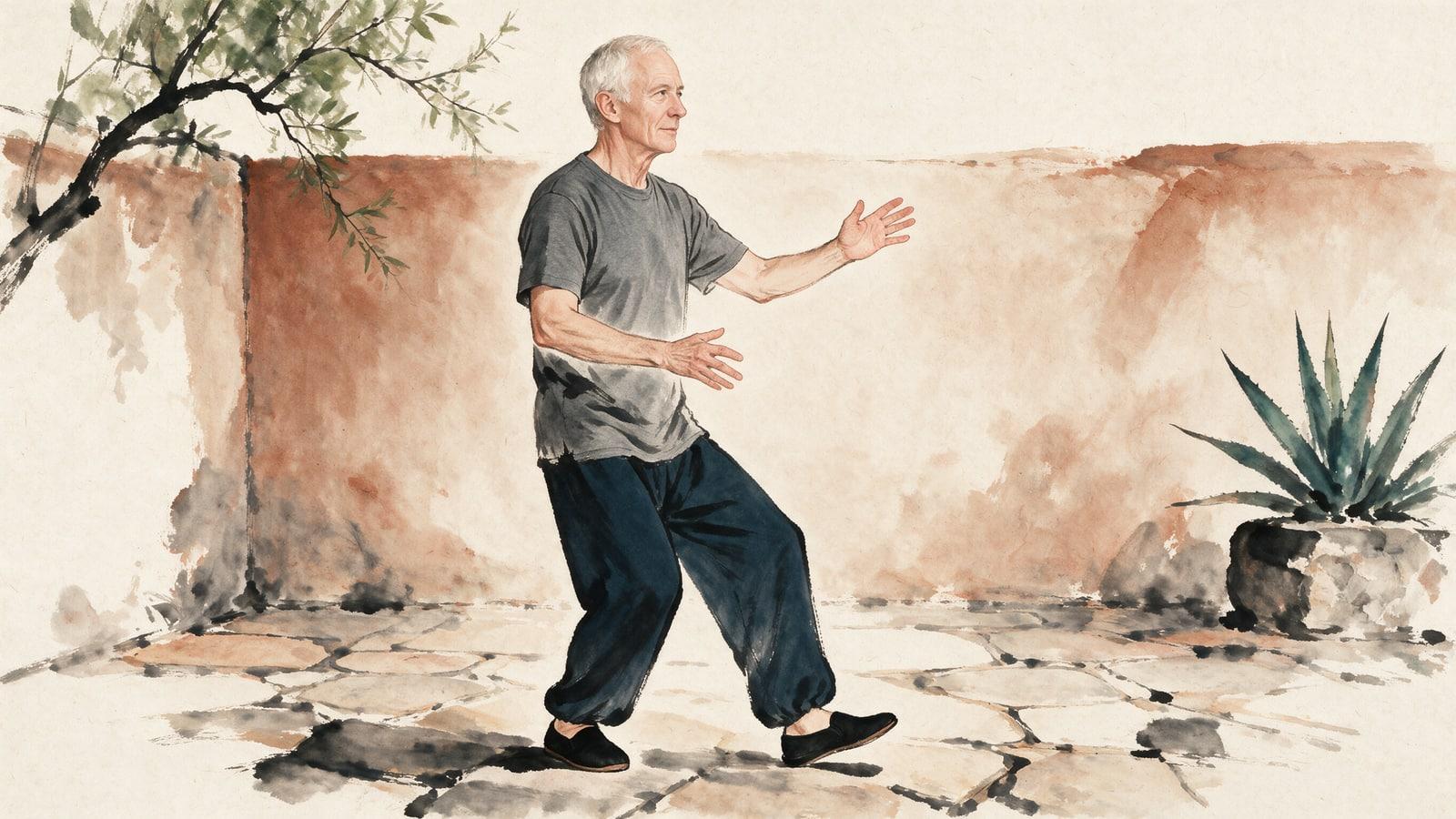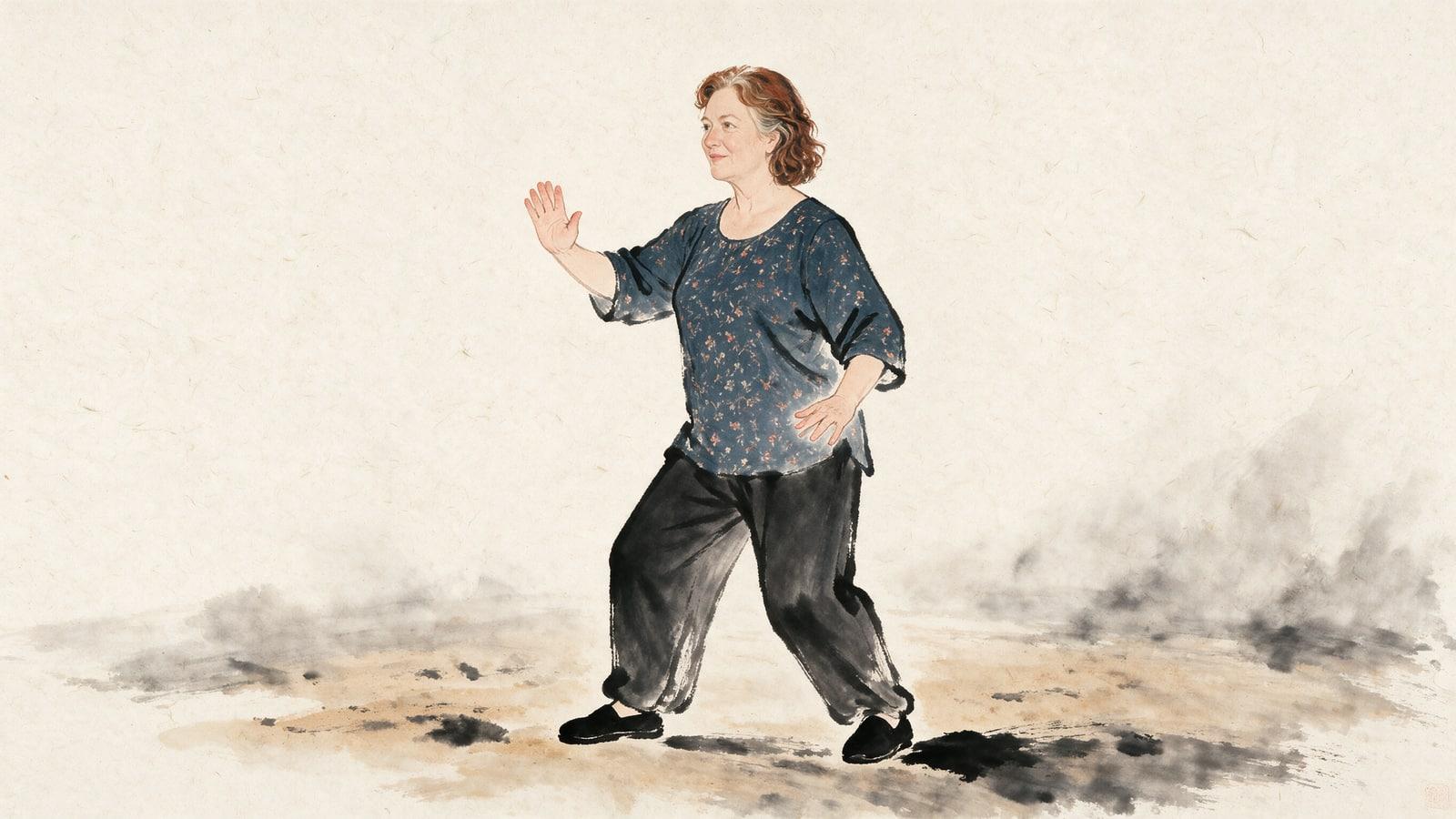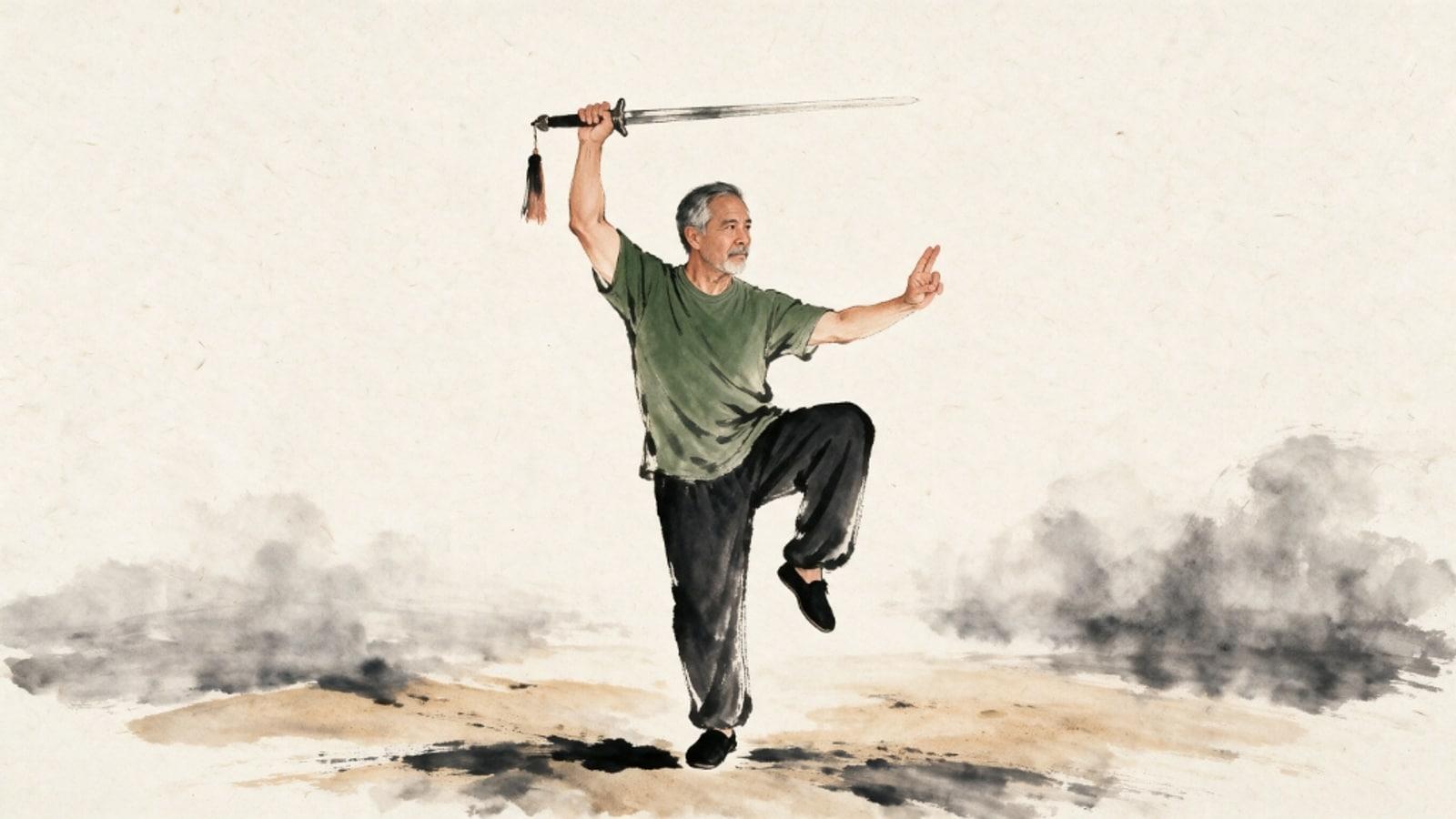
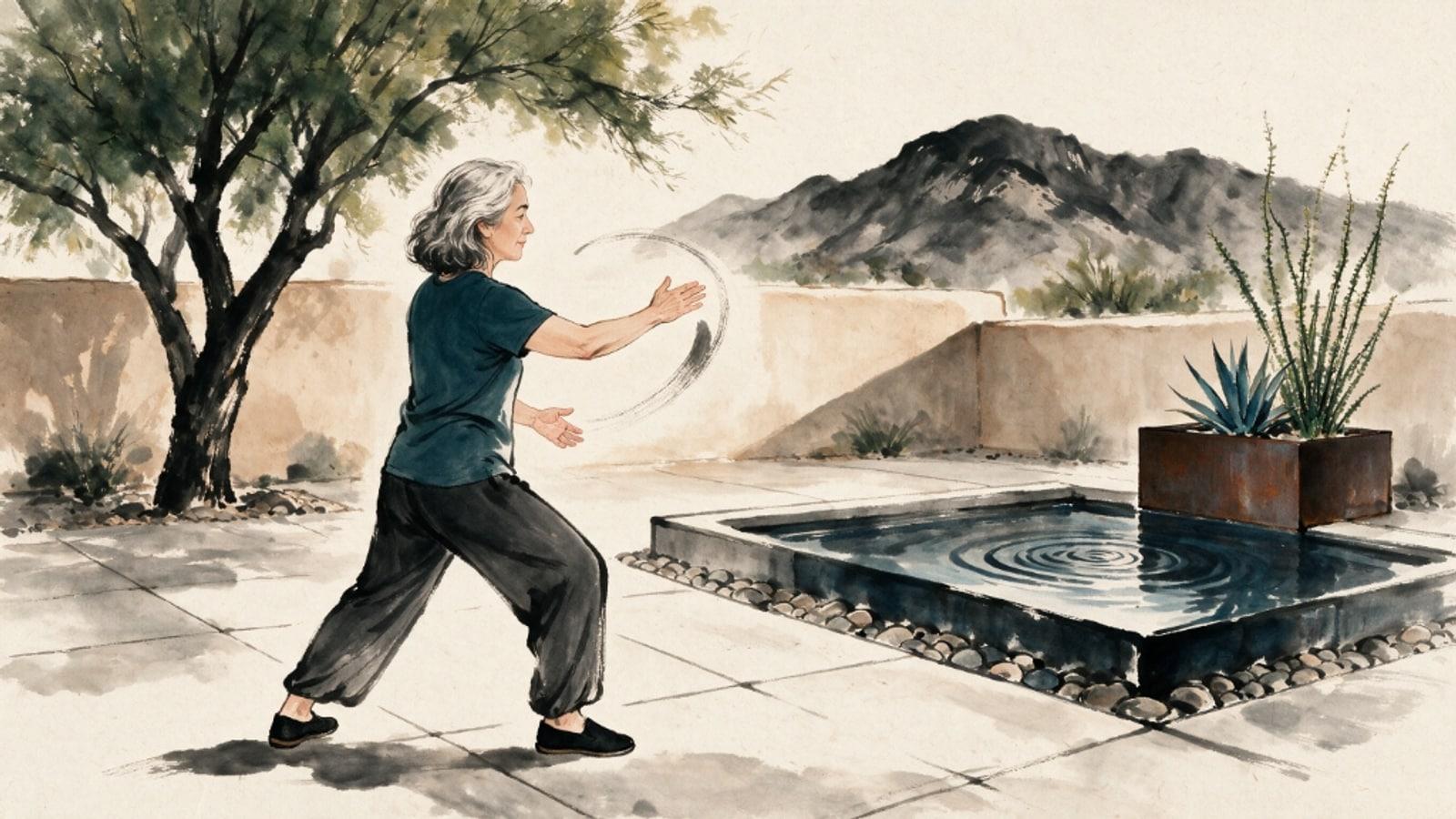
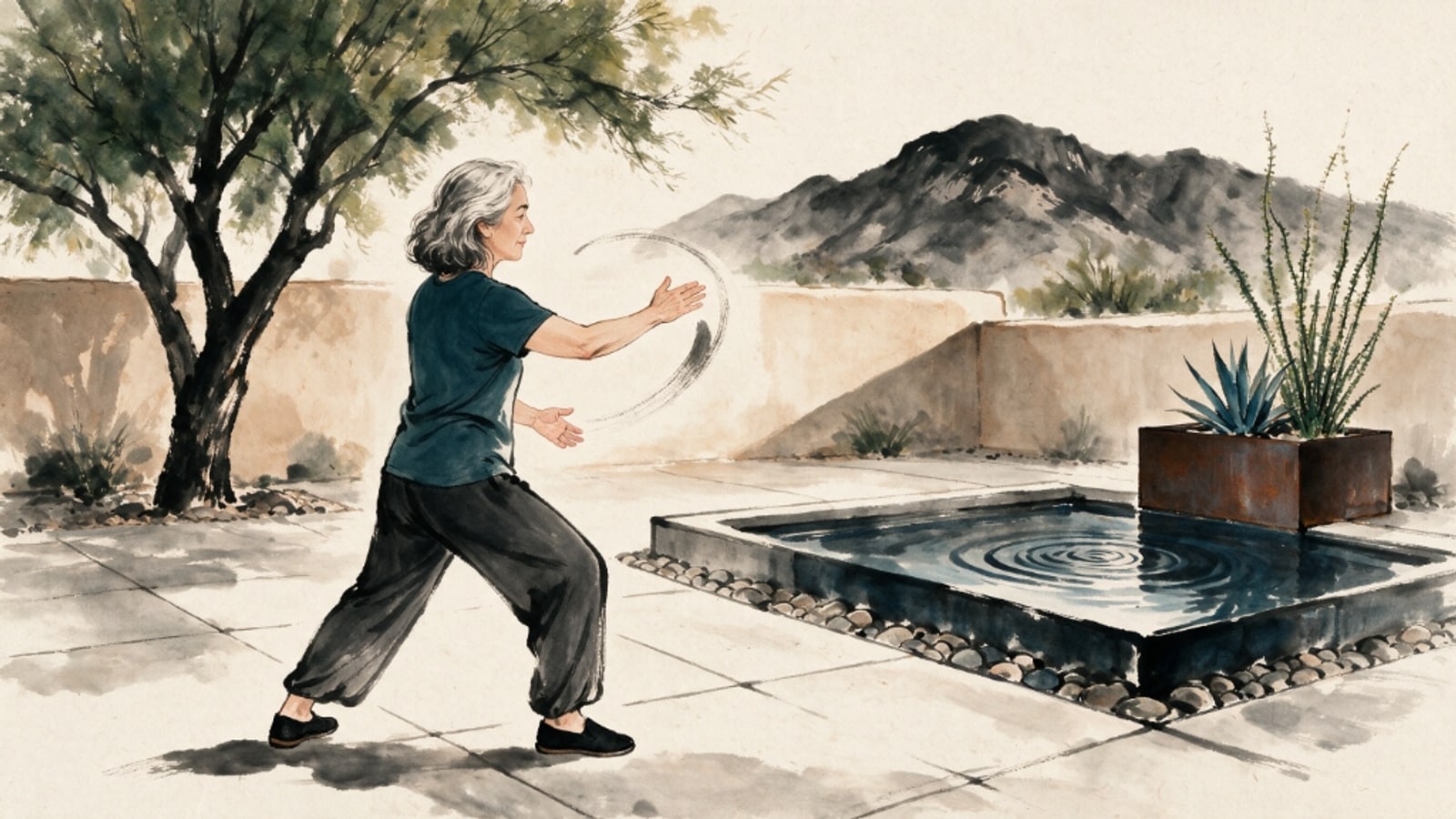
Imagine drawing a single, luminous strand of silk from a warm cocoon. If you pull too abruptly, the delicate filament snaps. If you hesitate or jerk your hand, the thread tangles upon itself. Only when your attention is steady—neither rushing nor stalling—does the silk unwind in one unbroken, glistening line.
In the classical tradition of Tai Chi, this living image is known as Silk Reeling (Chan Si Jin, 纏絲勁). Far more than a martial technique or a choreographed exercise, silk reeling is a way of inhabiting your own body. It invites every movement to begin deep in the earth beneath your feet, spiral gently through the hips and waist, and float effortlessly out to the fingertips without stiffness or strain.
For those of us cultivating steadier balance, joint comfort, and ease in daily life here in Tucson, the silk thread offers an extraordinary teacher. Most moments of unsteadiness do not happen while we are standing still; they happen in the transitions—turning to answer a voice behind us, stepping around a curb, or reaching into a high cabinet. Silk reeling teaches the body to weave those separate moments back into a single, supported whole.
☯️ Why the Old Masters Chose Silk as Their Metaphor
To appreciate why the old masters chose silk as their highest metaphor for movement, it helps to look inside the three Chinese characters of 纏絲勁 (Chan Si Jin):
- Chan — Winding & Coiling: A continuous, three-dimensional spiral that wraps around a quiet center rather than moving in stiff, isolated straight lines.
- Si — Raw Silk: A fiber that feels impossibly soft and yielding in the hand, yet possesses remarkable tensile strength when woven together.
- Jin — Refined Whole-Body Skill: Unlike stiff muscular effort or bracing, silk-reeling skill is whole-body responsiveness born of alignment, patience, and quiet listening.
The Legend of Empress Leizu and the Unbroken Thread
Ancient Chinese lore traces the discovery of silk to Empress Leizu, wife of the Yellow Emperor, nearly five thousand years ago. According to tradition, as she rested beneath the shade of a mulberry grove with a cup of steaming tea, a wild silkworm cocoon dropped into her cup. Rather than prying the cocoon apart by force, Leizu watched quietly as the gentle warmth of the water softened its outer gum. When she touched it lightly, a single fine filament loosened and began to unwind in a continuous strand across her garden.
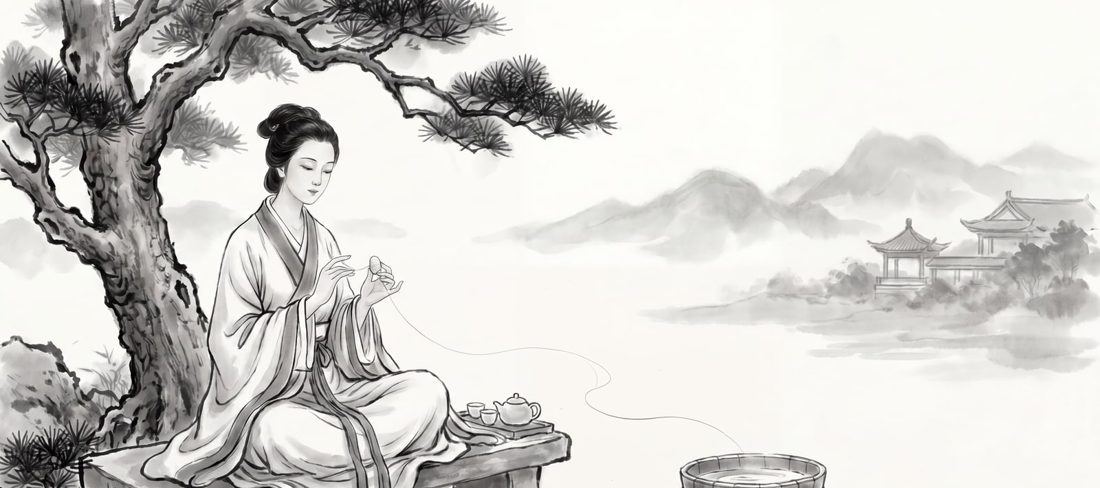
Whether read as cultural memory or Daoist parable, Leizu’s story holds the first secret of internal practice: connection cannot be forced; it must be softened and drawn forth with care. Before silk can be reeled, the cocoon must be warmed and loosened—just as the body in Tai Chi must first cultivate relaxed release—softening unnecessary muscular holding so the joints can move freely.
From the Classics to Our Studio Floor
In the classical Treatise on Taijiquan, the old masters described how this unbroken thread of movement travels through the body:
“Its root is in the feet, issued through the legs, controlled by the waist, and expressed through the fingers.”
— Wang Zongyue, Taijiquan Lun (The Tai Chi Classics)
In simple terms, your hands never move on their own. While silk-reeling exercises are famously celebrated as the foundational engine of Chen village Tai Chi, the classical Yang family lineage preserved through masters such as Yang Chengfu, Tung Ying-chieh, and Tung Huling guarded this same spiraling heart. As Tung Ying-chieh wrote in 1948, the turning of the whole body is directed by the waist and carried smoothly through relaxed arms into soft, supple hands—hands that never stiffen or strain, yet remain alive with quiet resilience.
Modern anatomy sees an echo of this ancient wisdom in the body’s connective tissue—the continuous, three-dimensional web of connective tissue that wraps every muscle, bone, and joint from head to toe. And in the contemporary wellness work of Dr. Paul Lam, the silk maker’s craft is distilled into three words we return to in every class: moving slowly, smoothly, and continuously.
🌿 How It Feels in Movement
1. Slowness: Giving the Body Time to Listen
In everyday life, momentum often masks habits of tension. We rise from a chair in a hurry, pivot quickly on a planted foot, or reach forward with a raised shoulder before our base of support is ready. Speed conceals where our alignment is leaking until the moment our balance feels precarious.
Moving slowly—as though drawing silk through warm water—gives the mind time to enter the body. You begin to feel the three balance points on the sole of each foot: the heel, the base of the big toe, and the outer edge of the little toe, centering right behind the ball of each foot. Instead of falling from one step into the next, you feel weight pour gradually like sand through an hourglass, always knowing which leg is substantial (full) and which is insubstantial (empty).
2. The Hip Crease: The Gentle Hinge That Protects the Knees
One of the most common questions students ask is how Tai Chi can involve so much turning without straining the knees or lower back. The answer lies in softening the hip crease—the natural fold at the front of the hip where the thigh meets the pelvis.
When the hips are stiff, turning the upper body often twists the knee joint—which is built primarily as a hinge—or forces the lower back to tighten. Silk reeling teaches the hip crease to soften and fold gently inward as you shift weight. Because the hip socket is a deep ball-and-socket joint built for smooth turning, letting every turn begin in the hips and waist allows your knees to point peacefully in the exact direction of your toes, protecting both your knees and your lower back from twisting strain.
3. Soft Chest, Open Back, and the Weaver’s Breath
For a spiral to travel smoothly from the waist into the hands, the upper body cannot be locked like a board. Classical teachers describe this as allowing the breastbone to soften gently inward so the upper back naturally widens and rounds. Rather than lifting the shoulders to move the arms, the shoulder blades settle downward, and the wrists and fingers remain unbraced.
Through it all, the breath acts as the quiet weaver of the movement. Whenever the breath is held, the internal thread tightens. By allowing your breathing to remain quiet, unhurried, and settled in the lower abdomen, inhalation naturally accompanies gentle gathering and coiling, while exhalation supports settling and outward expression.
Watch: Wellness-Based Silk Reeling in Practice
✨ Key Reflections to Carry With You
- Softness Is Structure, Not Weakness: A single filament of silk yields effortlessly to the touch, yet woven together it carries enduring resilience. Releasing excess muscular bracing allows your skeleton and connective tissue to support you without rigidity.
- Steer from the Center, Spare the Knees: Let every turn and weight shift begin in the deep fold of the hips and waist while your knees stay aligned with your toes—transforming everyday turns, steps, and reaches into calm, supported transitions.
- Keep the Thread Unbroken: Whether practicing in our studio at Culture Connects or stepping across your kitchen floor at home, return to the quiet rhythm of the cocoon: move slowly, smoothly, and continuously, carried by an easy, unheld breath.
Old Pueblo Tai Chi — Traditional Yang & Sun Style Classes
Culture Connects Studio • 3000 E. 22nd Street, Tucson, AZ 85713 • https://oldpueblotaichi.com
Questions about classes? Contact Dan Kimball at dan@oldpueblotaichi.com