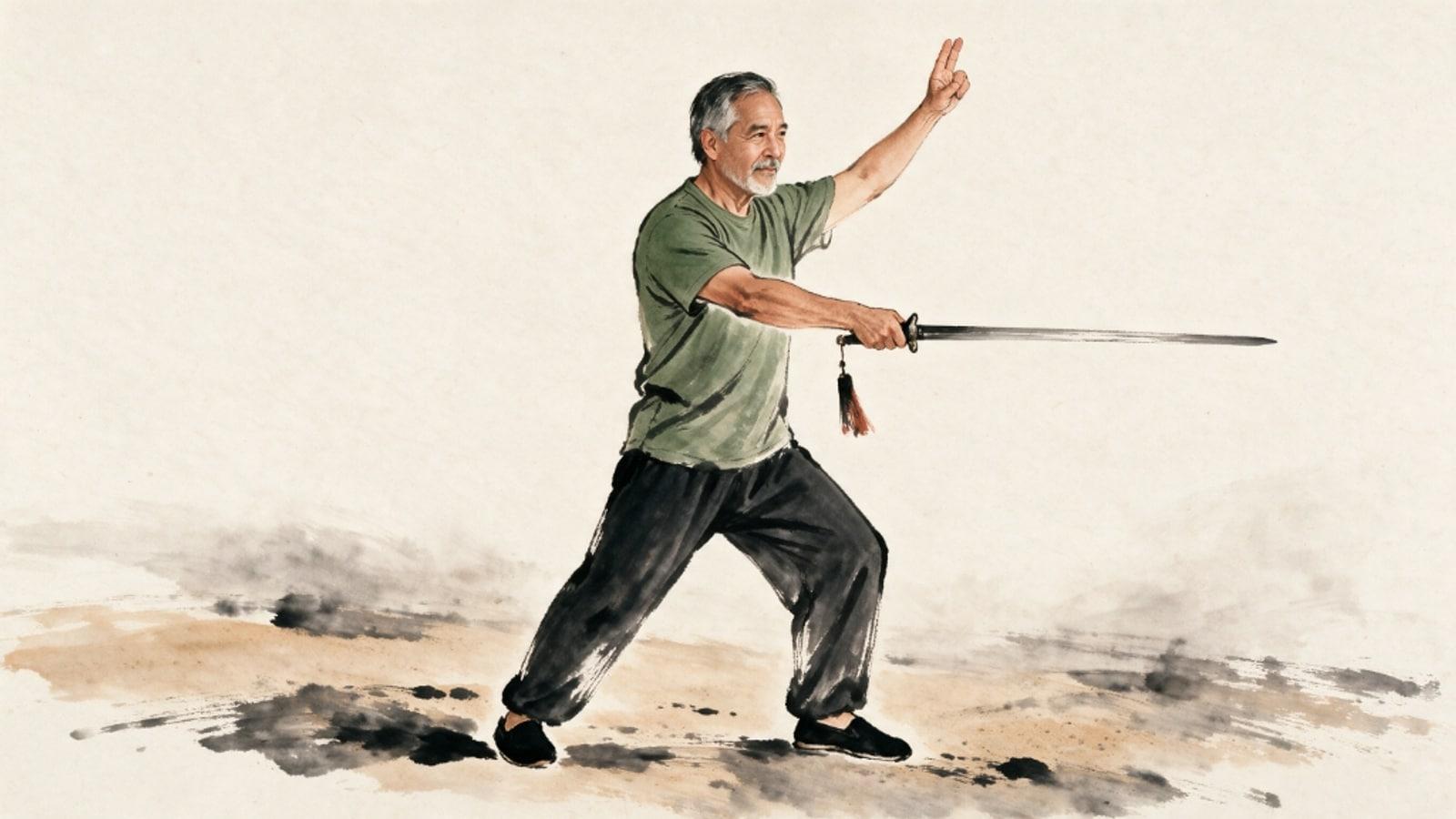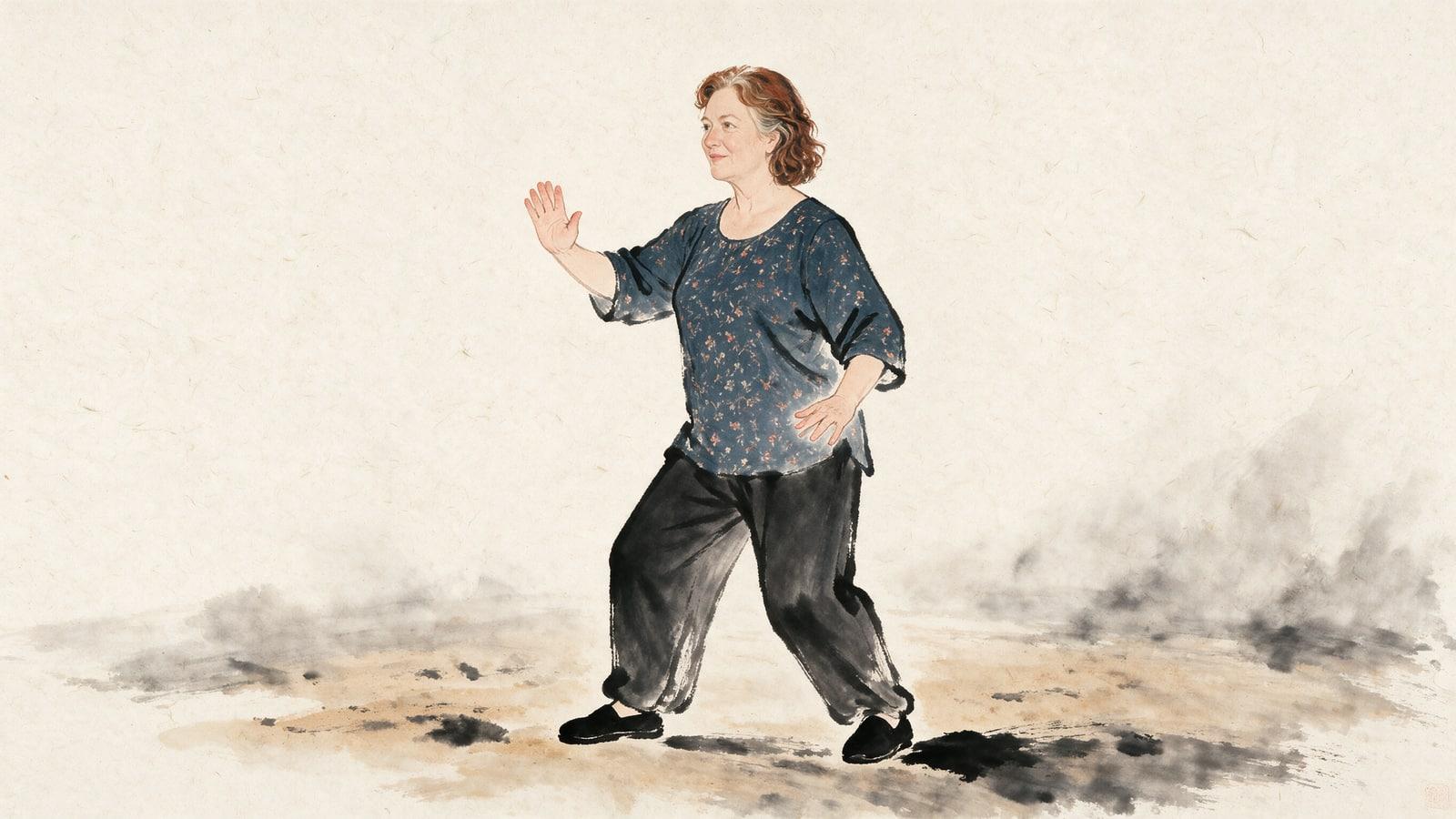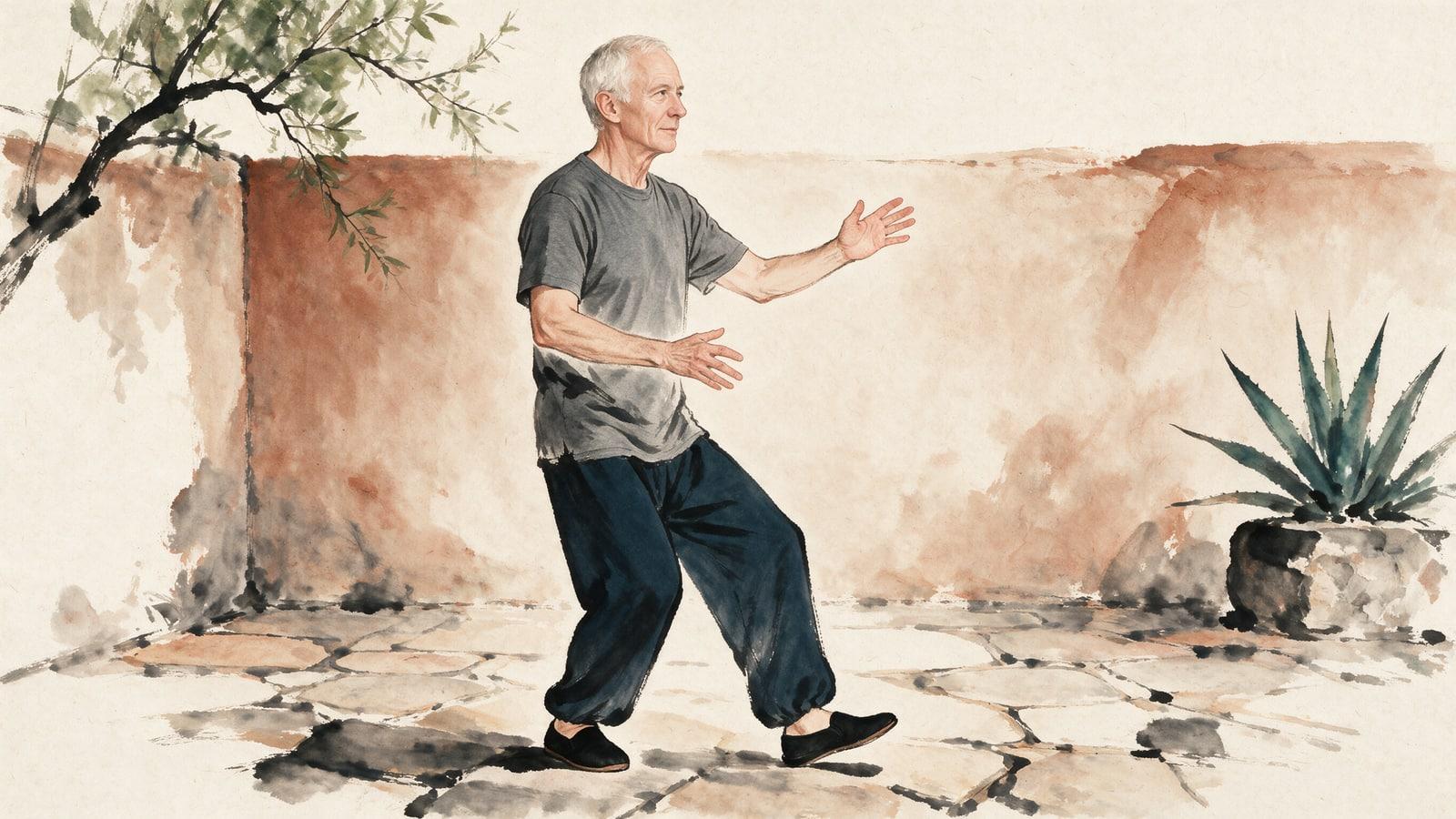

Spend ten minutes in any Tai Chi class and you will probably hear the teacher offer a warm reminder: “Let your shoulders soften—find a little more Song.” In English, we usually translate Song simply as “relaxation.”
The trouble is that in everyday English, “relax” usually makes us think of collapsing onto the couch at the end of a long day. If you try to relax like that while standing up, your chest slumps, your lower back rounds, and your knees feel heavy. In Tai Chi, Song means something much more refreshing: letting go of unnecessary stiffness while your posture stays tall, spacious, and awake.
☯️ A Hidden Clue Inside the Chinese Character
A wonderful way to picture Song comes directly from the traditional Chinese character 鬆. It is made of two simple pictures side by side: on the left is the symbol for long, flowing hair, and on the right is the symbol for a tall pine tree.
“Inner relaxation is the secret of all health and well-being. As you practice the postures and movements, your inner work is to relax.”
— Master Kam Chuen Lam, The Qigong Workbook for Anxiety
Think of a tall ponderosa pine up on Mount Lemmon. Its trunk rises clear and upright toward the sky, yet its needles and branches sway freely whenever the wind blows. That is the exact feeling we look for in Tai Chi: a tall, supported spine paired with soft, unhurried shoulders, elbows, hips, and knees.
🌿 How It Feels in Movement: Three Places to Let Tension Melt Away
Instead of trying to relax your whole body at once, it is much easier to check three common “tension traps” one by one as you move:
1. Heavy Shoulders and Elbows
When we concentrate on learning a new movement, our shoulders love to creep up toward our ears. Each time you exhale, imagine your shoulder blades sliding gently down your back and your elbows feeling pleasantly heavy, as if resting on warm water.
2. Unclenched Hips and Lower Back
Standing with locked knees or a tight lower back makes balance feel rigid and tiring. Unlocking your knees just an inch and letting your tailbone settle straight toward your heels takes the pressure off your lower back and lets your legs support you naturally.
3. Soft Hands and Jaw
Tight hands and a clenched jaw quietly send tension all the way up into the neck. In Tai Chi, we keep a gentle curve in the fingers—as if holding a small bird without squeezing it—and let a soft hint of a smile relax the face.
🥋 Studio Cue: Try the “One-Inch Exhale.” Stand comfortably with your feet shoulder-width apart. Inhale and feel the crown of your head float tall; exhale and let your shoulders, ribs, and hips settle downward by just half an inch while your head stays tall.
🪑 Gentle Adaptation: Practicing this while seated is one of the best breaks you can take during the day. Sit near the front of a sturdy chair with your feet flat on the floor, let your hands rest warmly on your thighs, and take three slow breaths—softening your jaw, shoulders, and belly on every exhale.
✨ Key Reflections to Carry With You
- Relaxed does not mean slumped: Keep your spine tall like a pine tree while letting extra muscle tension melt downward.
- Check your shoulders and jaw first: Softening your face, hands, and shoulders immediately calms the rest of your body.
- Less effort brings steadier balance: When your joints aren’t locked or braced, your body can adjust smoothly to every step.
Old Pueblo Tai Chi — Traditional Yang & Sun Style Classes
Culture Connects Studio • 3000 E. 22nd Street, Tucson, AZ 85713 • https://oldpueblotaichi.com
Questions about classes? Contact Dan Kimball at dan@oldpueblotaichi.com