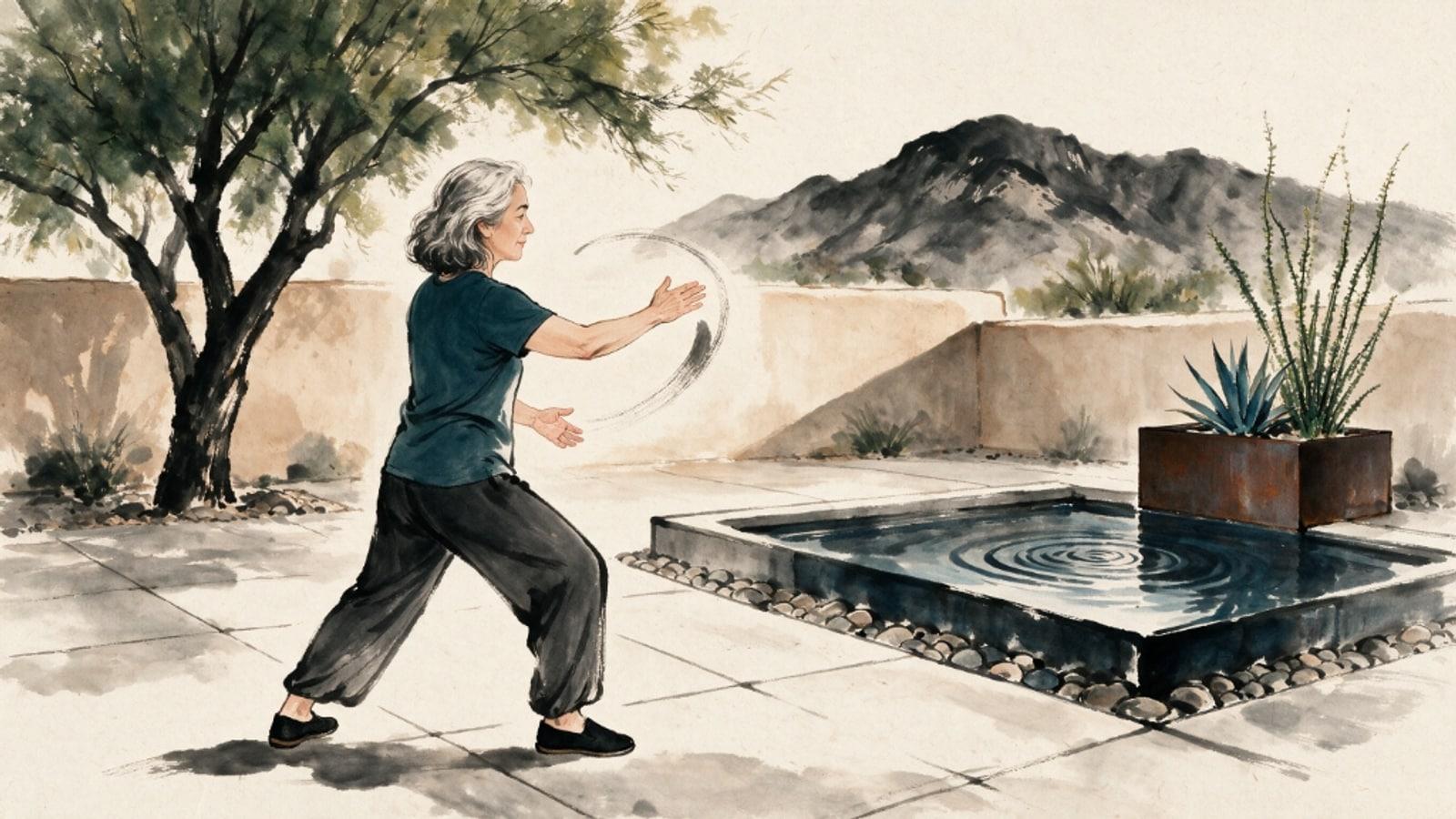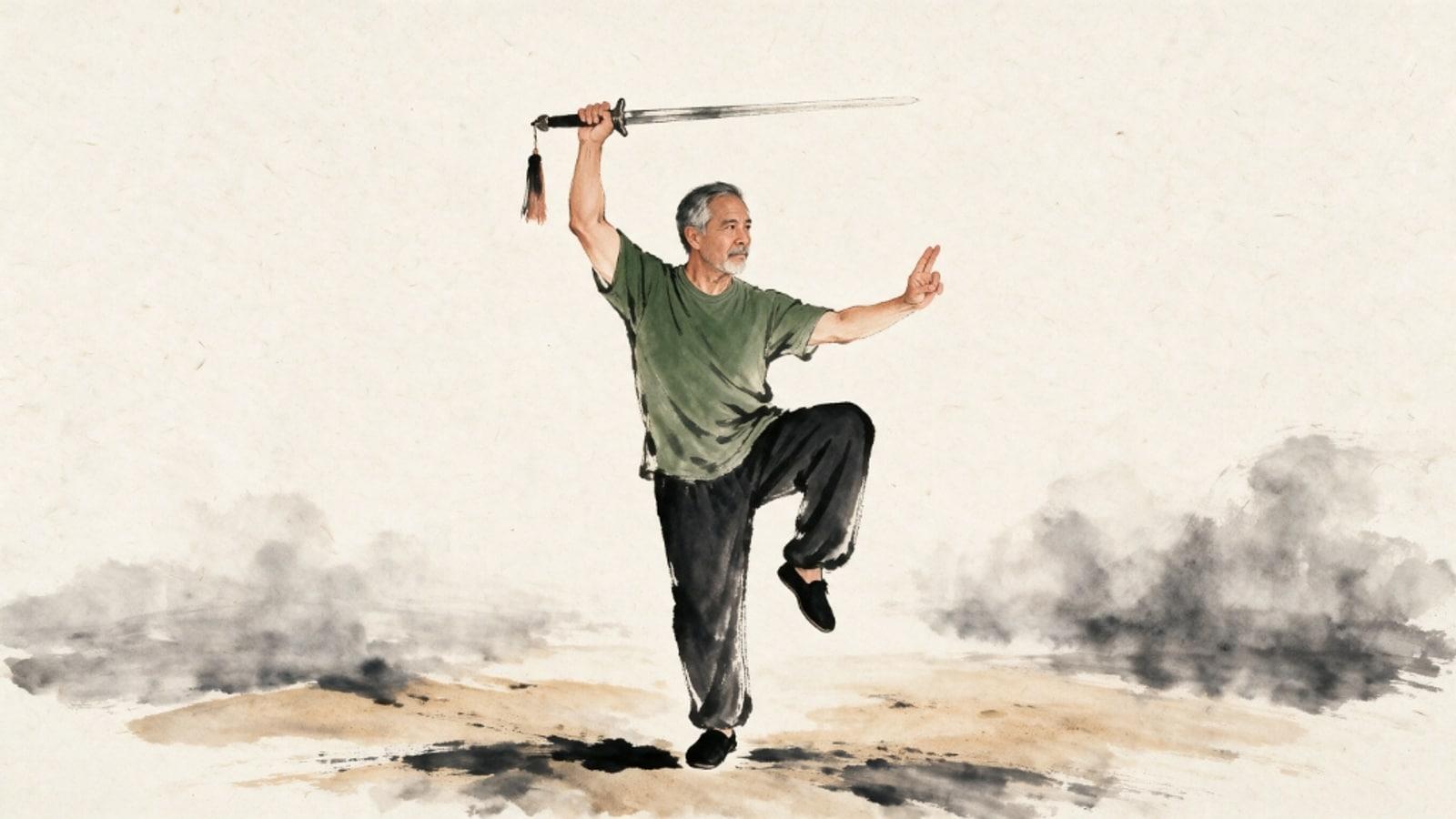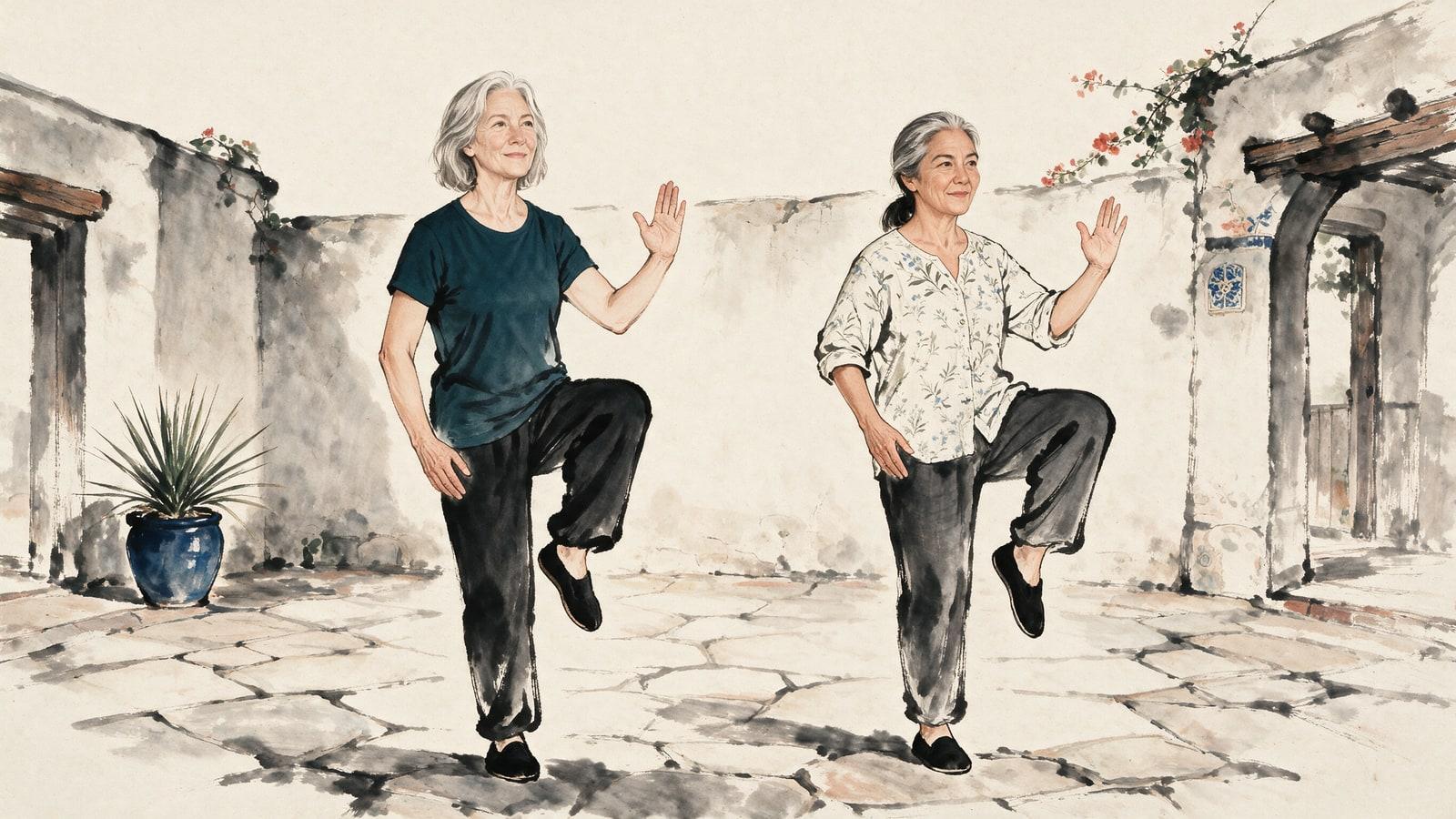

Think about how we normally walk when we are in a hurry. We lean our upper body forward and essentially “fall” onto our front foot just in time to catch ourselves. On a flat hallway floor, that works fine—until our toe catches the edge of a rug, a gravel curb, or an uneven desert trail, and our weight is already committed forward.
Tai Chi retrains the way you step from the ground up. By teaching you to know clearly which leg is holding your weight and which leg is light and free to move, every step becomes a calm choice rather than a mini-fall.
☯️ Pouring Weight Like Sand in an Hourglass
In the classical writings of Tai Chi, teachers placed one skill above almost all others: telling the difference between “Empty” and “Full” (Xu Shi 虛實).
“Life is a process. It is always in motion. It is always changing. It is always shifting, in the same way that our weight moves from foot to foot.”
— Master Kam Chuen Lam, The Qigong Workbook for Anxiety
When one leg carries your weight, we call it Full (Substantial). When the other leg has little or no weight on it, we call it Empty (Insubstantial). If you get stuck with your weight split 50/50 while trying to turn or step—something teachers playfully call being “double-weighted”—your feet feel glued to the floor. When you pour your weight cleanly onto one supporting leg first, your other foot is completely free to step smoothly in any direction.
🌿 How It Feels in Movement: Three Steps to “Cat-Like” Walking
1. Settle Before You Step
Before you lift a foot in Tai Chi, pour 100 percent of your weight into your standing leg. Feel your standing foot widen against the floor so you are completely balanced before your moving foot ever leaves the ground.
2. Touch Down With an “Empty” Foot First
Reach your moving foot out and touch your heel (or toes) lightly to the floor without putting your weight on it yet—just like testing the temperature of bathwater or checking thin ice. Because your weight is still safely on your back leg, you can pick that front foot right back up at any moment.
3. Pour Your Weight Smoothly Across
Once your front foot feels flat and secure on the floor, slowly pour your weight forward from your back leg into your front leg—like water flowing from one cup into another—keeping your head and shoulders level the whole way.
🥋 Studio Cue: Try the “Pause and Tap” check: step your left heel forward onto the floor, pause before shifting your weight, and tap that front heel lightly twice. If you can tap it without your shoulders tipping forward, you have mastered empty-and-full stepping!
🪑 Gentle Adaptation: While sitting near the front edge of a chair, lean your torso just an inch to the right so your right sitting bone feels heavy and your left foot feels light enough to lift a half-inch off the floor. Then glide smoothly to the left side.
✨ Key Reflections to Carry With You
- Place the foot first, shift weight second: Separating foot placement from weight transfer is the single best habit for preventing trips and stumbles.
- Avoid getting stuck 50/50: Always know which leg is your anchor leg before you turn or step.
- Practice in everyday life: You can practice slow, attentive weight shifting while waiting for the kettle to boil or standing in line at the grocery store.
Old Pueblo Tai Chi — Traditional Yang & Sun Style Classes
Culture Connects Studio • 3000 E. 22nd Street, Tucson, AZ 85713 • https://oldpueblotaichi.com
Questions about classes? Contact Dan Kimball at dan@oldpueblotaichi.com