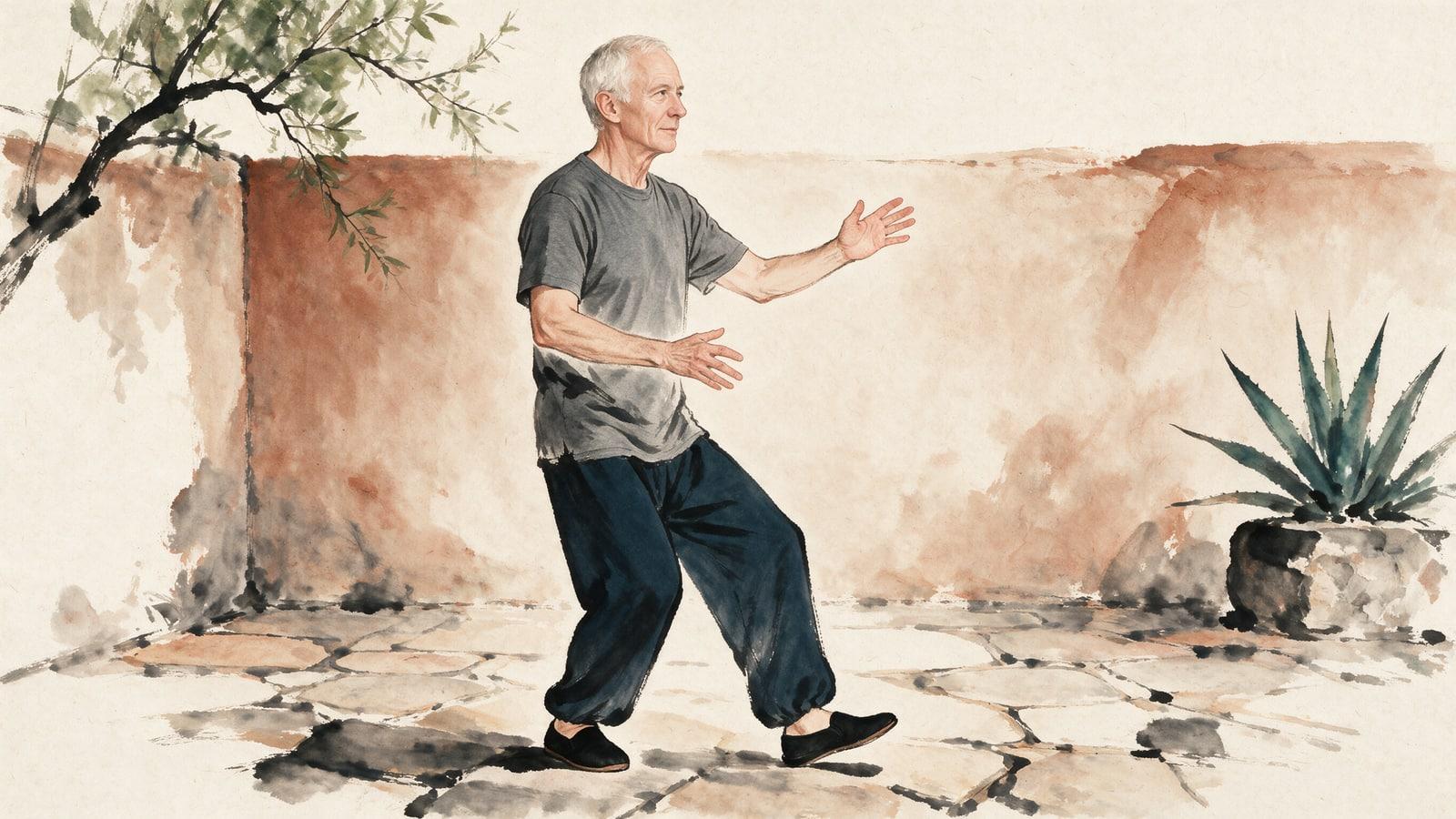

One of the most common worries people bring to their first Tai Chi class is knee comfort. Many visitors tell us, “I’d love to improve my balance, but my knees don’t like deep bends or lunges.”
Almost every time someone feels pressure in the front of their knees while stepping, the cause is simple: they are bending forward at the knees first instead of folding softly at the hips. Learning how to fold at the front crease of your hip is the #1 secret to happy, pain-free knees.
☯️ Why Your Hips Are Built Like a Door Hinge
Look at how your lower body is put together. Your knee is a simple hinge designed to swing smoothly back and forth—not to twist sideways while carrying all your body weight. Your hip joint, on the other hand, is a deep, sturdy ball-and-socket joint surrounded by the strongest muscles in your body.
“When you relax, you should learn to relax deeply into your internal organs... The more you can bring your mind deep into the joint and relax it, the more Qi will circulate smoothly.”
— Dr. Yang, Jwing-Ming, Arthritis Relief
In traditional Tai Chi, the front crease where your thigh meets your pelvis is called the Kua (胯). Whenever we lower our stance or shift weight from one leg to the other, the movement starts by softening the hip crease—just like sitting back toward a tall stool—rather than pushing the kneecaps forward over the toes.
🌿 How It Feels in Movement: Three Easy Ways to Find and Use Your Hip Crease
1. The Two-Finger Hip Crease Finder
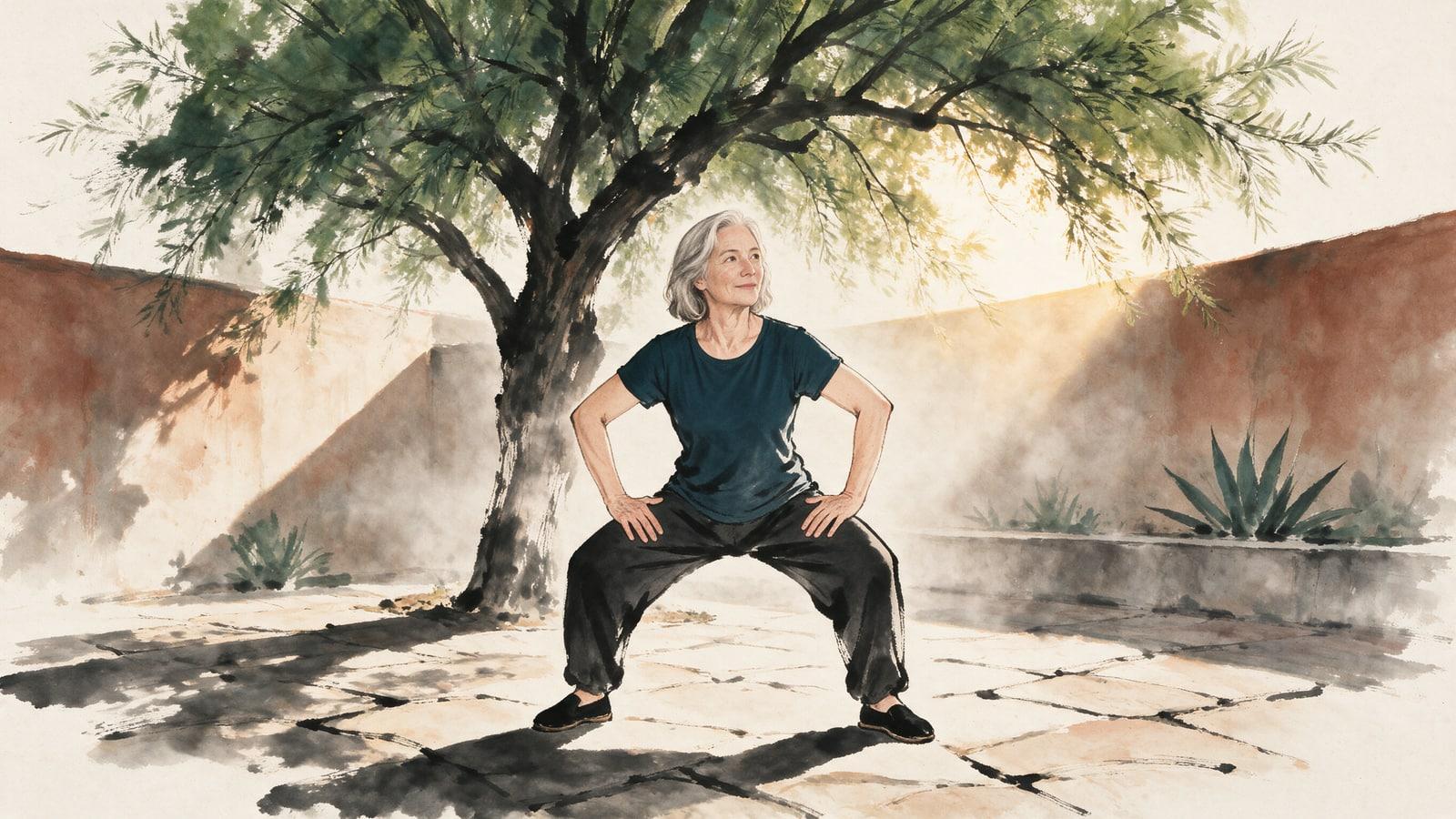
Stand with your feet shoulder-width apart and place the edges of both hands right into the crease where your thighs meet your lower belly (right where your pants crease when you sit down). Instead of bending your knees forward, let your hips fold gently backward onto your fingers by just an inch—as if perching on the edge of a high counter. Notice how the weight immediately settles into your heels and hips instead of your kneecaps.
2. Turning Like a Revolving Door, Not Twisting Your Knees
When we turn left or right in postures like Brush Knee or Wave Hands Like Clouds, we never twist a planted knee. Instead, we fold gently into one hip crease while the other hip opens, letting our kneecaps stay pointed in the exact same direction as our toes.
3. The “Can I See My Toes?” Knee Check
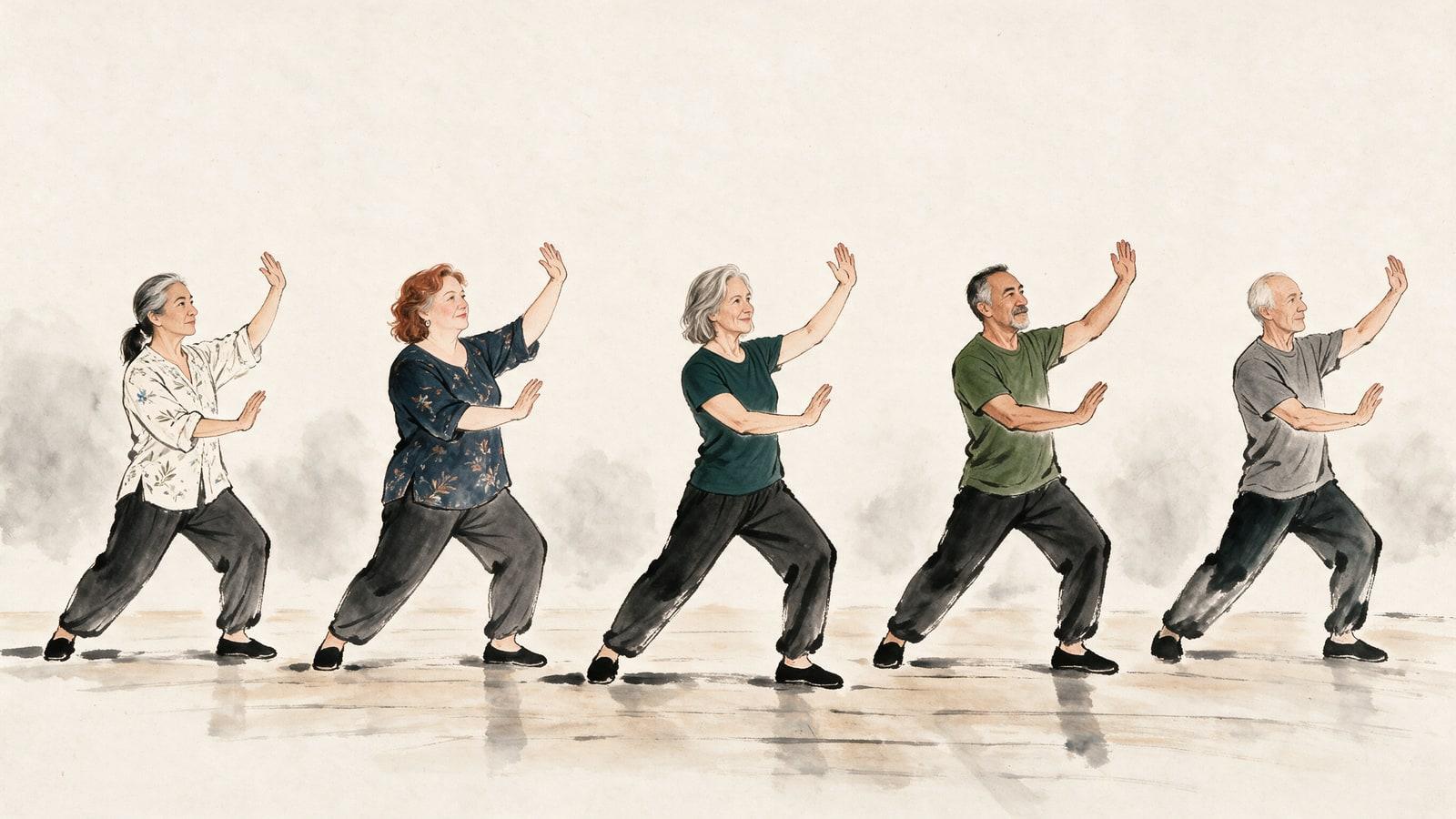
Whenever you step forward into a bow stance, glance down for a second: you should always be able to see the tips of your front toes past your kneecap. If your knee hides your toes, simply sit a hair further back into your hip crease.
🥋 Studio Cue: Imagine you are holding a bag of groceries in both arms and need to bump a car door shut with your hip. That small, backward fold at the hip crease is the exact feeling of a healthy Tai Chi stance.
🪑 Gentle Adaptation: You never have to bend low in Tai Chi. Standing just an inch lower than your normal everyday posture—with unlocked knees and a soft hip crease—gives you all the balance and circulation benefits with zero strain on sensitive joints.
✨ Key Reflections to Carry With You
- Fold at the hips first: Sitting slightly back into your hip crease lets your strong hip muscles support you instead of your kneecaps.
- Keep knees aligned with toes: Turn from your hips and waist so your knees never twist sideways.
- High stances are always welcome: Comfort and alignment matter far more than how low you bend.
Old Pueblo Tai Chi — Traditional Yang & Sun Style Classes
Culture Connects Studio • 3000 E. 22nd Street, Tucson, AZ 85713 • https://oldpueblotaichi.com
Questions about classes? Contact Dan Kimball at dan@oldpueblotaichi.com