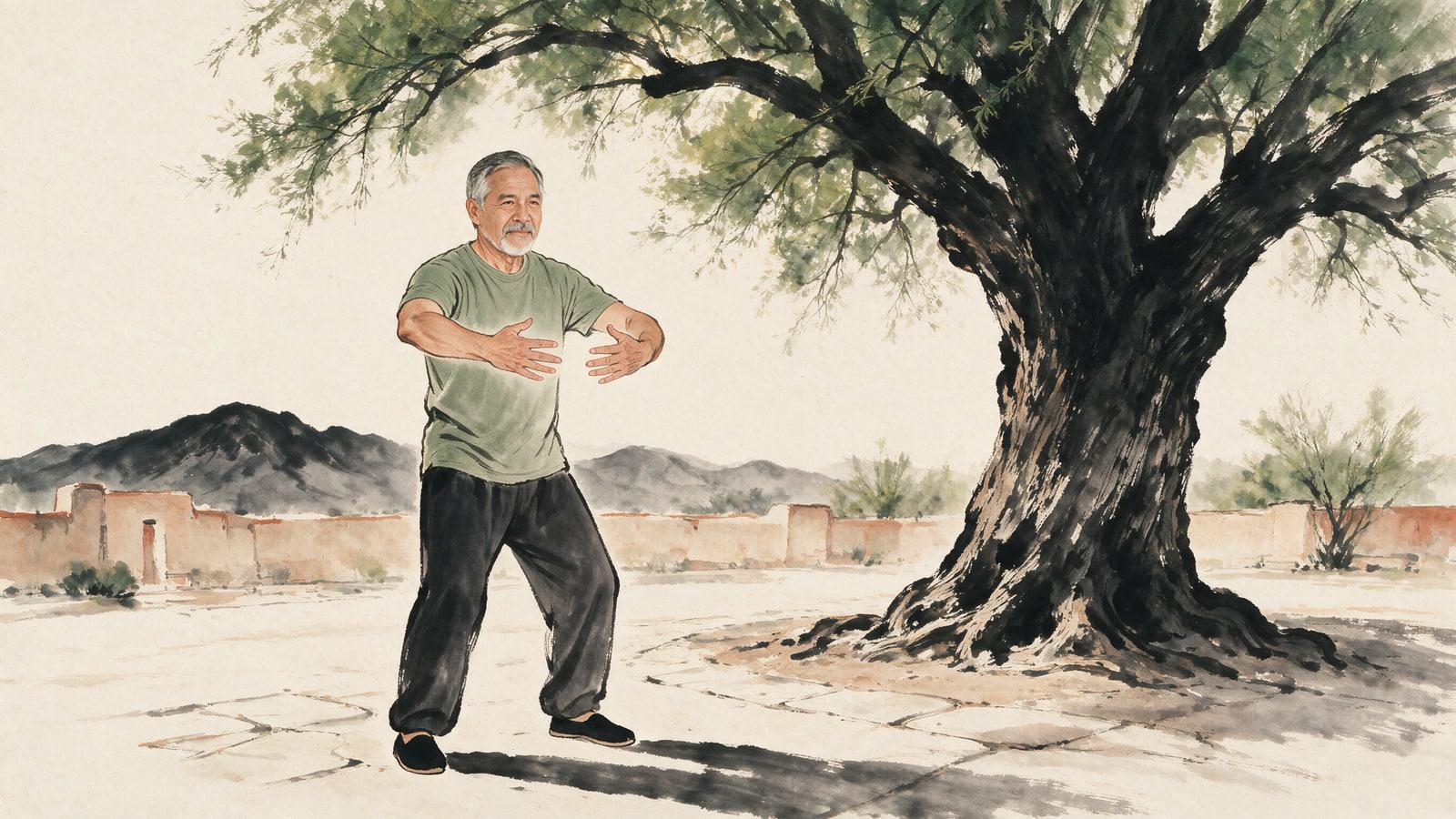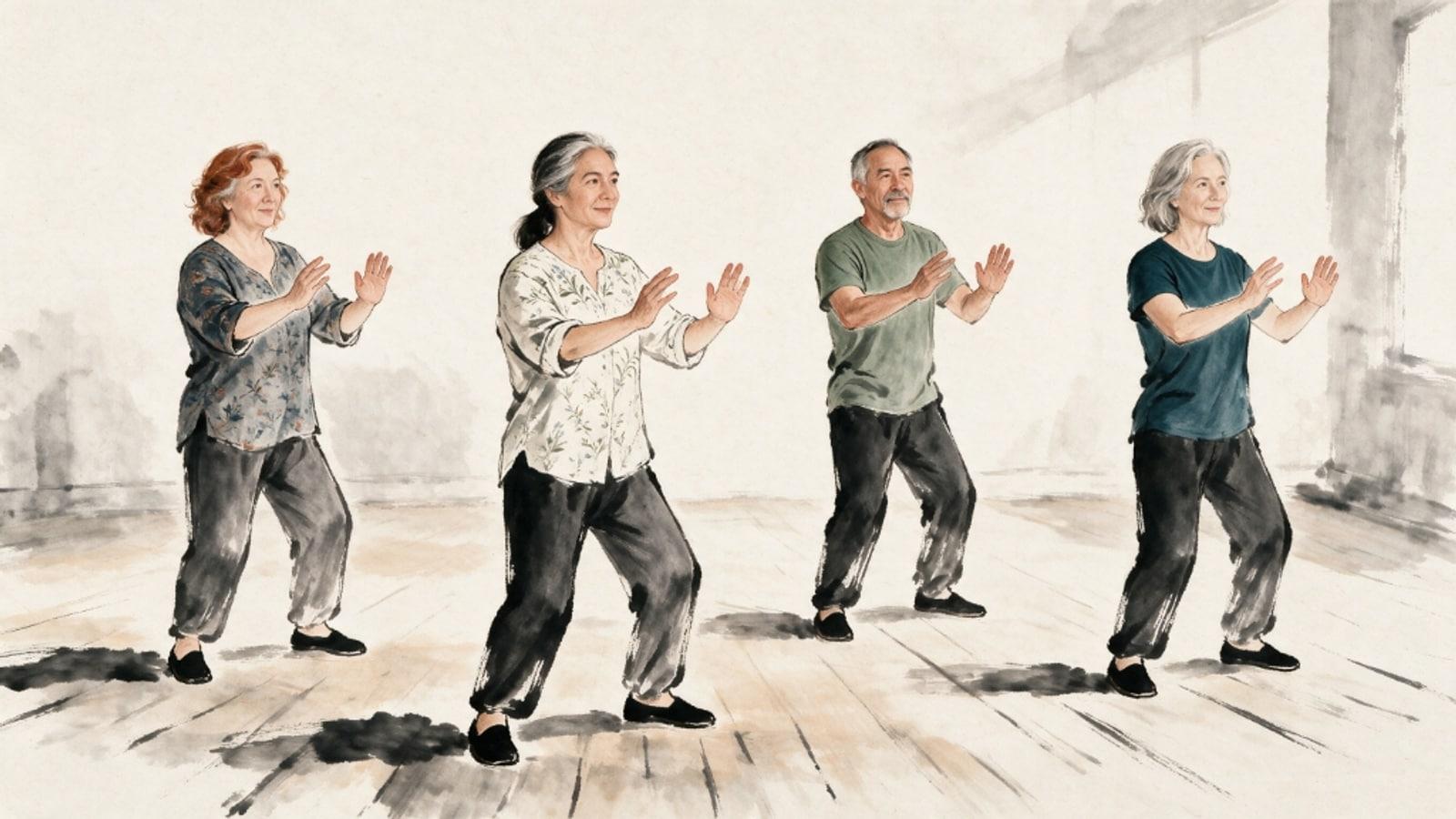

Watch a group practicing Tai Chi in the quiet morning air and you will notice an unmistakable rhythm: weight pours smoothly from one foot to the other, the waist turns like a slow river bend, and the hands trace spacious arcs through the air without hurry or strain. Often described as “meditation in motion,” Tai Chi—known in full as Tai Chi Chuan or Taijiquan (太極拳)—is a classical Chinese internal art that unites postural alignment, unhurried breathing, and calm, present attention.
While many people first come to Tai Chi in Tucson seeking steadier balance, happier knees, or relief from a busy mind, they soon discover that Tai Chi is not a workout you force your body through. It is a lifelong craft of listening—learning how to stand with effortless support, move from your center, and carry a quiet composure into everyday life.
☯️ The Grand Ultimate in Motion
Whether written as Tai Chi, Tai Chi Chuan, or Taijiquan, the three Chinese characters 太極拳 reveal the heart of the practice:
- Tai: Vast, supreme, or boundless.
- Ji: The ultimate pivot or ridgepole—where the complementary poles of Yin and Yang meet, balance, and transform into one another.
- Quan: Fist, boxing, or embodied movement method.
Together, Taijiquan means the physical art of embodying the dynamic balance of Yin and Yang. Preserved across centuries in the classical Tai Chi treatises—from the Daoist mountain heritage of Wudang and Chen Village to the great family lineages of Yang and Sun—the art is built upon what the classics call the Thirteen Postures: eight foundational hand expressions (beginning with Ward-Off, Roll-Back, Press, and Push) paired with five stepping directions anchored in Central Equilibrium.
“Tai chi is a form of mind-body exercise that is based on slow, flowing, choreographed movements... Some people have even described it as meditation in motion.”
— Peter M. Wayne, PhD, An Introduction to Tai Chi
Rather than relying on stiff muscular force, Tai Chi cultivates relaxed release—gently letting go of unnecessary tension so your bones stack cleanly and your whole body moves as one connected unit.
🌿 How It Feels in Movement
Here is a short look at Tai Chi practiced at a calm, unhurried studio pace so you can see how the posture, stepping, and breathing work together:
1. Separating Full and Empty (Cat-Like Stepping)
In everyday walking, we often fall passively from one foot onto the next. In Tai Chi, we learn to distinguish clearly between the substantial (full) leg and the insubstantial (empty) leg. You pour your weight completely into one stable root before peeling the other foot softly off the floor—stepping with the quiet sensitivity of a cat testing the ground before committing its weight. This deliberate weight transfer is why Tai Chi is so widely respected for balance and fall prevention.
🥋 Studio Cue: Before you step, check if you can lift your moving foot an inch off the floor without your upper body leaning or tipping. When your standing hip crease settles, the empty foot becomes effortless to place.
2. Suspended from Above, Rooted Below
Every posture is organized around a vertical plumb line. We imagine the crown of the head floating lightly upward while the shoulders, elbows, and breath settle downward toward the lower belly. When the spine is lengthened without stiffness, the joints have room to move freely without grinding or bracing.
3. How Beginners Learn in Our Tucson Studio
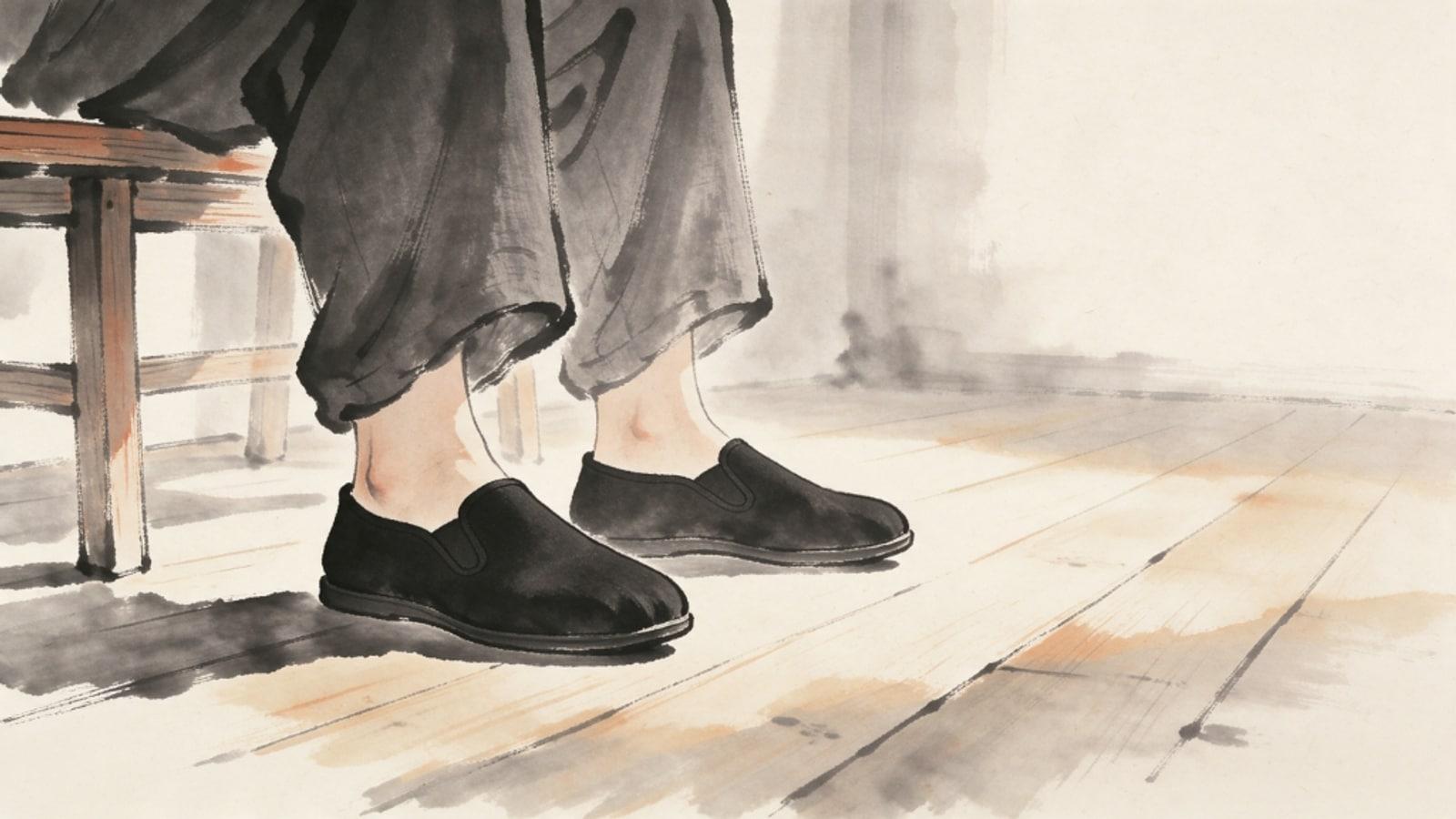
At Old Pueblo Tai Chi, no one is ever expected to memorize a long sequence on their first day. Each class begins with gentle Qigong breath and joint warm-ups, moves into foundational weight-shifting and stepping patterns, and builds short, repeatable sequences step by step. All you need is comfortable, loose-fitting clothing and flat, flexible-soled shoes that let you feel the floor clearly.
🪑 Gentle Adaptation: Every person’s joints and balance are unique. You can practice in a higher stance to protect sensitive knees, rest whenever you wish, or adapt the upper-body spirals and breathing from a sturdy chair while your legs build strength over time.
✨ Key Reflections to Carry With You
- Tai Chi is a skill grown through patience, not force: Five quiet minutes of mindful stepping or standing each day will deepen your balance and coordination far more than rushing through choreography.
- True balance lives in clear transitions: Knowing where your weight rests—and shifting it smoothly without leaning—protects your knees and steadies every step you take.
- Stillness and movement are partners: The calm attention you cultivate inside the form naturally follows you out into the rest of your week.
Old Pueblo Tai Chi — Traditional Yang & Sun Style Classes
Culture Connects Studio • 3000 E. 22nd Street, Tucson, AZ 85713 • https://oldpueblotaichi.com
Questions about classes? Contact Dan Kimball at dan@oldpueblotaichi.com