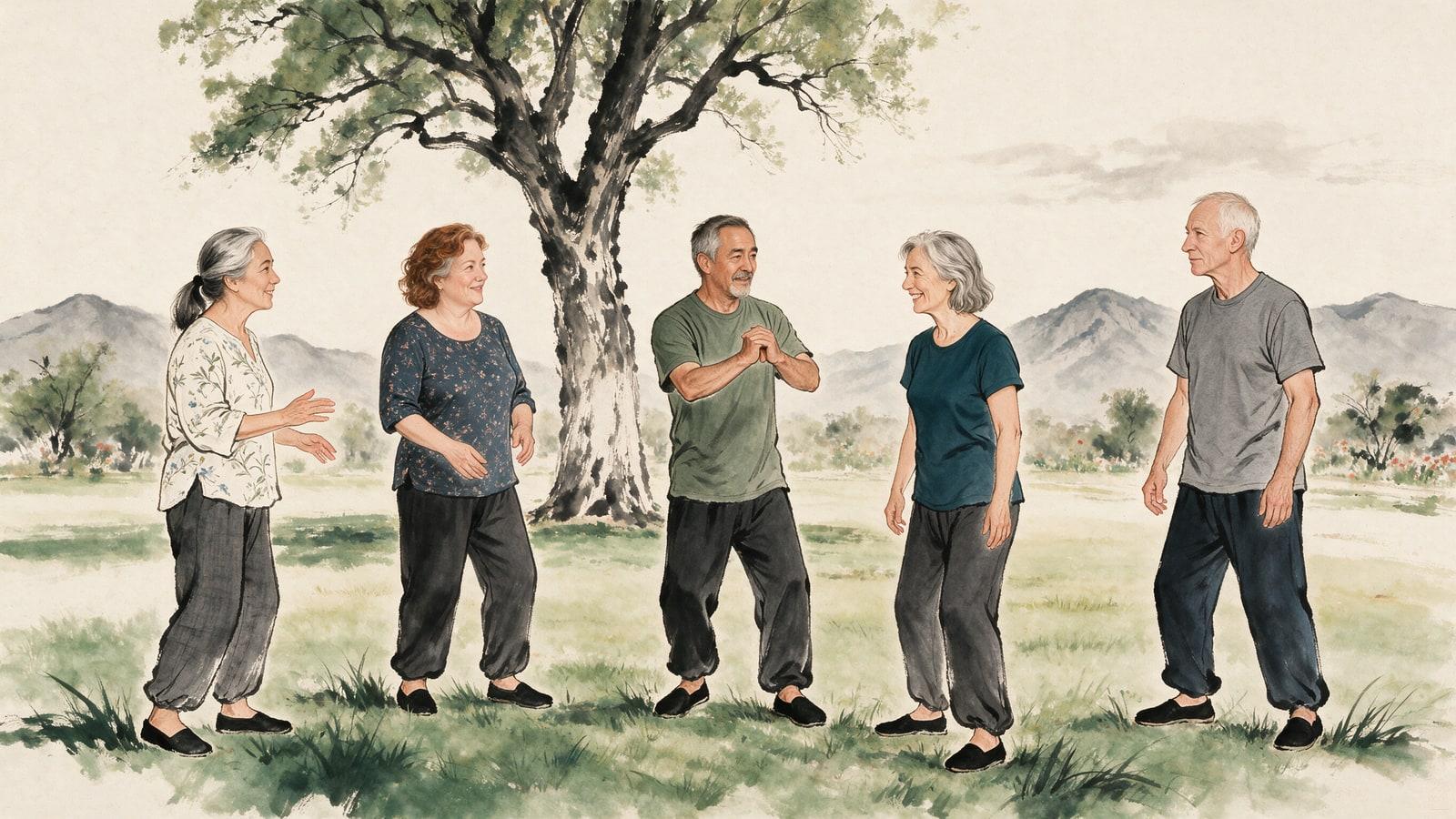
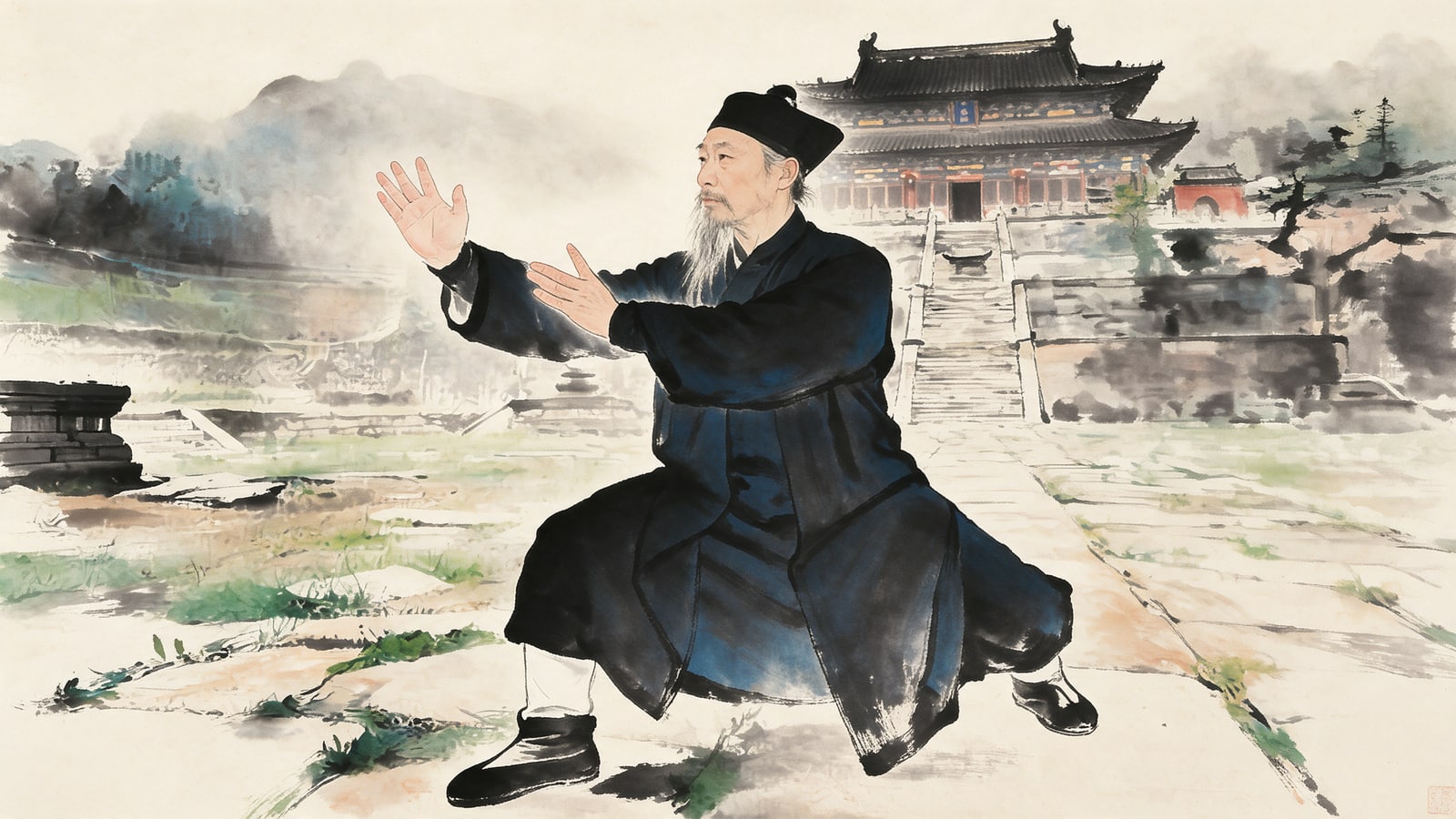
When most people picture Tai Chi in a sunlit park, they are picturing the sweeping, unhurried arcs of Yang style—large, generous circles that open the shoulders, lengthen the spine, and invite the breath to slow down. In Wudang Yang Style Tai Chi, those familiar, graceful shapes are reunited with the peaceful mountain tradition of Wudang Mountain, where movement was never separated from quiet inner calm.
Rather than treating a routine as a list of outer postures to memorize, Wudang practice approaches each gesture from the inside out. Every step begins in stillness, rises through the waist like a slow current of water, and returns to stillness when the movement is complete. At Old Pueblo Tai Chi in Tucson, we share this tradition as a welcoming, everyday practice that brings together comfortable joint health and moving meditation.
☯️ Wudang Mountain & the Roots of Flowing Movement
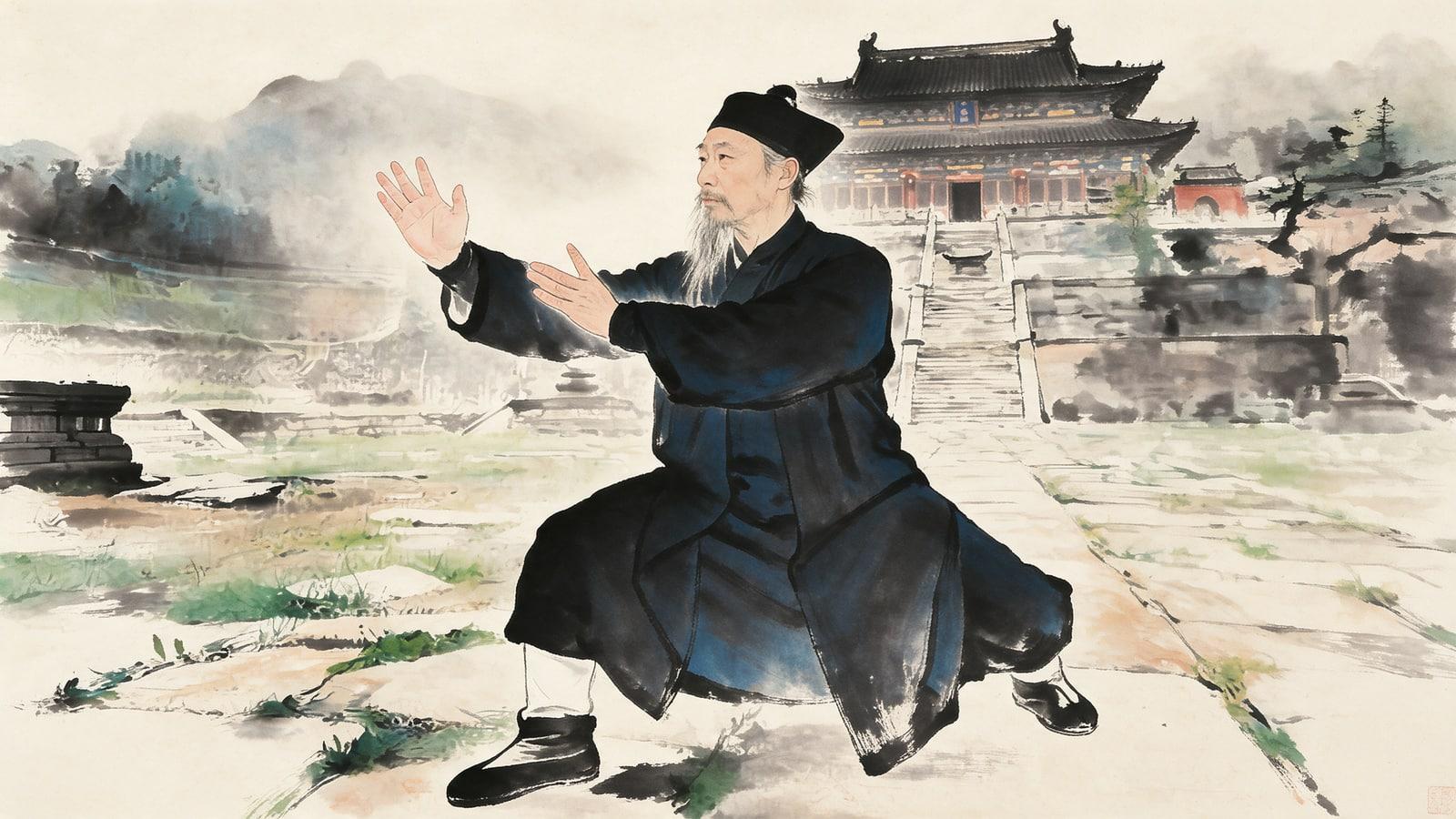
High in the mist-covered peaks of central China stands Wudang Mountain (武當山), revered for centuries as a sanctuary of Daoist meditation, herbal wellness, and internal martial arts. According to tradition, the wandering sage Zhang Sanfeng (張三豐) retreated into these quiet peaks to study the ways of nature. Observing the interplay of a crane and a serpent—how a balanced posture could yield without collapsing, and how softness could redirect force without strain—he shaped an art built on circular motion, gentle awareness, and unhurried grace.
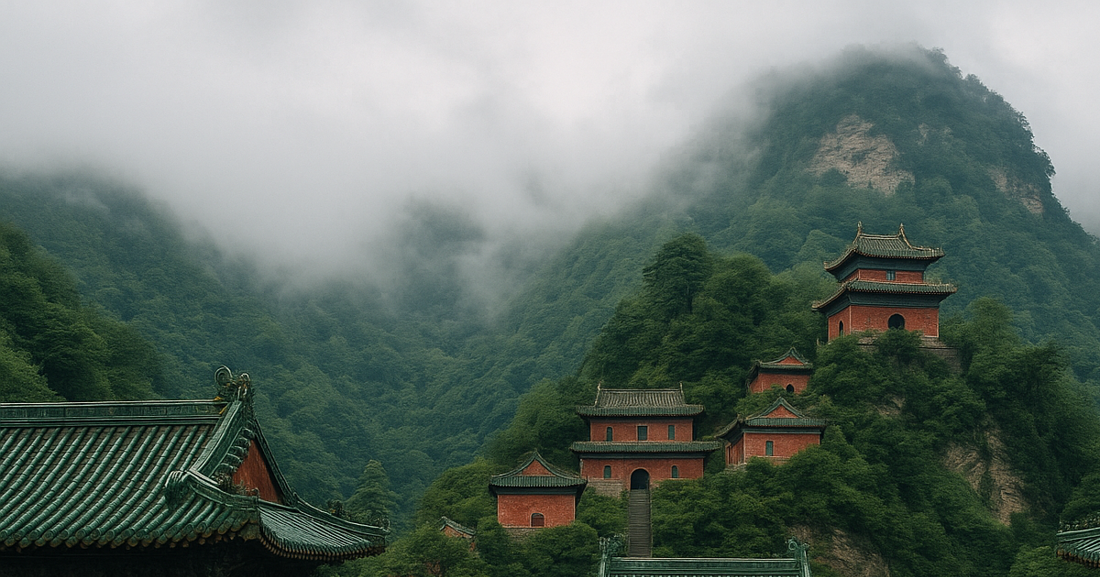
“The interplay of stillness and movement is fundamental to Tai Chi, as it is to life.”
— Master Lam Kam Chuen, Step-by-Step Tai Chi
In the Wudang tradition, practice unfolds across three natural stages:
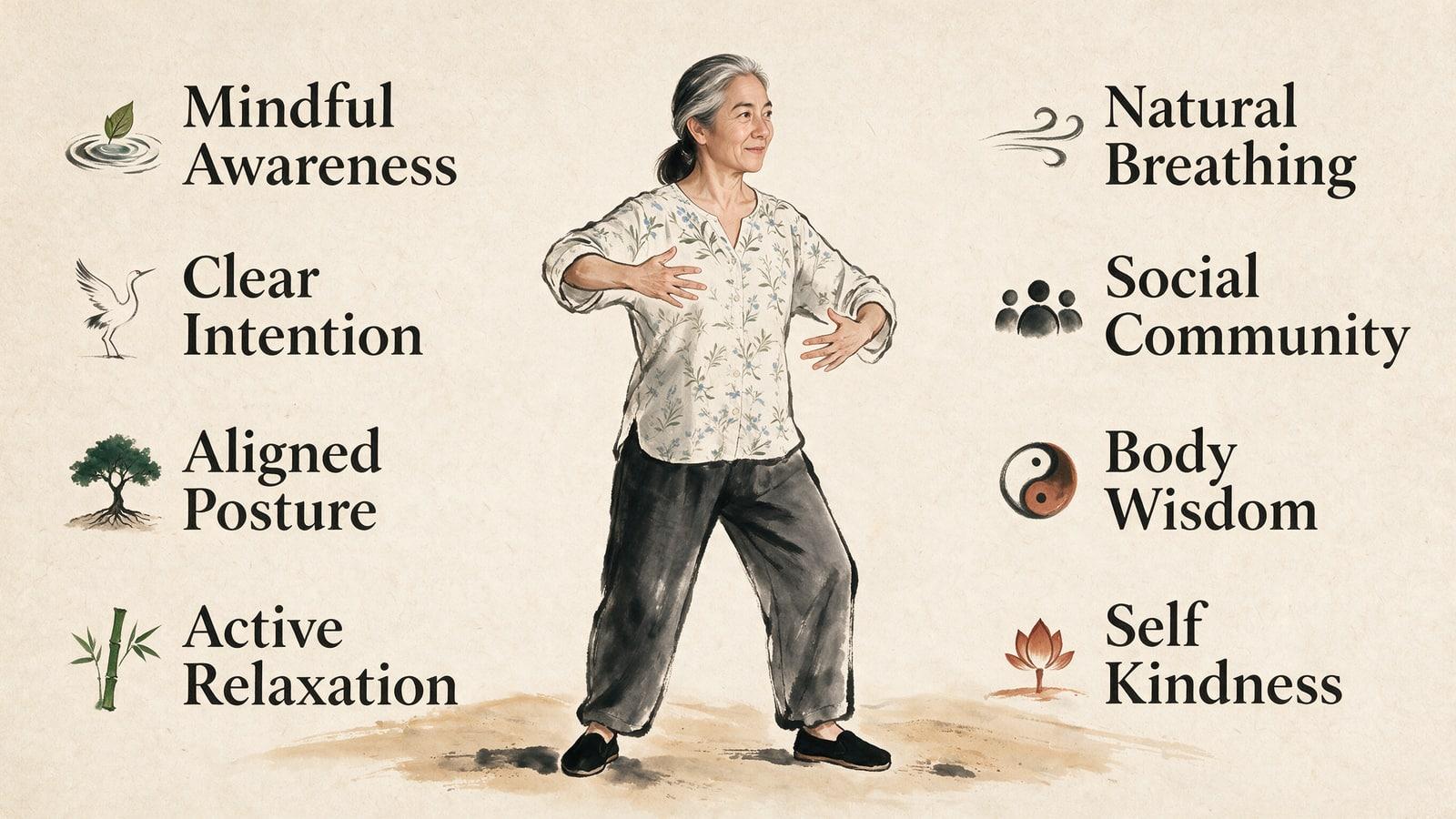
- 1. Quiet Stillness (Wuji): Before a single step is taken, we stand in comfortable alignment. Through quiet standing and easy belly breathing, we care for our physical stamina, our daily energy, and a clear, settled mind.
- 2. Flowing Balance (Taiji): As stillness stirs into motion, weight pours smoothly from one leg to the other, the hands rise and sink in gentle spirals, and the breath settles low in the belly. The outer movement stays as soft as drifting clouds while steady leg strength grows underneath.
- 3. Practical Harmony: As your balance matures, you begin to feel the practical purpose hidden inside every posture—pairing soft, yielding sensitivity with resilient support from the ground up.
🌿 How It Feels in Movement
Stepping into Wudang Yang Style never feels like a stiff gym workout. Instead, it feels like learning to move as one connected whole—where nothing is rushed, no joint is locked, and every posture flows smoothly into the next.
1. Beginning in Quiet Stillness
Every routine begins before the hands ever lift. Standing with your feet shoulder-width apart, you let the crown of your head float gently upward while your hips and heels settle heavily into the floor. As your jaw softens and your breath drops beneath your ribs, the busy rush of the day begins to quiet.
🥋 Studio Cue: Before you lift your wrists to begin a movement, pause for three slow breaths. Feel the soles of your feet widen against the floor first, and let the motion grow out of that quiet base rather than starting from your shoulders.
2. Spacious Circles Guided by the Waist
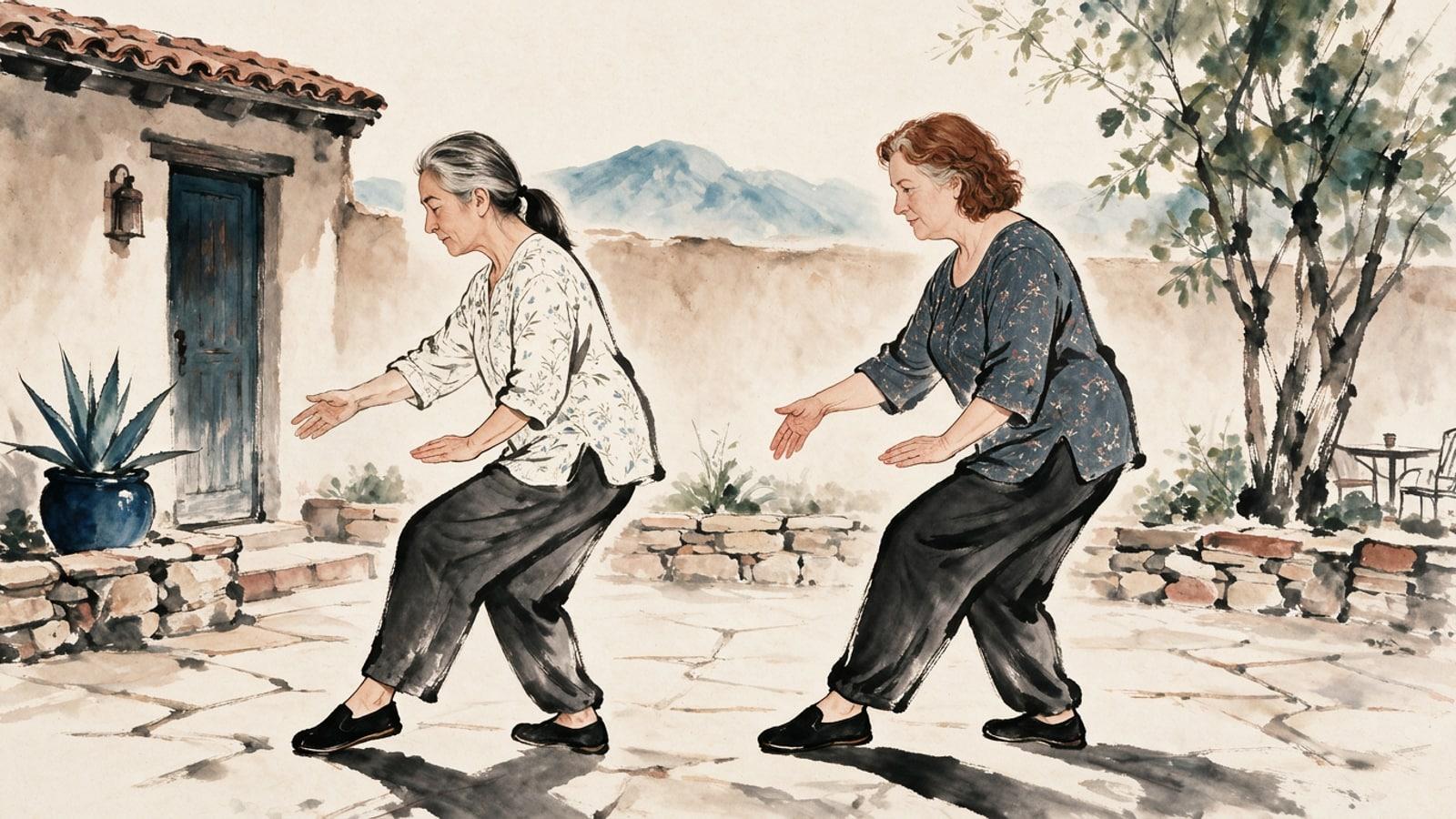
Whether moving through Wave Hands Like Clouds or opening into Single Whip, the arms never pull away from your body’s center on their own. Your waist turns like a smooth hinge, carrying your shoulders, elbows, and wrists along spacious, unhurried arcs that gently loosen stiff joints.
🪑 Gentle Adaptation: If your shoulders or knees feel tender today, make your circles smaller and stand a little taller. In Wudang practice, a small, relaxed circle connected to your breath brings far more benefit than a deep posture held with tension.
3. Moving With the Nature of Water
Teachers often compare Wudang Yang Style to a wide river: calm and clear on the surface, yet steady and supportive underneath. When you shift your weight from one foot to the other, imagine warm water pouring slowly from one pitcher into another—never jerking, never stopping abruptly, and never losing its ease.
✨ Key Reflections to Carry With You
- Stillness is the mother of movement: The steadiness of your footwork begins in the quiet pause before your first step.
- Softness builds true strength: Letting go of tight shoulders and locked knees allows your bones and deeper posture muscles to support you naturally.
- Practice you can carry into your day: Every weight shift and slow breath in Wudang Yang Style is a gentle rehearsal for meeting daily life with balance and patience.
Old Pueblo Tai Chi — Traditional Yang & Sun Style Classes
Culture Connects Studio • 3000 E. 22nd Street, Tucson, AZ 85713 • https://oldpueblotaichi.com
Questions about classes? Contact Dan Kimball at dan@oldpueblotaichi.com