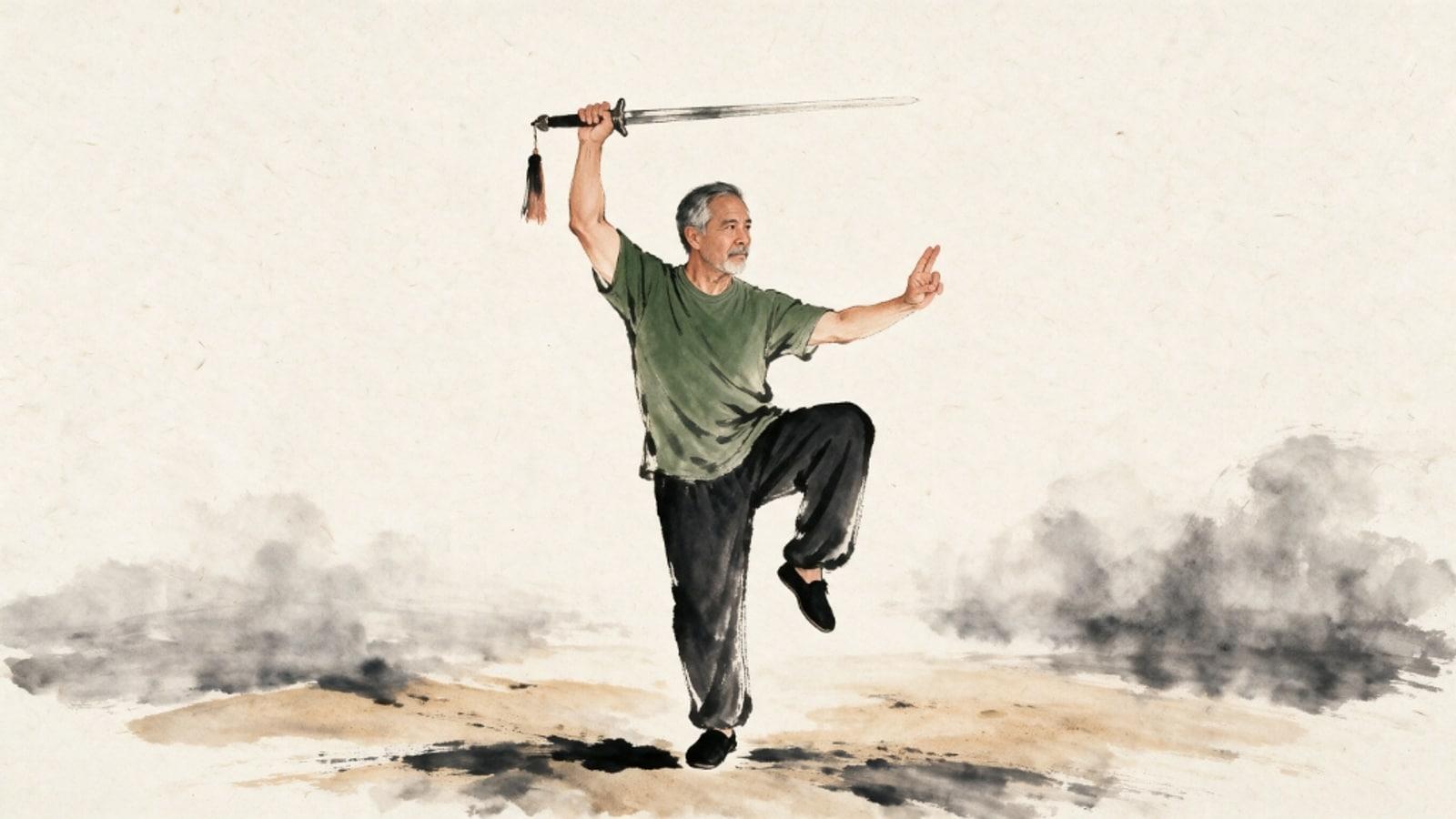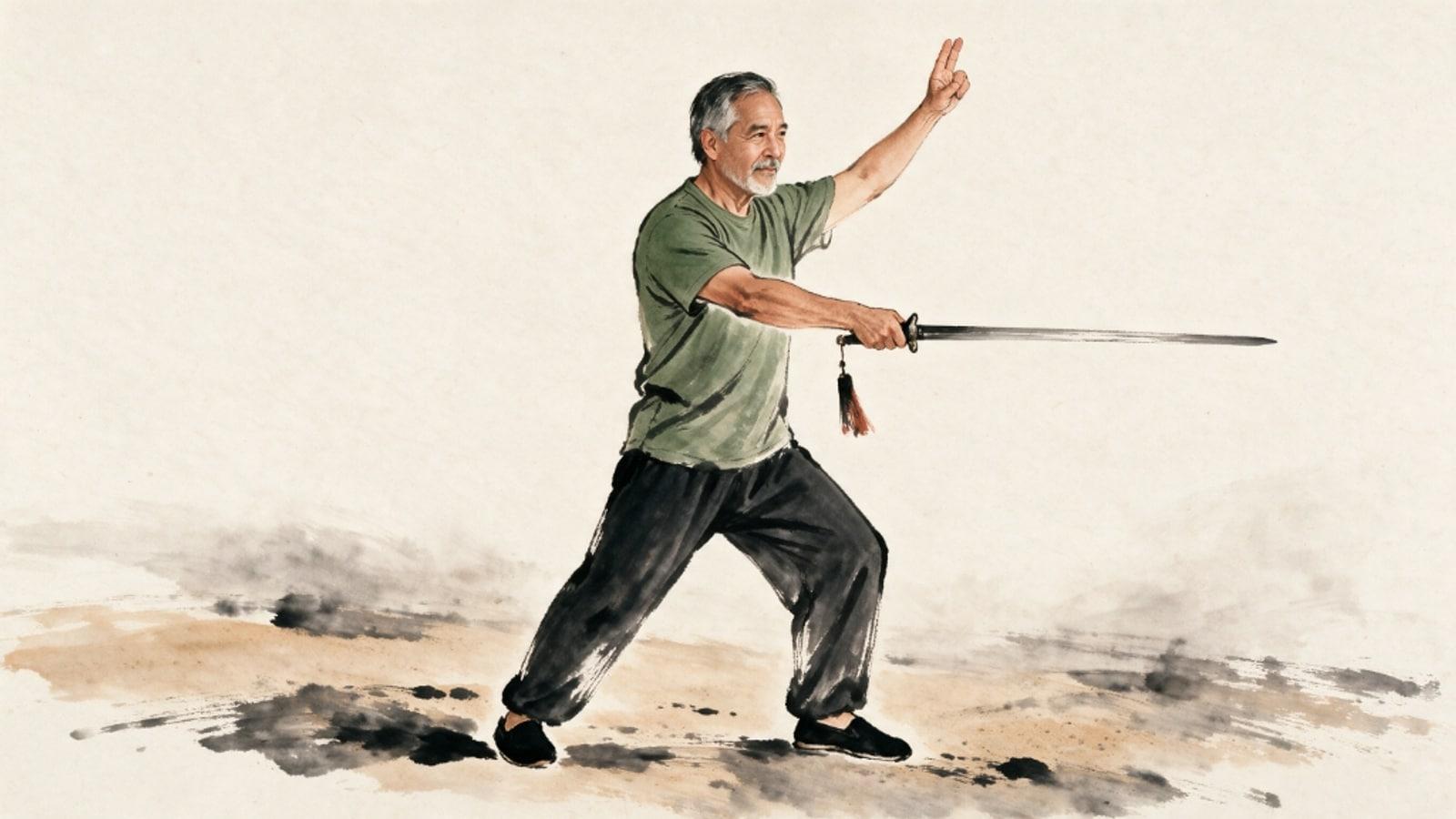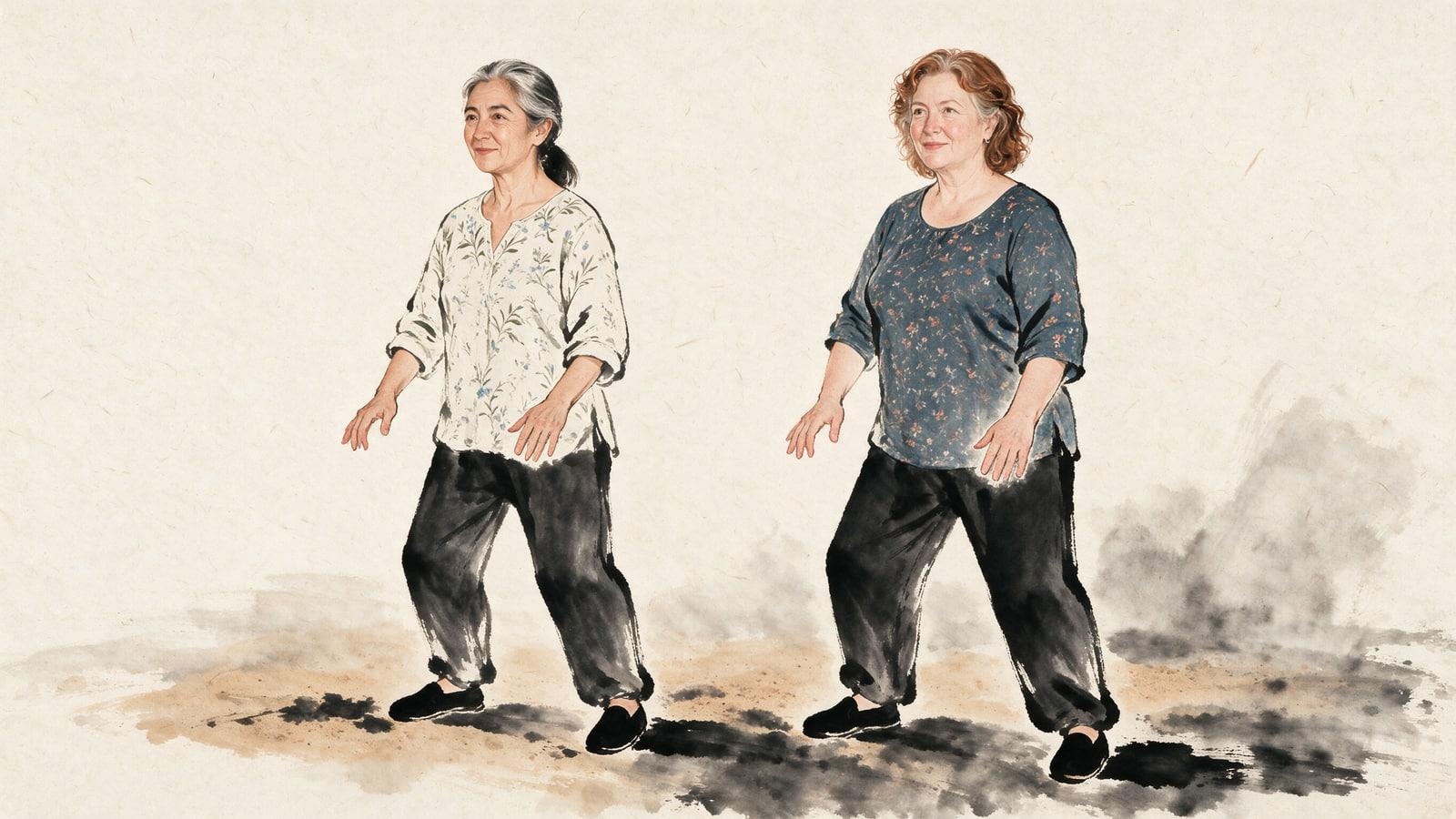

Almost everyone has had the moment of catching their reflection in a store window—or noticing themselves hunched over a steering wheel or kitchen counter—and immediately trying to “fix” their posture. We do what we were taught as kids: we pull our shoulders sharply back, puff out our chest, and lift our chin. It holds for about thirty seconds, and then our lower back starts to ache, our neck stiffens, and our breathing turns shallow.
In Tai Chi and Qigong, we look at the spine not as a rigid flagpole that has to be muscled into place, but as a living mountain trail. Hours spent driving, reading, or leaning over a desk create little rockslides of tension along that trail. Instead of bracing harder, our practice is about gently clearing those narrow spots: when the spine softens, your posture becomes tall, buoyant, and effortless on its own.
☯️ The Legend of the Three Mountain Gates
Early Daoist teachers loved to map the human body using the imagery of mountains, rivers, and valleys. Along the back of the body—where warm, rising energy travels up the spine during the Magpie Bridge breathing loop—they noticed three natural bottlenecks where everyday tension loves to gather. They called these the Three Mountain Passes (San Guan 三關).
“Wherever there is tension in your body, your energetic circulation is stagnant or blocked. Therefore, the primary aspect of studying any internal art is relaxing the entire body.”
— Ramel Rones & David Silver, Sunset Tai Chi
Imagine driving up the Catalina Highway toward Mount Lemmon and meeting three narrow canyon switchbacks along the way. In your spine, those three passes are:
- The Tailbone Gate (Weilu 尾閭 — Base of the Spine): The lowest pass at the sacrum and tailbone, which pinches shut whenever we lock our knees or arch our lower back.
- The Narrow Spine Gate (Jiaji 夾脊 — Between the Shoulder Blades): The middle pass in the upper back right behind the heart, which stiffens when we slump over a screen or pull our shoulders tightly backward.
- The Jade Pillow Gate (Yuzhen 玉枕 — Base of the Skull): Named after the cool porcelain headrests used in ancient China, this upper pass sits right where the neck meets the skull and tightens whenever our chin pokes forward.
When those three gates swing shut, our lower back feels achey, our upper back feels stiff, and our neck feels heavy. When we soften them in sequence from bottom to top, our whole frame feels connected from the floor to the crown of the head.
🌿 How It Feels in Movement: Opening the Three Passes
As you explore these three areas, remember our favorite studio guideline: the 70 percent rule. Never push or stretch to your limit—aim for a comfortable 70 percent of your range so your muscles feel safe enough to let go.
1. Releasing the Tailbone Gate at the Base
Start with your feet shoulder-width apart and your knees softly unlocked. Most of us carry a tight arch in the lower back without realizing it. Soften your hip creases as if you are just beginning to perch on the edge of a tall stool, and imagine your tailbone growing heavy like a smooth river stone dropping quietly toward your heels. As your tailbone settles downward, you will feel your lower back lengthen and your standing center become steady.
2. Softening the Chest to Open the Mid-Back
Now bring your attention to the middle of your back, right between your shoulder blades. Instead of pulling your shoulders backward like a soldier at attention, let your breastbone soften inward just a fraction and let your elbows hang heavy toward the floor. You will feel the space between your shoulder blades widen naturally—like a hawk spreading its wings—giving your ribs plenty of room to expand when you breathe.
3. Floating the Crown to Clear the Jade Pillow
Finally, notice where the base of your skull rests atop your neck. When we peer forward at phones, books, or road signs, our chin pokes out and pinches the back of the neck. Gently draw your chin back just half an inch—not tilting your head down to the floor, but letting the back of your neck grow long—while imagining the crown of your head floating upward as if lifted by a light thread. That tiny release opens the upper pass and lets a wave of relaxation travel all the way down to your feet.
🥋 Studio Cue: Try this 30-second check right now: lightly rest two fingers in the soft hollow at the very base of the back of your skull. Poke your chin forward half an inch and feel how the muscles under your fingers tighten and bunch up. Now draw your chin softly back and let the crown of your head float toward the ceiling—you can feel the space under your fingers soften and lengthen right away.
🪑 Gentle Adaptation: You can open all three mountain passes right from a sturdy chair. Sit near the front third of the seat with your feet planted flat on the floor in comfortable flat-soled shoes or grip socks. Let your sitting bones sink heavily into the chair to lengthen your lower back, rest your hands lightly on your thighs so your shoulder blades widen across your mid-back, and let the crown of your head float tall while keeping your gaze level and soft.
✨ Key Reflections to Carry With You
- Alignment comes from letting go, not bracing: True upright posture happens when you let your tailbone settle and your chest soften, rather than forcing your shoulders back.
- Three simple landmarks unstick the whole spine: Whenever you feel stiff during the day, check in with your tailbone, the space between your shoulder blades, and the base of your skull.
- Every gentle breath clears the trail: You do not need deep stances or strenuous stretches to open your spine—softening within your comfortable 70 percent zone lets your body find its natural length and ease.
Old Pueblo Tai Chi — Traditional Yang & Sun Style Classes
Culture Connects Studio • 3000 E. 22nd Street, Tucson, AZ 85713 • https://oldpueblotaichi.com
Questions about classes? Contact Dan Kimball at dan@oldpueblotaichi.com