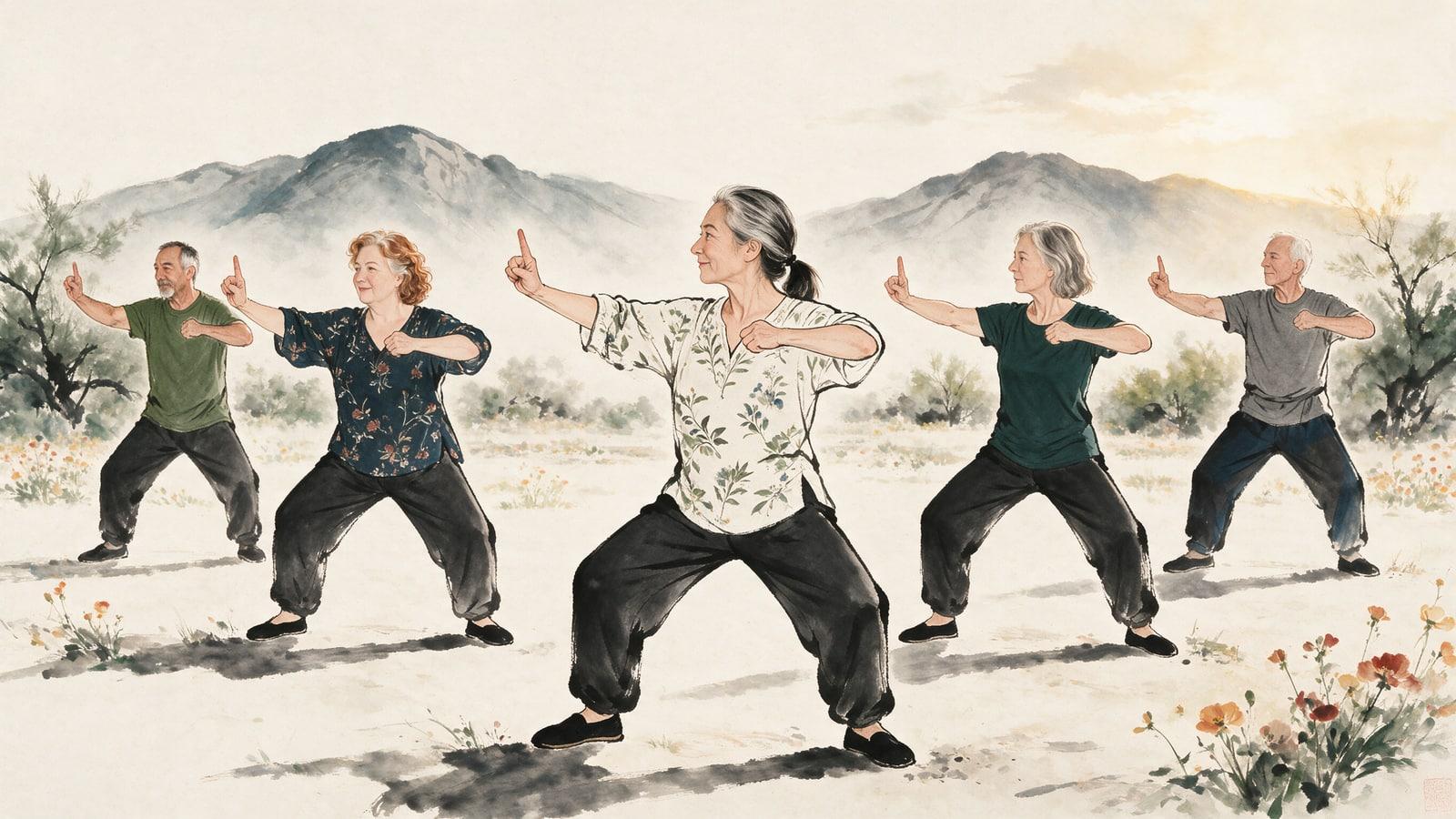

Walk into any park at sunrise, or into our Tucson studio a few minutes before class begins, and you will see students standing quietly with a soft smile. They let their arms swing gently forward and back like the pendulum of an old grandfather clock. This deceptively simple warm-up is Swinging Arms Qigong.
Why has such an easy movement lasted for centuries? Nothing reveals and releases hidden shoulder tension faster than letting gravity do the work. Within two or three minutes of rhythmic swinging, tight shoulders drop, cold hands grow warm, and your upper body feels noticeably lighter.
☯️ Empty the Upper Body, Root the Feet
Known in Chinese as Swinging Arms Qigong (Shuai Shou Gong 甩手功), this classic longevity practice brings a famous Tai Chi saying to life: keep your upper body light and empty, and your lower body steady and rooted.
As your feet rest solidly on the ground, your shoulders, elbows, and wrists become completely loose, like heavy bell ropes swinging from a wooden beam. This gentle pendulum motion encourages warm circulation through your chest, shoulders, and arms all the way down to your fingertips.
“The first step toward this reorienting is the removal of all unnecessary muscular tension from the body.”
— Arthur Rosenfeld, Tai Chi: The Perfect Exercise
🌿 How It Feels in Movement: Two Ways to Practice
1. Waist-Led Alternating Arm Swing
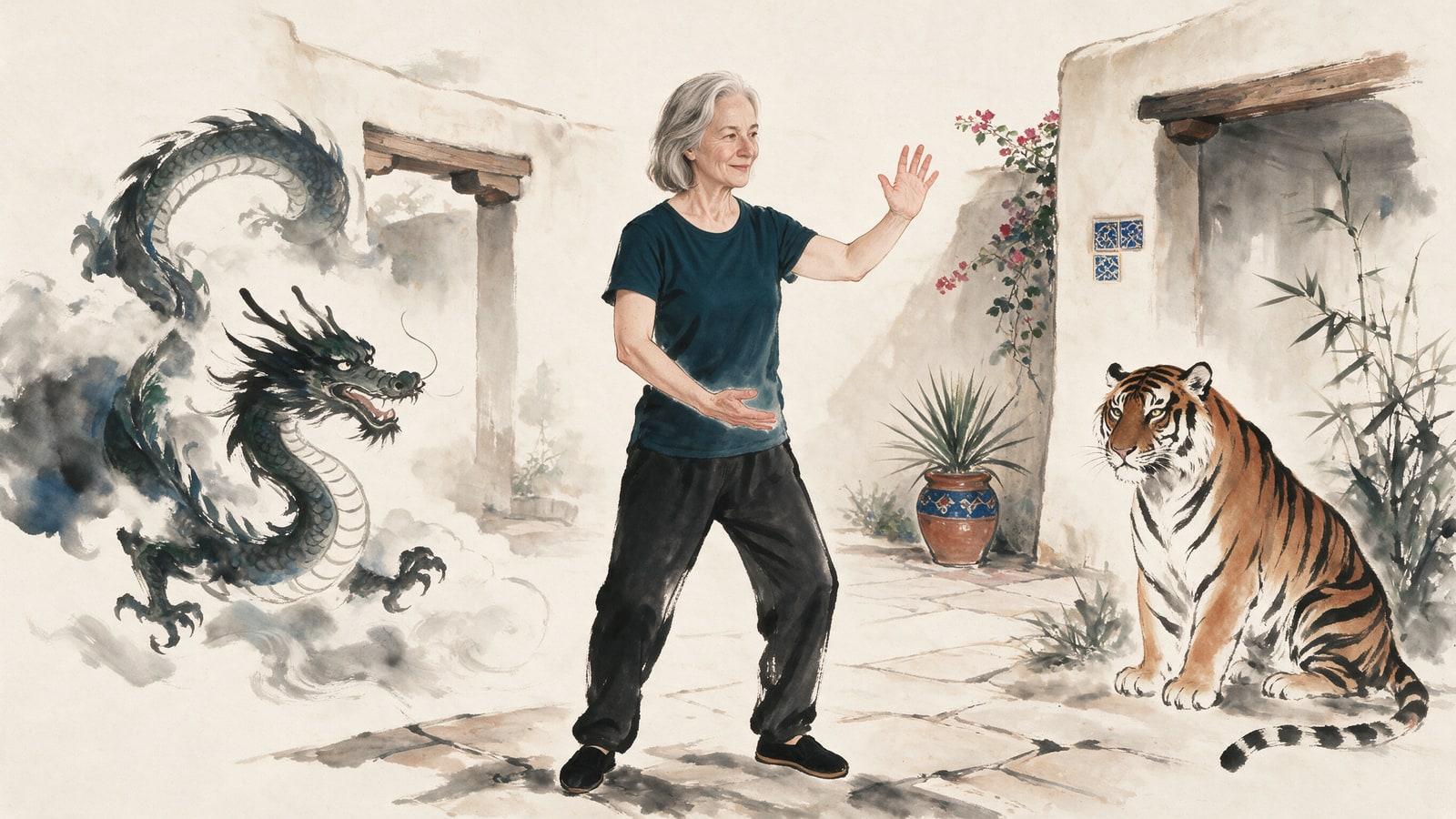
Stand with your feet shoulder-width apart and your knees softly unlocked. As shown in our illustration, turn your waist gently from side to side so one arm swings smoothly forward while the other swings back behind you. Let your arms hang like soft coat sleeves, driven entirely by the easy turn of your hips and waist.
2. Classic Two-Arm Pendulum Swing
- Find Your Base: Stand tall with your feet shoulder-width apart, toes pointing straight ahead, and knees softly unlocked.
- Float Both Arms Forward: Let both arms float easily forward to about waist or lower-chest height with your palms facing down.
- Let Gravity Swing Them Back: Instead of pushing your arms down with muscle, simply relax your shoulders and let gravity swing both arms down past your hips.
- Add a Soft Knee Pulse: Once the rhythm feels natural, add a tiny softening and lengthening of your knees on each swing so the gentle rebound from the floor moves your arms effortlessly.
🥋 Studio Cue: Check yourself halfway through: are you lifting your arms with your shoulder muscles, or letting them swing from your waist and legs? The less your shoulders try to help, the warmer and looser your hands will feel.
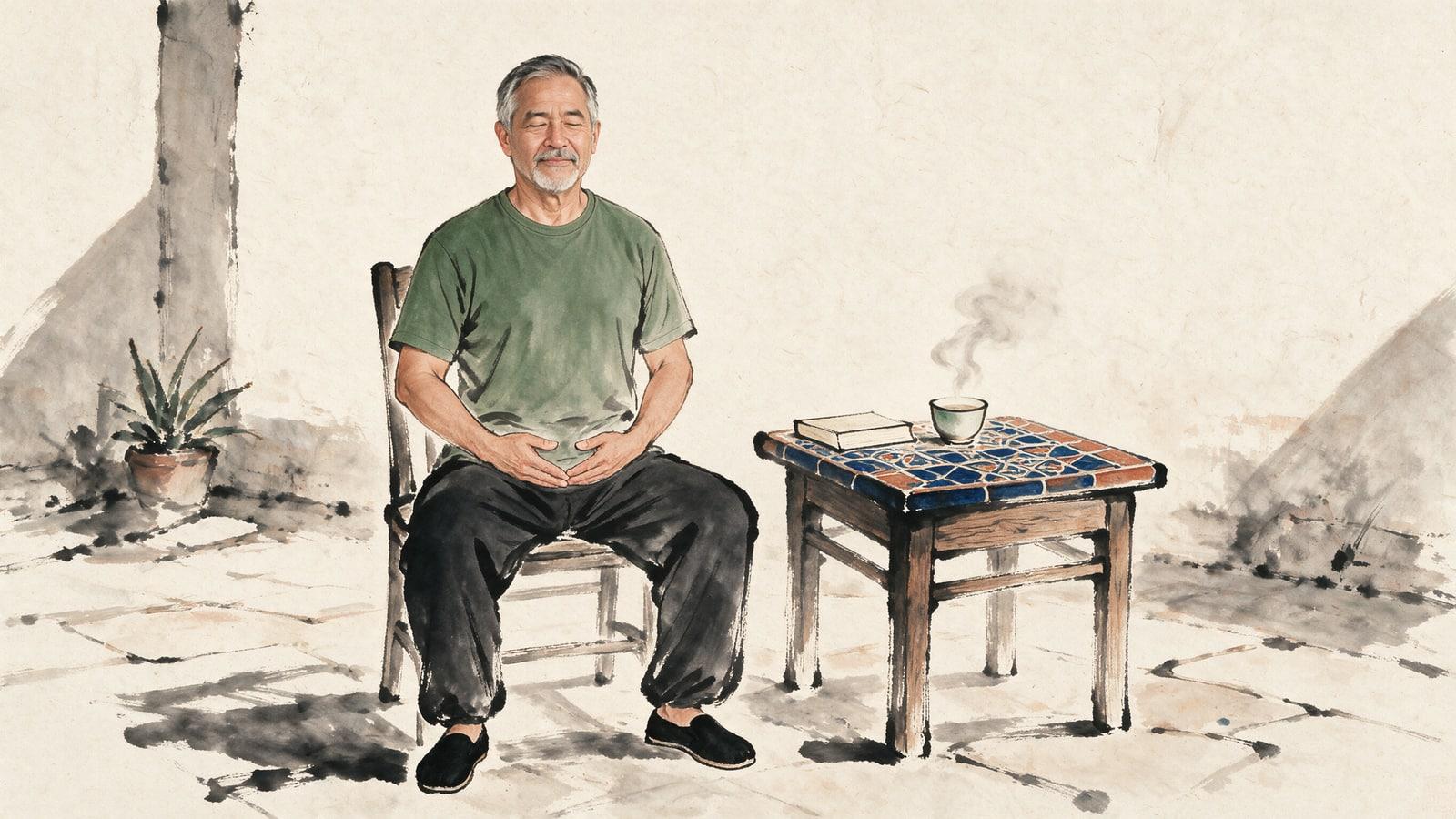
🪑 Gentle Adaptation: If standing for five minutes feels tiring, sit near the front edge of an armless chair so your arms have clear room to swing beside your hips. Keep any knee bounce tiny, about half an inch, so your joints always feel supported.
✨ Key Reflections to Carry With You
- Start with two to three minutes: Fifty to one hundred unhurried swings in the morning is plenty to wake up stiff shoulders before breakfast.
- Keep your jaw and gaze soft: Let your tongue rest lightly behind your upper teeth and breathe quietly through your nose.
- Pause at the end to feel the warmth: When you finish swinging, stand quietly for thirty seconds and enjoy the warm, tingly circulation in your palms.
Old Pueblo Tai Chi — Traditional Yang & Sun Style Classes
Culture Connects Studio • 3000 E. 22nd Street, Tucson, AZ 85713 • https://oldpueblotaichi.com
Questions about classes? Contact Dan Kimball at dan@oldpueblotaichi.com