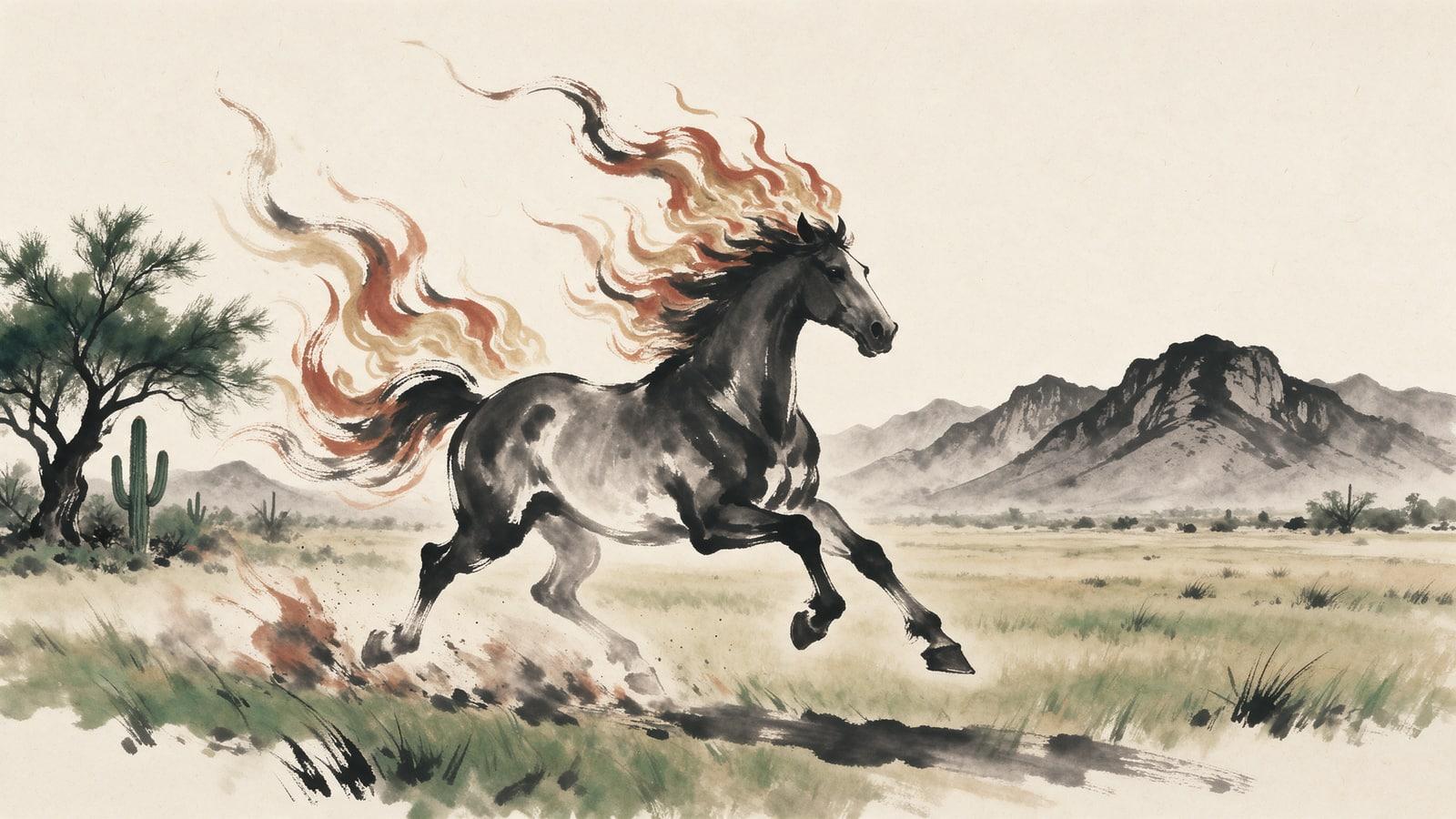
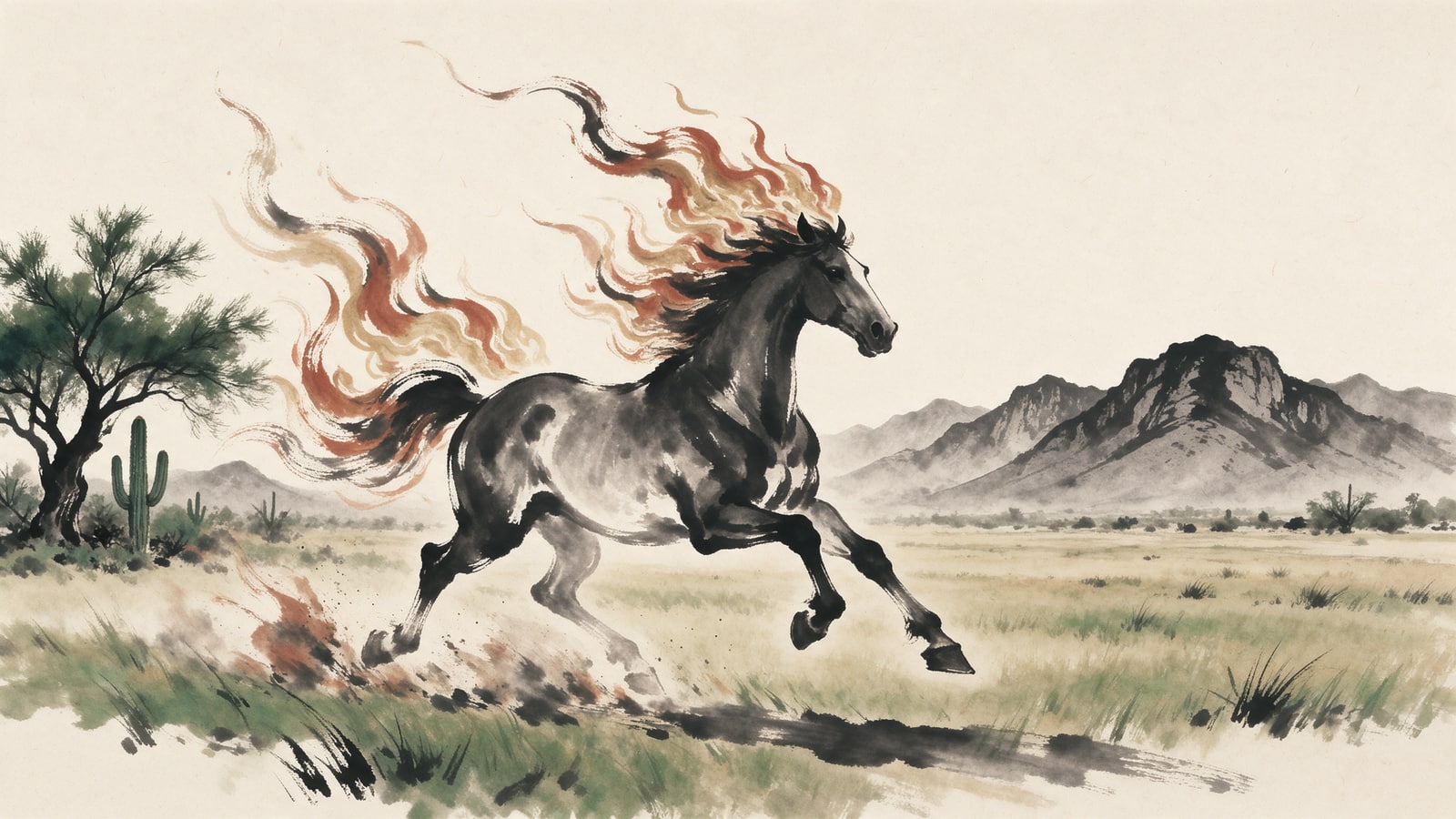
Picture a spirited horse galloping across the open Sonoran desert—muscle, breath, and forward momentum moving at full stride. Now add fire: brightness, urgency, creative energy, and the constant risk of running too hot. That is the classical imagery of the 2026 Year of the Fire Horse, a pairing in the traditional sixty-year Chinese calendar that arrived with the Lunar New Year in February 2026.
Rather than treating the Fire Horse as a superstition or a prediction of fate, we can read it the way classical teachers read the seasons—as a poetic mirror for an everyday challenge: How do we keep the warmth of inspiration and momentum without burning out our energy or rushing through our days?
☯️ Bingwu (丙午) and the Art of Pacing Your Fire
In the traditional sixty-year calendar, Bingwu (丙午) pairs the bright warmth of the midday sun with the swift, spirited nature of the Horse. When those two symbols meet once every sixty years, the seasonal mood is doubly bright, fast-moving, and upward-rising.
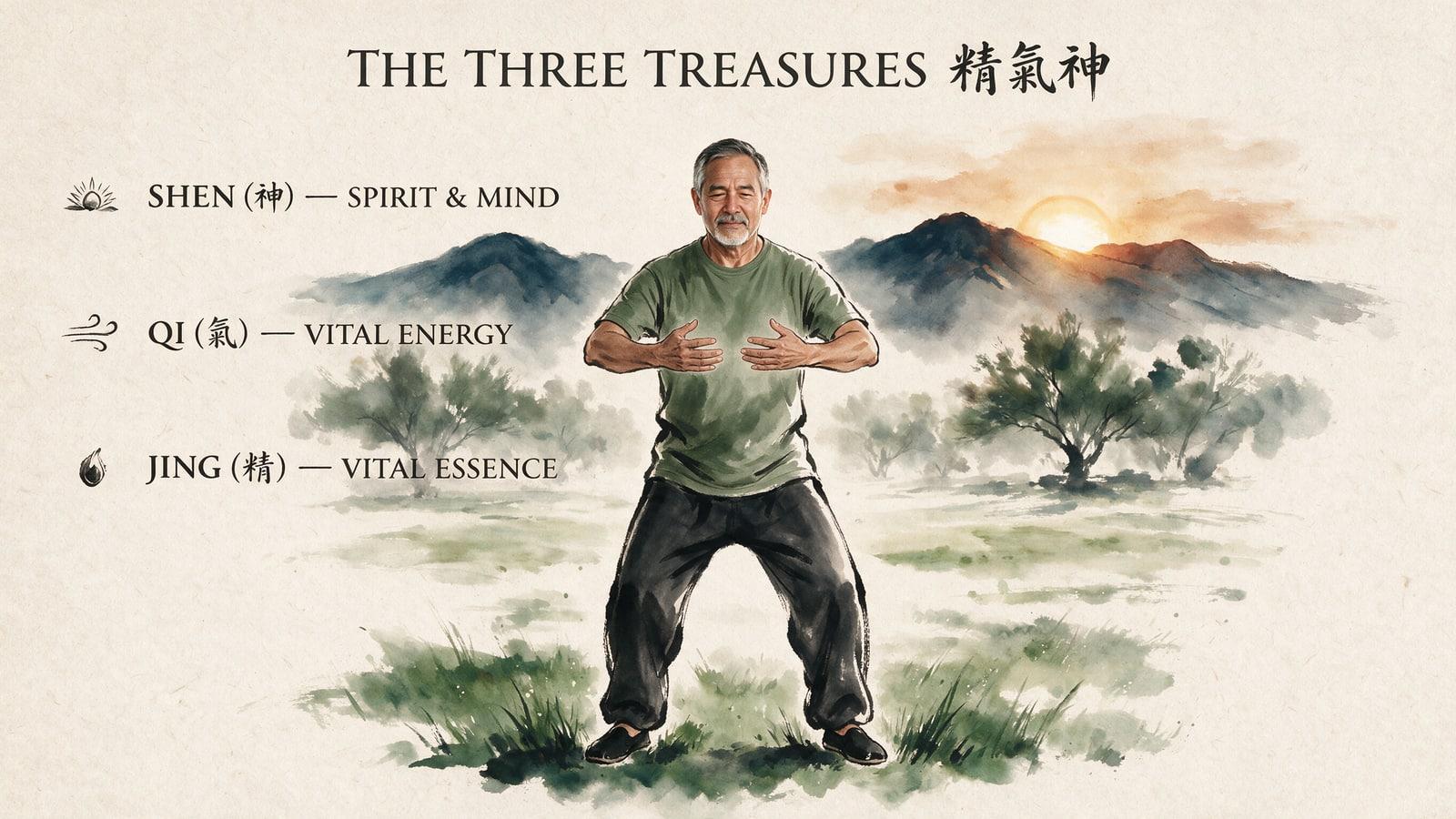
In Qigong and Daoist health traditions, the answer to excess heat is never to put out your inner spark. Instead, practitioners learn the art of pacing the fire—balancing active, focused effort with quiet, cooling rest so that rising excitement settles gently back down into a calm belly and steady feet.
“When we make it our practice, tai chi can tame our hot-rod hearts and in doing so make the experience of life both deeper and longer.”
— Arthur Rosenfeld, Tai Chi: The Perfect Exercise
🌿 How It Feels in Movement: Three Ways to Stay Grounded in a Fast Season
When daily life feels like a runaway horse—constant notifications, hurried errands, and shallow breathing—Tai Chi and Qigong offer three simple physical habits that turn scattered restlessness into steady vitality.
1. Unhurried Breathing — Cooling Down With a Longer Exhale
When urgency rises, our breath climbs high into the upper chest and our shoulders creep toward our ears. In Qigong, we cool the system down simply by lengthening the exhale: inhaling quietly through the nose for a count of four, and exhaling softly for a count of six to eight while letting the jaw and tongue relax. Within two minutes, this unhurried rhythm reminds your whole body that there is no emergency.
2. Rooting — Finding Your Footing Before You Step
Fire naturally flares upward and horses naturally surge forward. Tai Chi posture balances both tendencies by teaching us to settle downward before we move. When the crown of the head rises tall, the hips and knees soften, and your weight sinks evenly into the soles of your feet, you stop living in your head and regain a quiet, steady base.
3. Yielding — Responding Instead of Colliding
In Tai Chi, meeting force with stiff resistance only creates a collision where both sides lose their balance. Instead, we practice yielding: softening on contact, absorbing the rush, and choosing a calm direction. In daily life, yielding looks like taking one slow exhale before answering a sharp question, pausing for a half-beat at a busy intersection, or moving ten percent slower than our impatience wants to rush.
🥋 Studio Cue: Whenever you catch yourself rushing from one task to the next, pause in a doorway for thirty seconds and check three simple studio reminders: “Feet heavy, crown tall; knees soft, hips settling; breath dropping into the lower belly.” You are not holding back your energy—you are giving the horse a steady rein.
A 10-Minute Fire Horse Grounding Sequence (No Choreography Needed)
Practice this simple five-step sequence three to five times a week, or anytime your day feels hurried and scattered:
- Quiet Standing (2 minutes): Stand with your feet shoulder-width apart, knees unlocked, and arms hanging softly at your sides. Let your jaw and shoulders release as your exhale lengthens.
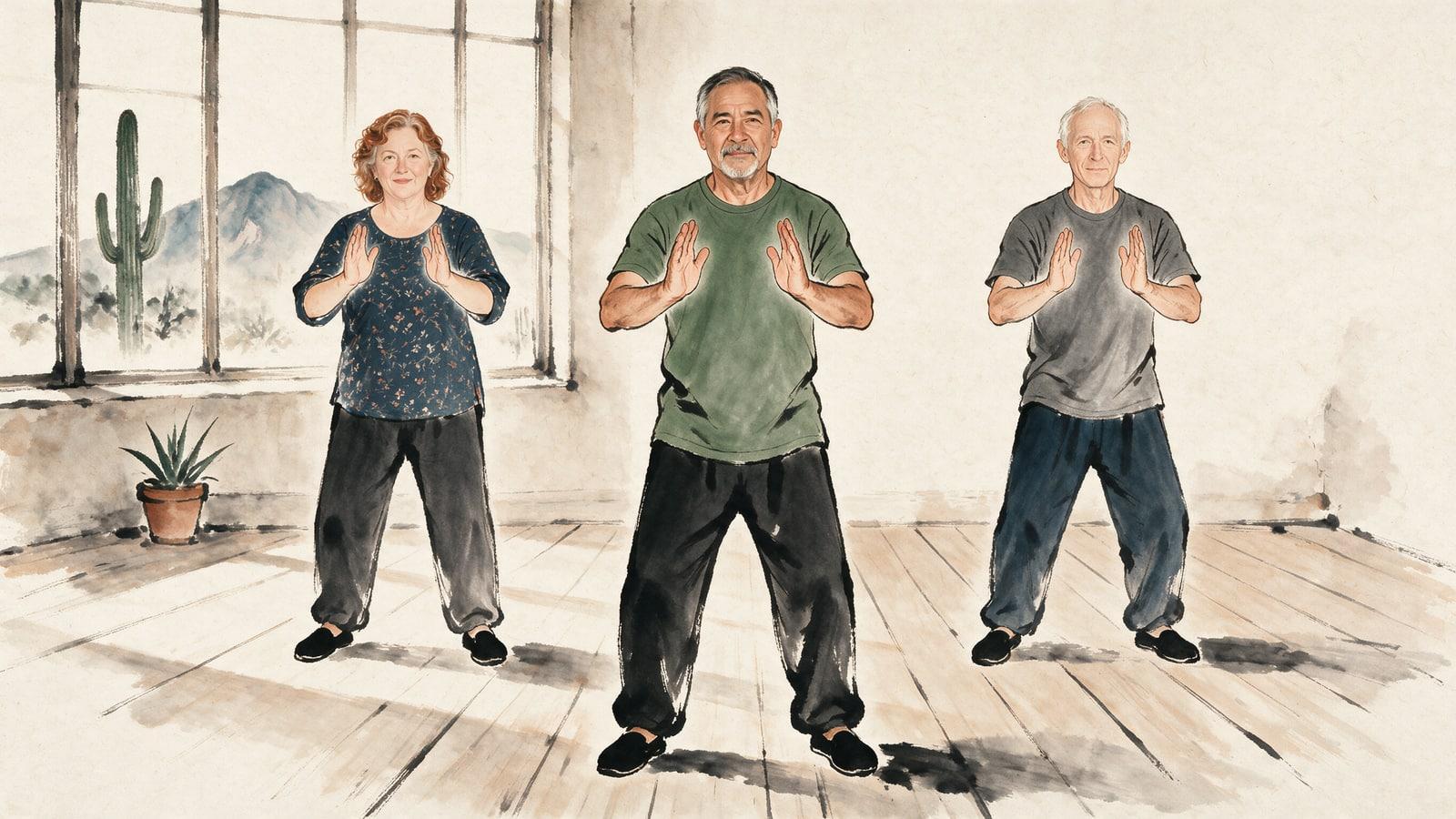
- Standing Like a Pine (3 minutes): Float your arms lightly in front of your lower belly as if holding a warm beach ball. Feel your weight sink comfortably through the soles of your feet into the floor.
- Unhurried Weight Shifts (2 minutes): Slowly pour your weight from the right foot to the left and back again, keeping your spine tall and your head level as if gliding across still water.
- Wave Hands Like Clouds (2 minutes): Let your waist turn gently from side to side while your arms float smoothly through the air as if stirring warm water.
- Resting at the Center (1 minute): Rest both palms over your lower belly below the navel. Take three slow breaths and carry the feeling of calm, steady warmth into the rest of your day.
🪑 Gentle Adaptation: You do not need to stand for ten continuous minutes to cool and ground your body. Every step of this sequence—from the four-to-six breath count to the gentle Cloud Hands waist turns and resting your palms over your lower belly—works wonderfully while seated upright near the front edge of a sturdy chair with both feet flat on the floor.
✨ Key Reflections to Carry With You
- Guide the fire rather than fearing it: Enthusiasm and momentum are wonderful allies when they are anchored by grounded feet and unhurried breath.
- Let your exhale be your thermostat: Whenever thoughts race or the day heats up, a slightly longer, softer exhale immediately invites the mind to settle.
- Softness is not weakness: Yielding for a single breath prevents unnecessary friction and saves your energy for what truly matters.
Old Pueblo Tai Chi — Traditional Yang & Sun Style Classes
Culture Connects Studio • 3000 E. 22nd Street, Tucson, AZ 85713 • https://oldpueblotaichi.com
Questions about classes? Contact Dan Kimball at dan@oldpueblotaichi.com