
Many people grow up thinking that exercise has to leave you exhausted in order to count. Yet when students finish an hour of Tai Chi and Qigong at our Tucson studio, they notice the opposite. They walk out to their cars feeling lighter, clearer-headed, and more energized than when they arrived.
To explain why gentle movement builds energy instead of draining it, traditional teachers use one of the simplest ideas in Chinese wellness: the Three Treasures.
☯️ The Candle Wax, the Flame, and the Light
In classical Qigong, human vitality is described as three connected layers known as Jing, Qi, and Shen (精氣神). As shown in our illustration, the easiest way to picture them is to imagine a burning candle:
“Exercising these three parts of our being—jing, shen, and qi—is the key to maintaining and restoring physical and mental vitality.”
— FaXiang Hou, The Body in Balance
- Vital Essence (Jing): The Candle Wax. The wax and wick represent your physical foundation, including strong bones, supple joints, restful sleep, and deep stamina.
- Vital Energy (Qi): The Warm Flame. The steady flame burning on the wick represents your daily energy, powered by easy breathing, aligned posture, and warm circulation.
- Spirit & Mind (Shen): The Radiating Light. The clear glow shining from the flame represents your mental clarity, calm presence, and peaceful mood.
If a candle sits in a gusty draft of rushing, shallow breathing, and overexertion, the flame flickers wildly and melts the wax down fast. When you shelter the candle inside a glass lantern through slow, calm movement, the wax lasts and the light shines steadily.
🌿 How It Feels in Movement: Taking Care of All Three Treasures in Class
1. Protecting the Wax: Gentle, Joint-Kind Posture
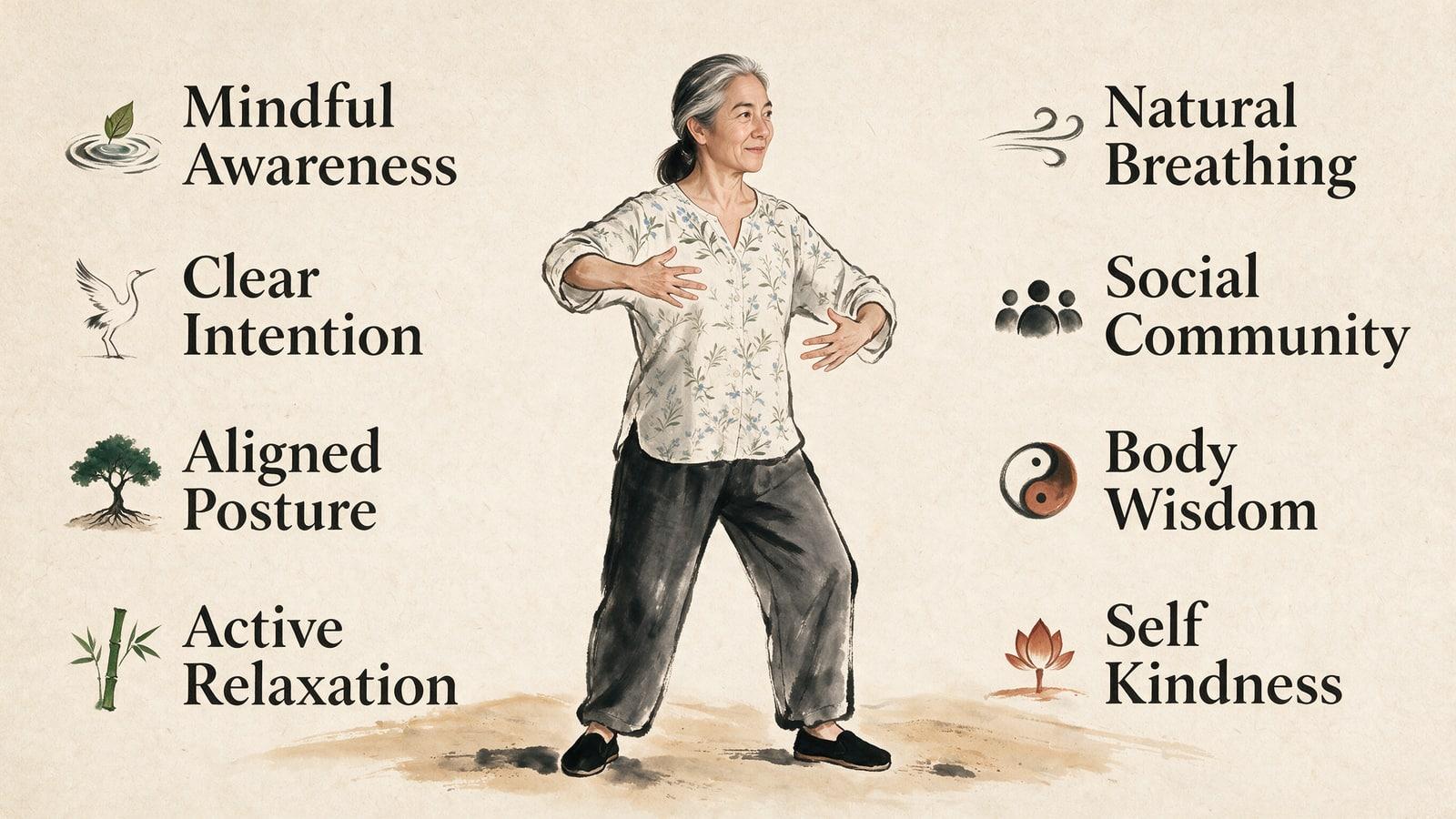
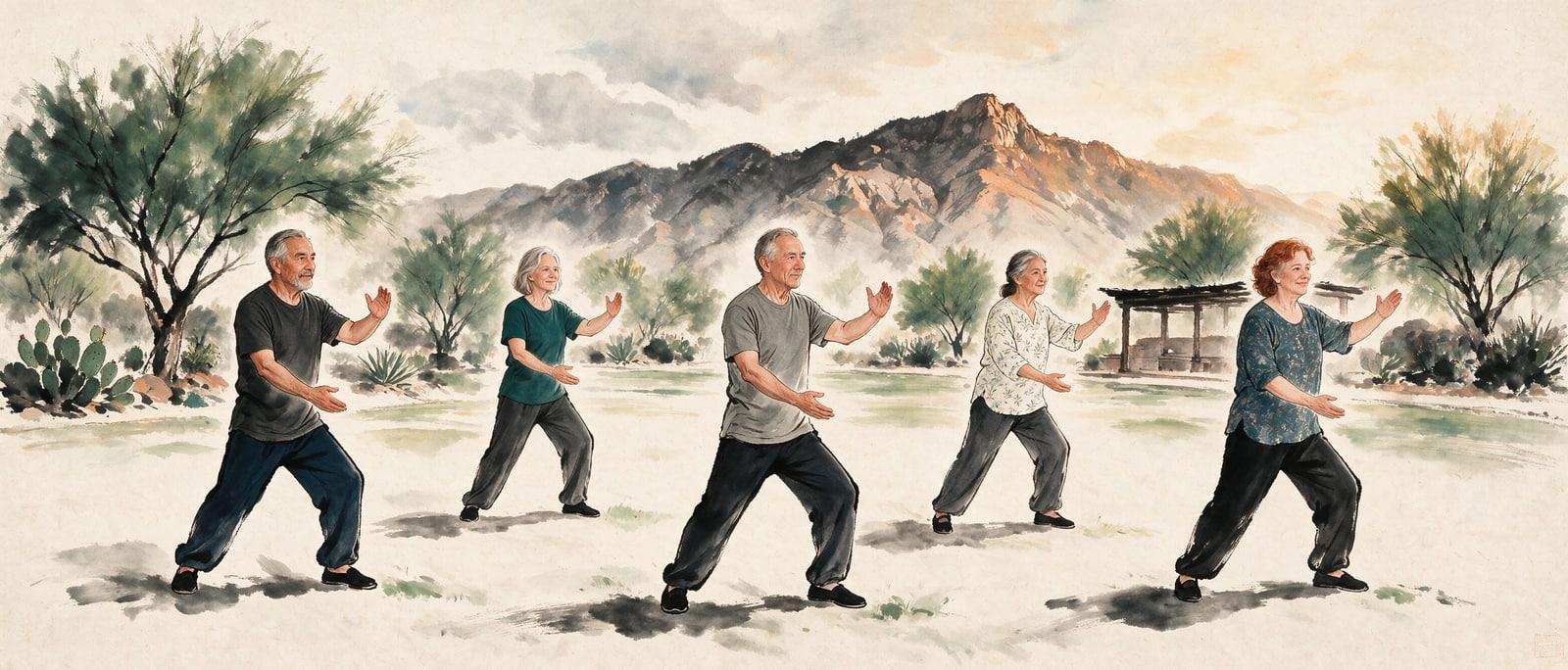
Stand with your feet shoulder-width apart, knees softly unlocked, and hands rounded comfortably in front of your chest as if holding a warm beach ball. By practicing at a comfortable 70 percent effort, you strengthen your legs and hips without draining your stamina.
2. Steadying the Flame: Unhurried Belly Breathing
Matching slow, rounded arm movements with calm nasal breathing acts like a gentle bellows. It boosts warm circulation to your hands and feet without ever making you gasp for air.
3. Brightening the Light: Soft, Present Eyes
Resting your attention gently on the feeling of your hands and breath gives your mind a quiet break from screens and busy schedules. Within a few minutes, your natural mental clarity returns.
🥋 Studio Cue: At the end of any Qigong routine, rest both palms over your lower belly for three quiet breaths. Picture your energy settling warmly into your center, like banking a cozy campfire so its warmth lasts all day.
🪑 Gentle Adaptation: On days when you feel tired or run-down, scale your practice back to slow seated Qigong or gentle standing breathing. Nourishing your energy is always wiser than pushing through fatigue.
✨ Key Reflections to Carry With You
- Exercise should replenish you: A great Tai Chi or Qigong session leaves you feeling refreshed rather than wiped out.
- Calm breath steadies the mind: Just as a steady flame gives off clear light, unhurried breathing brings mental clarity.
- Pace yourself for the long run: Gentle, consistent practice protects your joints and vitality year after year.
Old Pueblo Tai Chi — Traditional Yang & Sun Style Classes
Culture Connects Studio • 3000 E. 22nd Street, Tucson, AZ 85713 • https://oldpueblotaichi.com
Questions about classes? Contact Dan Kimball at dan@oldpueblotaichi.com