
When people visit Old Pueblo Tai Chi in Tucson for the first time, they often arrive because a doctor, physical therapist, or neighbor recommended Tai Chi. Some come for steadier balance or happier knees, while others simply want an hour where their mind can finally slow down.
After a few weeks of class, students often ask a great question: “How can something so gentle help my balance, my joints, and my stress levels all at the same time?” Researchers at Harvard Medical School asked that exact question. In their landmark guide, The Harvard Medical School Guide to Tai Chi, Dr. Peter Wayne and his team identified eight active ingredients that work together whenever you practice.
☯️ Why Moving as a Whole Beats Isolated Exercise
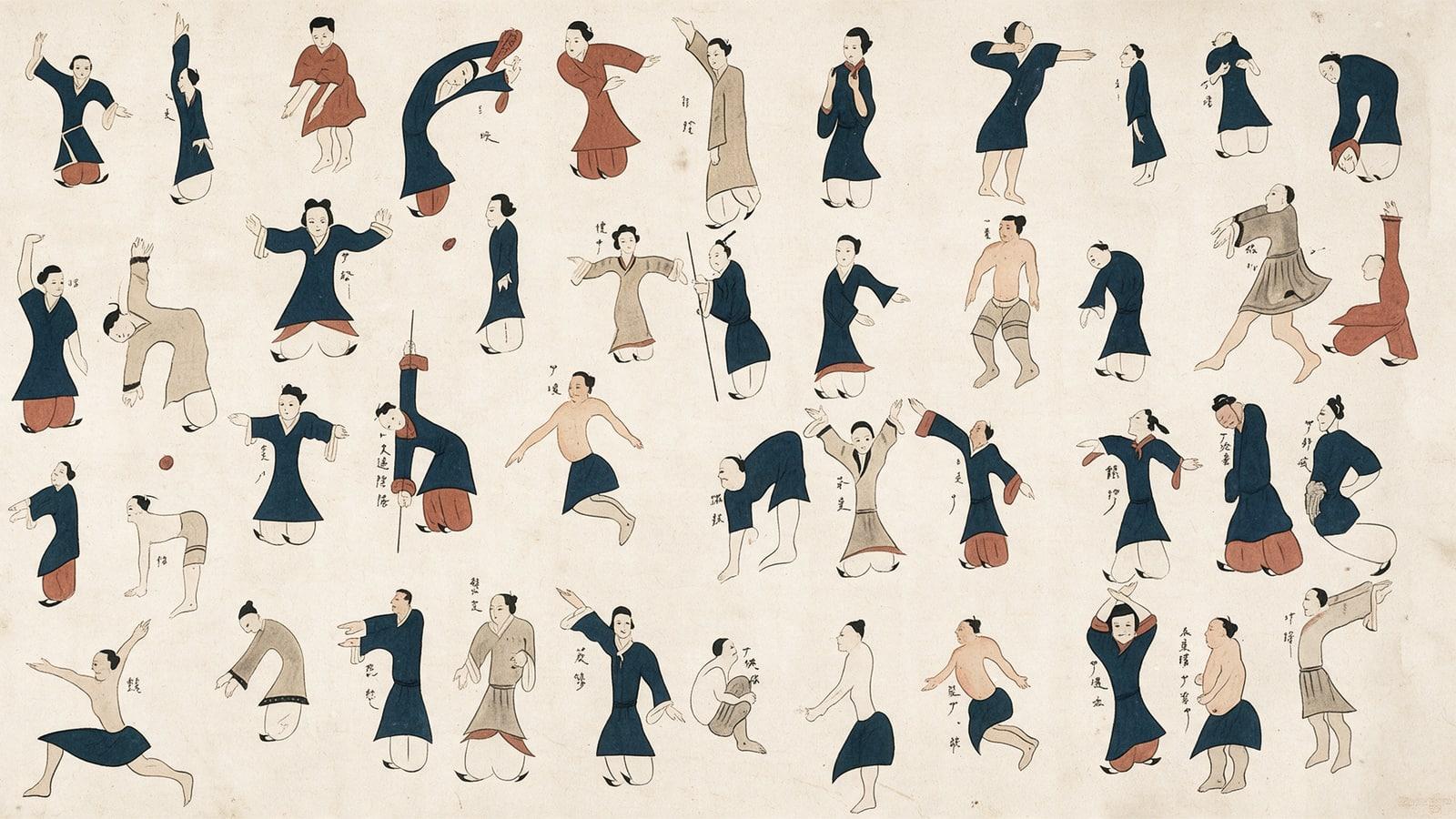
In most modern workouts, we separate everything: one machine for your legs, another for your arms, and maybe five minutes of quiet breathing at the very end. Classical Tai Chi (太極) was designed differently. It weaves posture, gentle weight shifting, slow breathing, and relaxed attention into a single, continuous flow.
“Tai chi looks at the body as an interconnected system, not as a collection of individual parts.”
— Peter M. Wayne, PhD, An Introduction to Tai Chi
Harvard’s researchers noticed that you can’t reduce Tai Chi to just one mechanical exercise. Its real magic comes from how eight simple habits support one another at the same time.
🌿 How It Feels in Movement: The Eight Active Ingredients in Everyday Practice
1. Mindful Awareness
Instead of zoning out while watching a screen on a treadmill, you pay gentle attention to how your feet meet the floor and how your hands glide through the air—giving a busy mind a refreshing break from everyday worry.
2. Clear Intention
Posture names like White Crane Spreads Its Wings or Wave Hands Like Clouds aren’t just poetic titles. Picturing your hands moving through soft clouds immediately helps your shoulders relax and smooths out jerky movement.
3. Aligned Posture
Standing tall with unlocked knees and relaxed shoulders builds leg strength and wakes up the natural balance sensors in the soles of your feet—without pounding your joints.
4. Active Relaxation
Rather than bracing or clenching your muscles, Tai Chi teaches you how to let go of extra tension in your neck, shoulders, and lower back while staying upright and steady.
5. Natural Breathing
As your arms open and close, your breathing naturally slows down and settles deeper into your ribs and belly, signaling your nervous system that it is safe to unwind.
6. Social Community
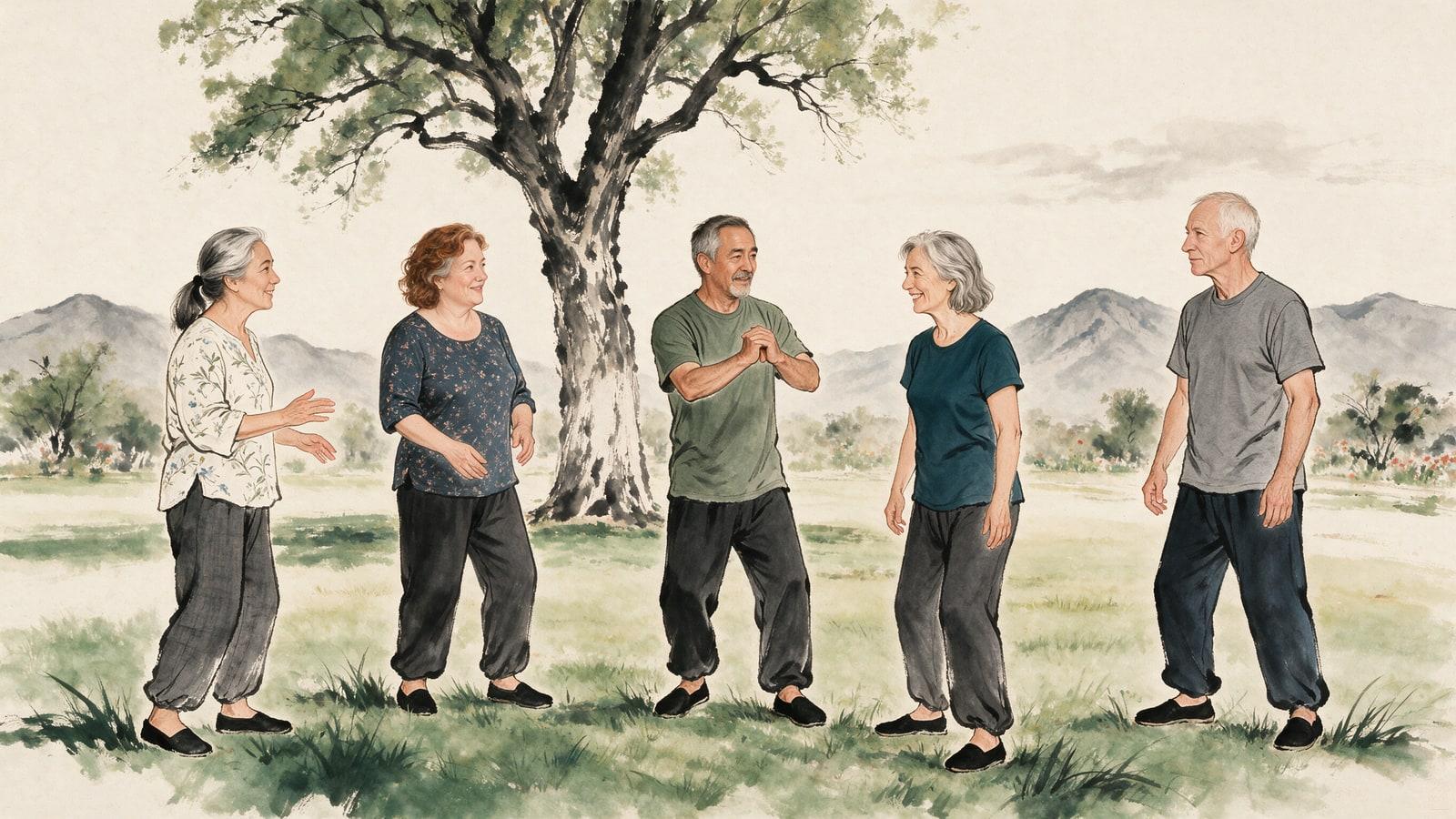
Moving side by side with neighbors in a friendly, non-competitive room lifts your mood and makes it much easier to stick with a healthy weekly habit.
7. Body Wisdom
Smooth, circular movements gently oil stiff joints and improve circulation from your fingertips to your toes, leaving you more energized after class than when you walked in.
8. Self Kindness
Tai Chi reminds us that we never need to force a stretch or rush through our day. Moving at roughly 70 percent of your maximum effort protects your body for the long run.
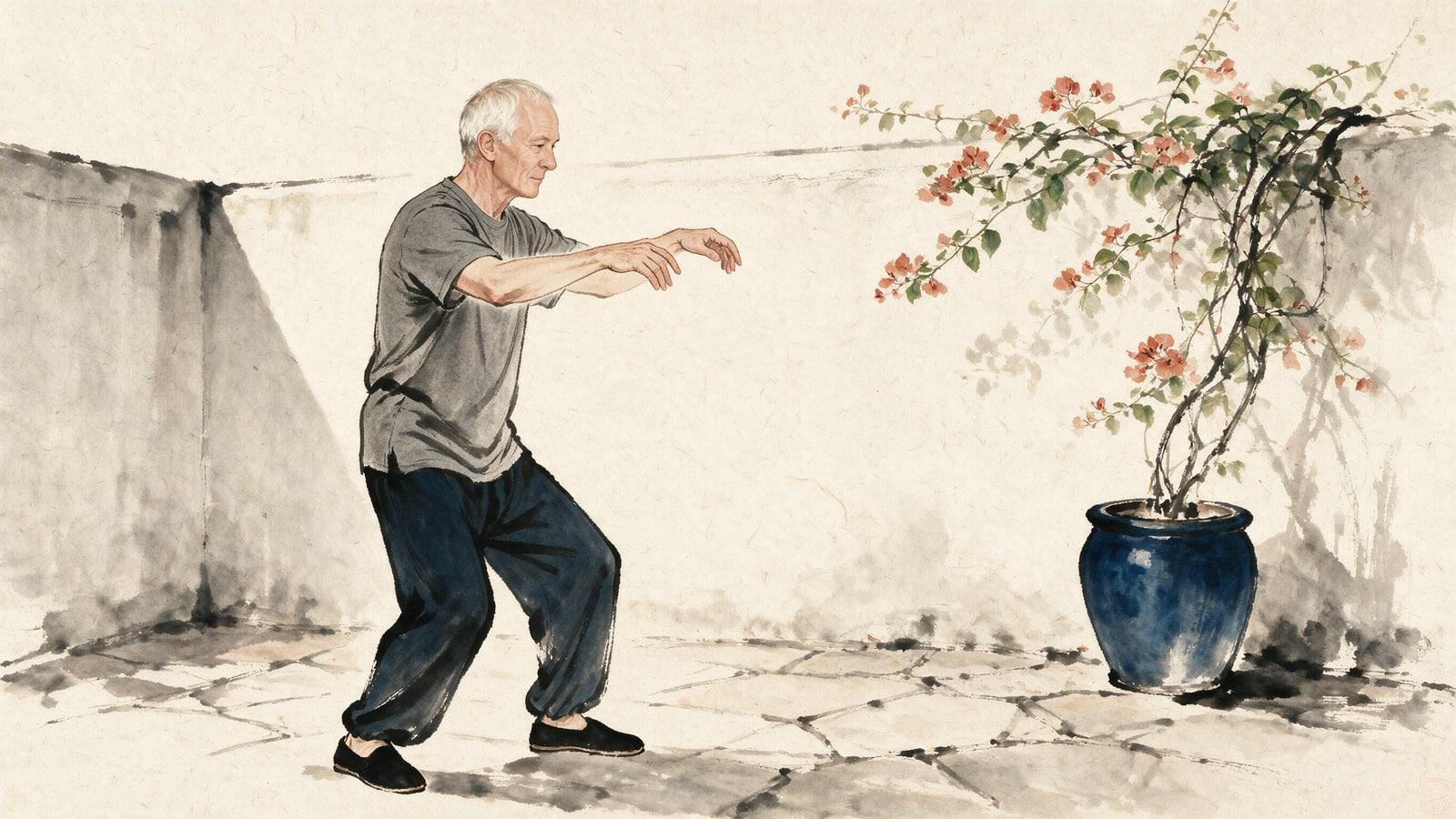
🥋 Studio Cue: Next time you practice a simple movement like Wave Hands Like Clouds, notice how three ingredients happen at once: your feet feel the floor, your breath stays slow, and your eyes rest softly on your moving hands.
🪑 Gentle Adaptation: All eight ingredients work just as well from a sturdy chair. Even when your hips stay seated, shifting your weight slightly from one sitting bone to the other and breathing slowly with your arm movements gives your body and mind the same calming reset.
✨ Key Reflections to Carry With You
- Everything works together: Balance, breathing, posture, and community amplify one another in every session.
- Gentle is effective: You don’t need high-impact strain to build stronger legs and steadier balance.
- Start where you are: Even ten minutes of slow, attentive movement brings noticeable calm to your day.
Old Pueblo Tai Chi — Traditional Yang & Sun Style Classes
Culture Connects Studio • 3000 E. 22nd Street, Tucson, AZ 85713 • https://oldpueblotaichi.com
Questions about classes? Contact Dan Kimball at dan@oldpueblotaichi.com