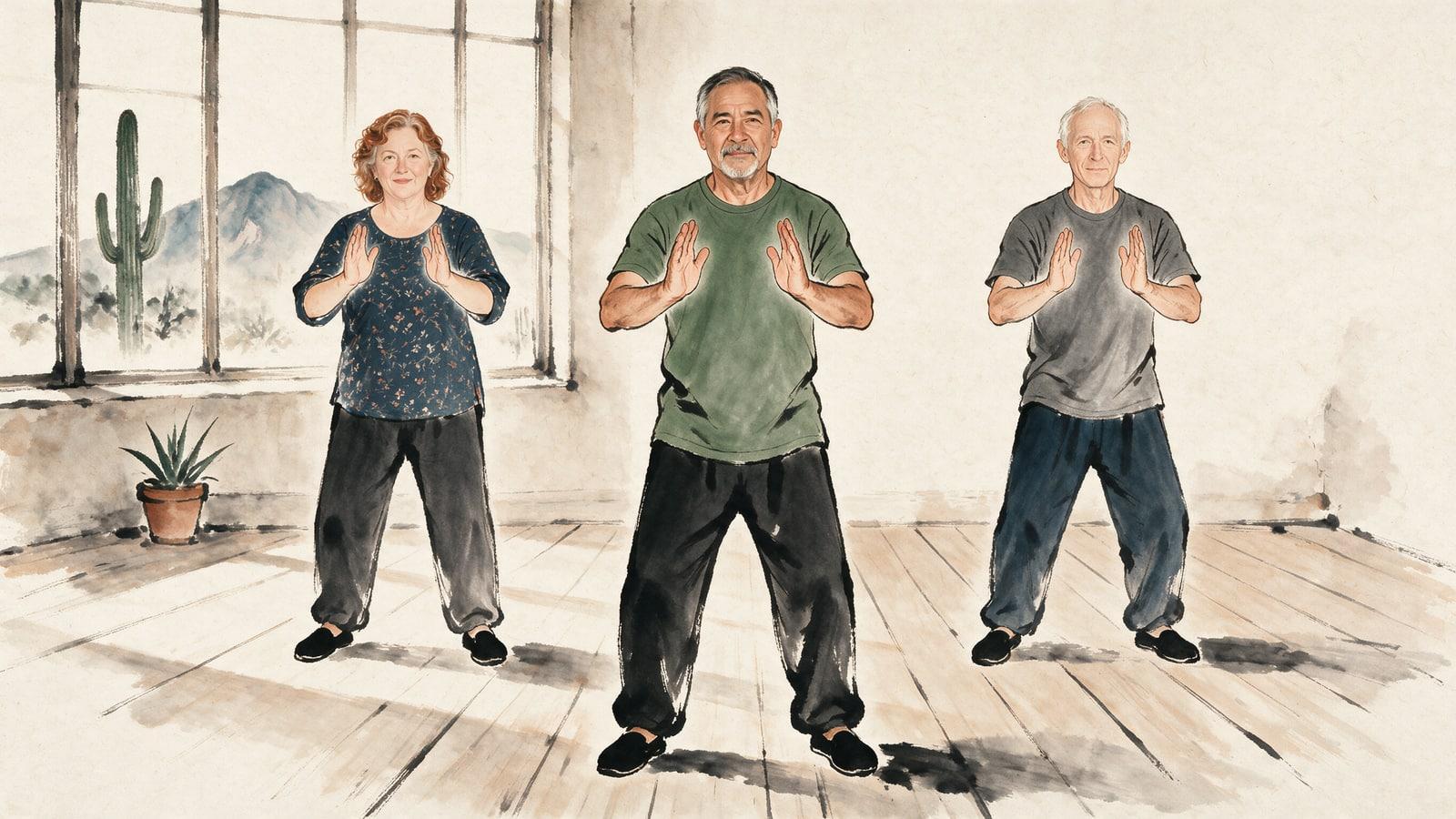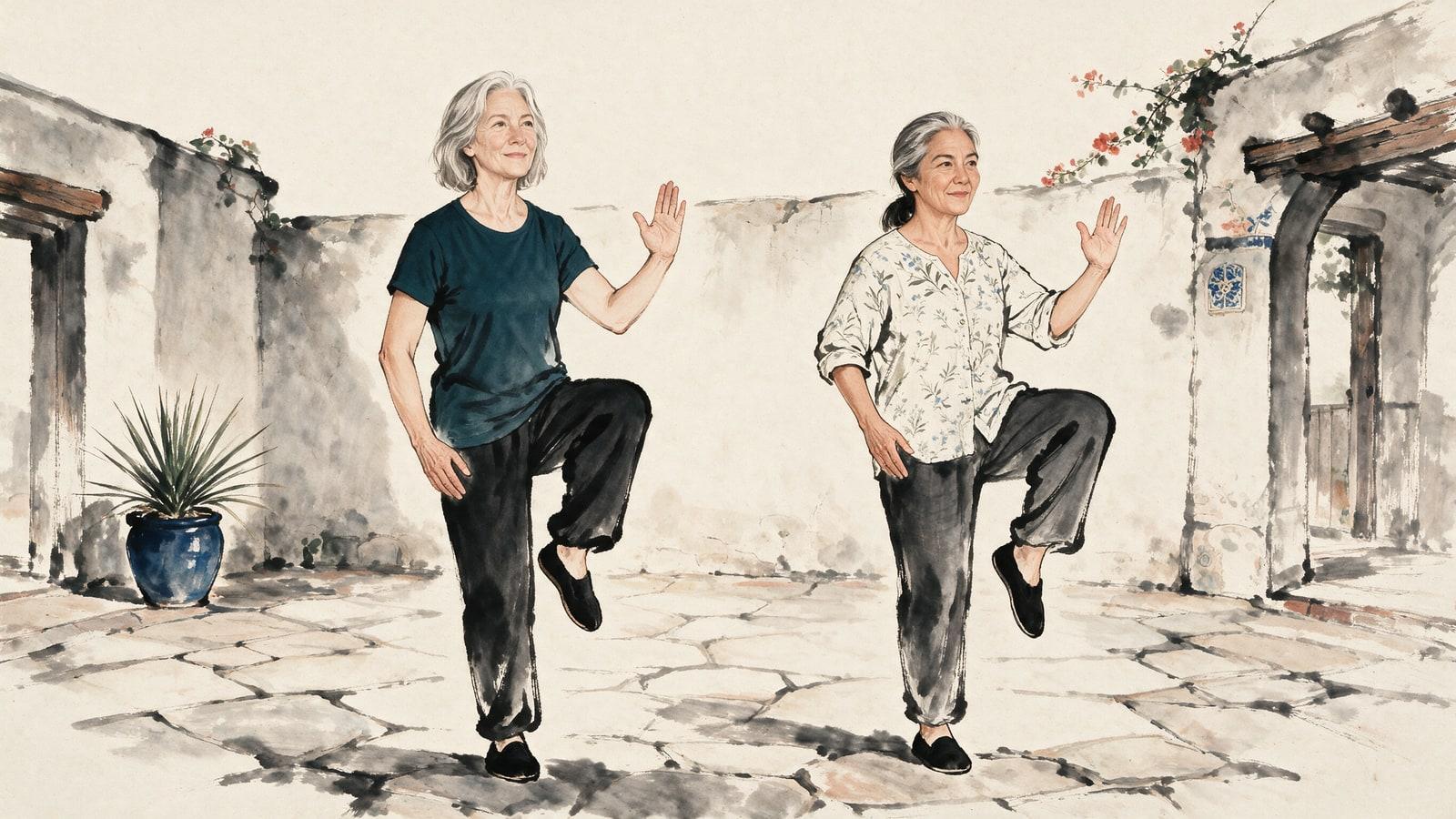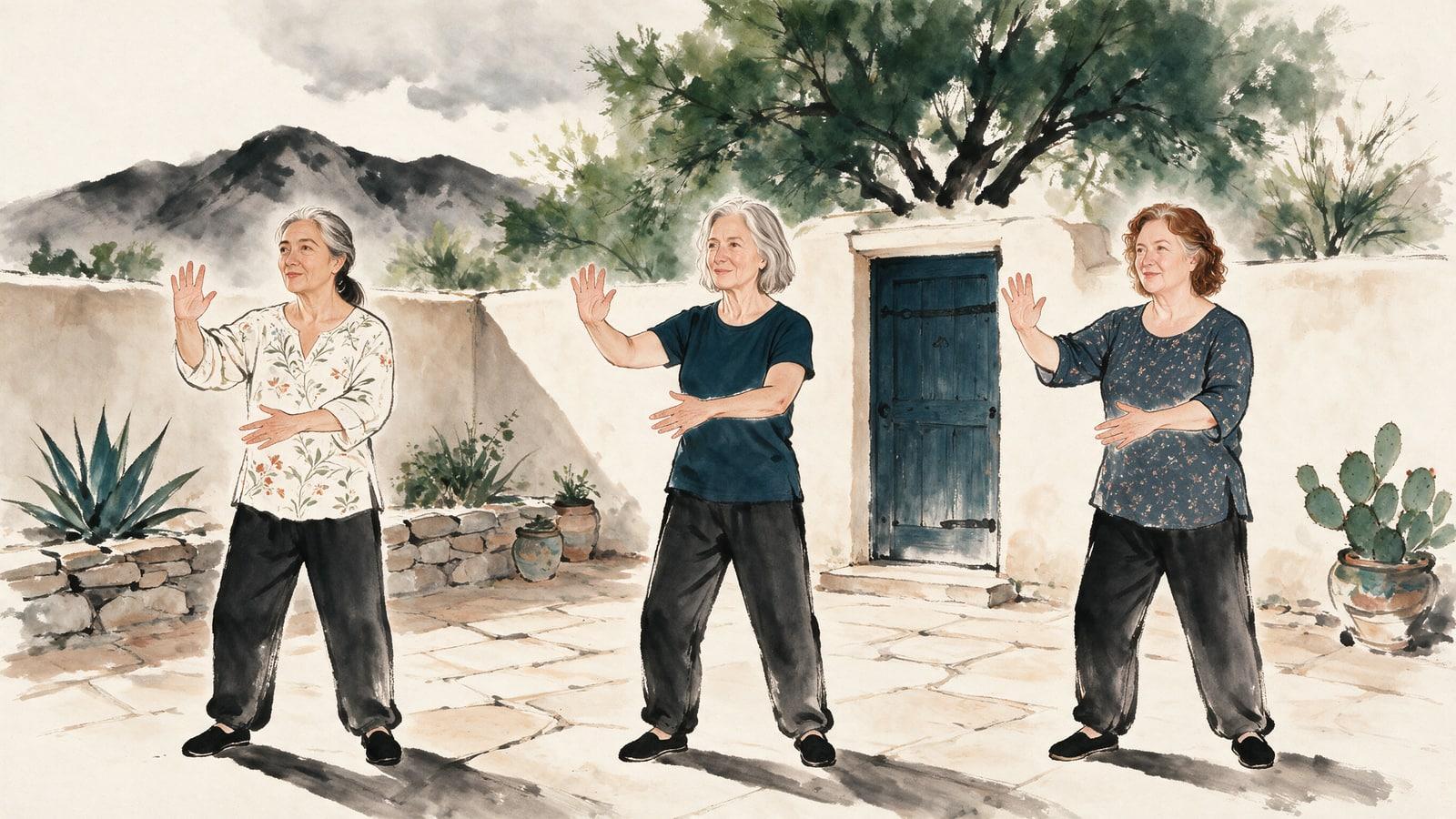

Halfway through the traditional Yang-style Tai Chi form comes a wonderful contrast of two movements: first, you fold gently downward in Needle at Sea Bottom, as if reaching into clear ocean water; then, you rise and step forward into Fan Through the Back, opening your chest and arms wide like a folding fan catching the wind.
Practiced together, this pair is like a deep exhale followed by a refreshing morning stretch. Even better, learning the simple hip-hinge secret behind Needle at Sea Bottom will teach you how to reach downward in everyday life without ever straining your lower back.
☯️ Gathering Downward Before Opening Wide
In classical Chinese movement, every big, expansive posture begins by gathering inward first—just like a plant drawing water into its roots before opening its leaves toward the sun.
“The spine is the root of all motion. Motion is the key to maintaining spinal health.”
— Dr. Yang, Jwing-Ming, Back Pain Relief
In Needle at Sea Bottom (Hai Di Zhen 海底針), 90 percent of your weight settles into your back leg while your front toes touch lightly in an Empty Stance. Then, in Fan Through the Back (Shan Tong Bei 扇通背), you step forward into a steady 70/30 Bow Stance as both arms open generously.
🌿 How It Feels in Movement: Step-by-Step Studio Guide
1. Hinge at the Hips—Never Round Your Lower Back
As you settle 90 percent of your weight onto your right (back) leg and touch the ball of your left foot lightly in front, fold forward slightly from your hip creases while keeping your spine completely straight and long. You only need to incline your torso about 15 to 20 degrees—never slump or round your waist to reach the floor!
2. Reach Softly With the “Needle” Hand
Let your right hand glide diagonally downward in front of your body with the fingers pointing toward the floor at knee-to-shin height, while your left hand rests calmly beside your left hip for balance, and your gaze looks softly ahead and down.
3. Rise and Step Into “Fan Through the Back”
Bring your torso upright as you lift both hands in front of your chest. Step your left foot forward onto a comfortable shoulder-width track and shift 70 percent of your weight into a front Bow Stance. As you arrive, draw your right hand up beside your right temple (palm facing out) and press your left palm gently forward at nose height—feeling a pleasant stretch across your upper back.
🥋 Studio Cue: Keep your eyes looking about six feet ahead on the floor during Needle at Sea Bottom rather than dropping your chin to your chest. Keeping your head stacked in line with your spine protects your neck and balance.
🪑 Gentle Adaptation: You never need to bend low to practice Needle at Sea Bottom! Staying nearly upright and simply pointing your fingertips toward your front knee gives you the exact same coordination with zero load on sensitive knees or lower backs.
✨ Key Reflections to Carry With You
- Keep your back long and flat: Any small forward incline comes from folding at your hip creases, never from rounding your lower back.
- 90/10 into 70/30: Enjoy the clear shift from a back-weighted Empty Stance into a grounded forward Bow Stance.
- Breathe with the movement: Exhale as you settle into Needle at Sea Bottom; inhale as you rise and exhale as you open into Fan Through the Back.
Old Pueblo Tai Chi — Traditional Yang & Sun Style Classes
Culture Connects Studio • 3000 E. 22nd Street, Tucson, AZ 85713 • https://oldpueblotaichi.com
Questions about classes? Contact Dan Kimball at dan@oldpueblotaichi.com