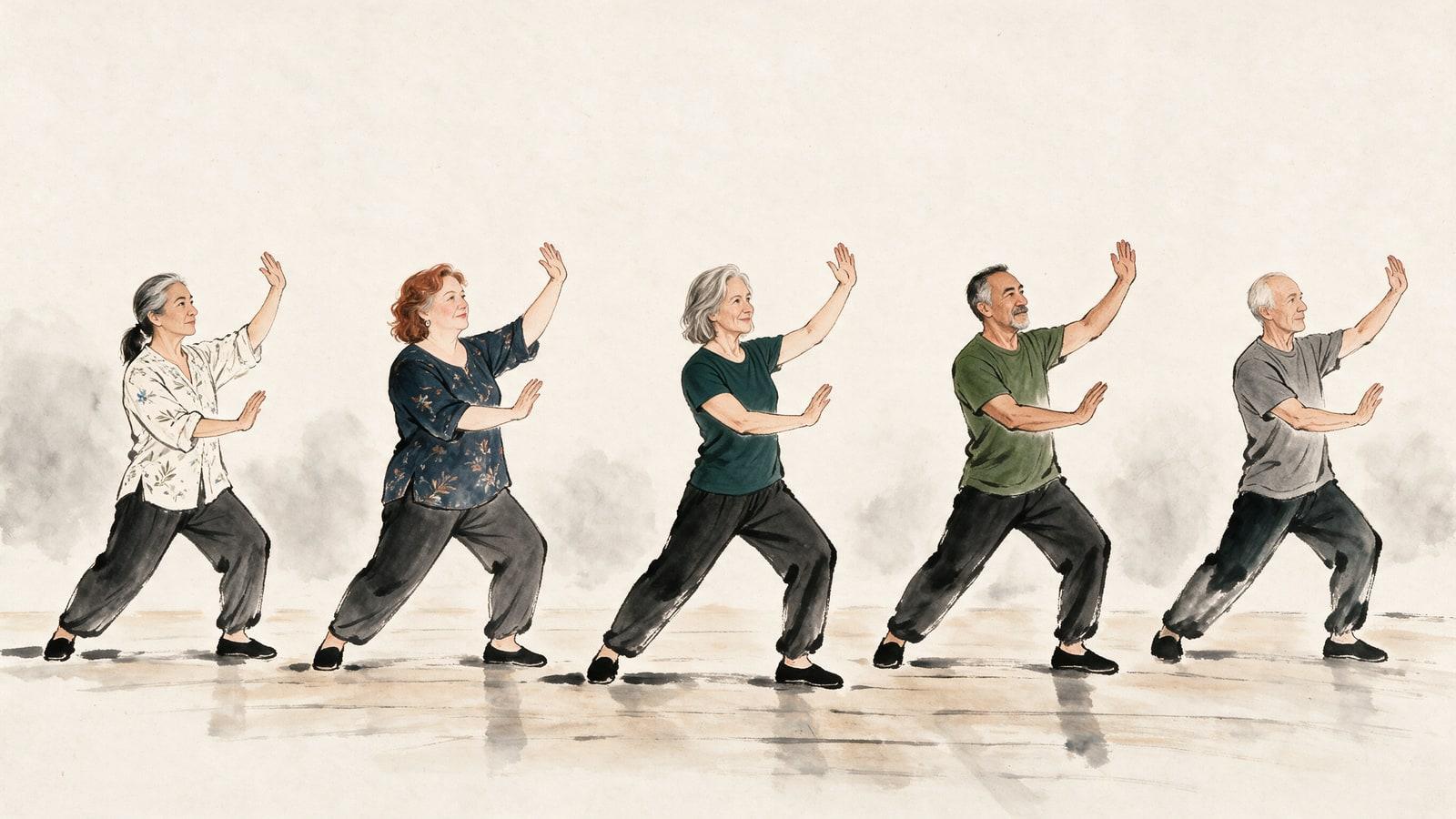

Almost every new student at Old Pueblo Tai Chi has the same pleasant surprise during their first few classes. Halfway through a warm-up or a round of Eight Pieces of Brocade Qigong, they notice something wonderful. Simply turning the wrists, waist, and ankles has melted stiffness out of their neck and lower back.
How can a small turn at your hands or hips help loosen your shoulders and spine? Your body is not built out of separate, disconnected parts. Like a well-knitted sweater, a continuous web of muscles, tendons, and connective tissue links your fingertips all the way to your toes.
☯️ Moving Like One Connected Web
Long before modern physical therapists studied how connective tissue links the body from head to toe, classical Chinese teachers mapped these pathways. They called them the body’s Tendon Channels (Jingjin 經筋): twelve long ribbons of muscle and tendon that travel across every major joint.
“To move, move every part. To be still, quiet every part.”
— Tai Chi Proverb (quoted by Martin J. Lee, The Healing Art of Tai Chi)
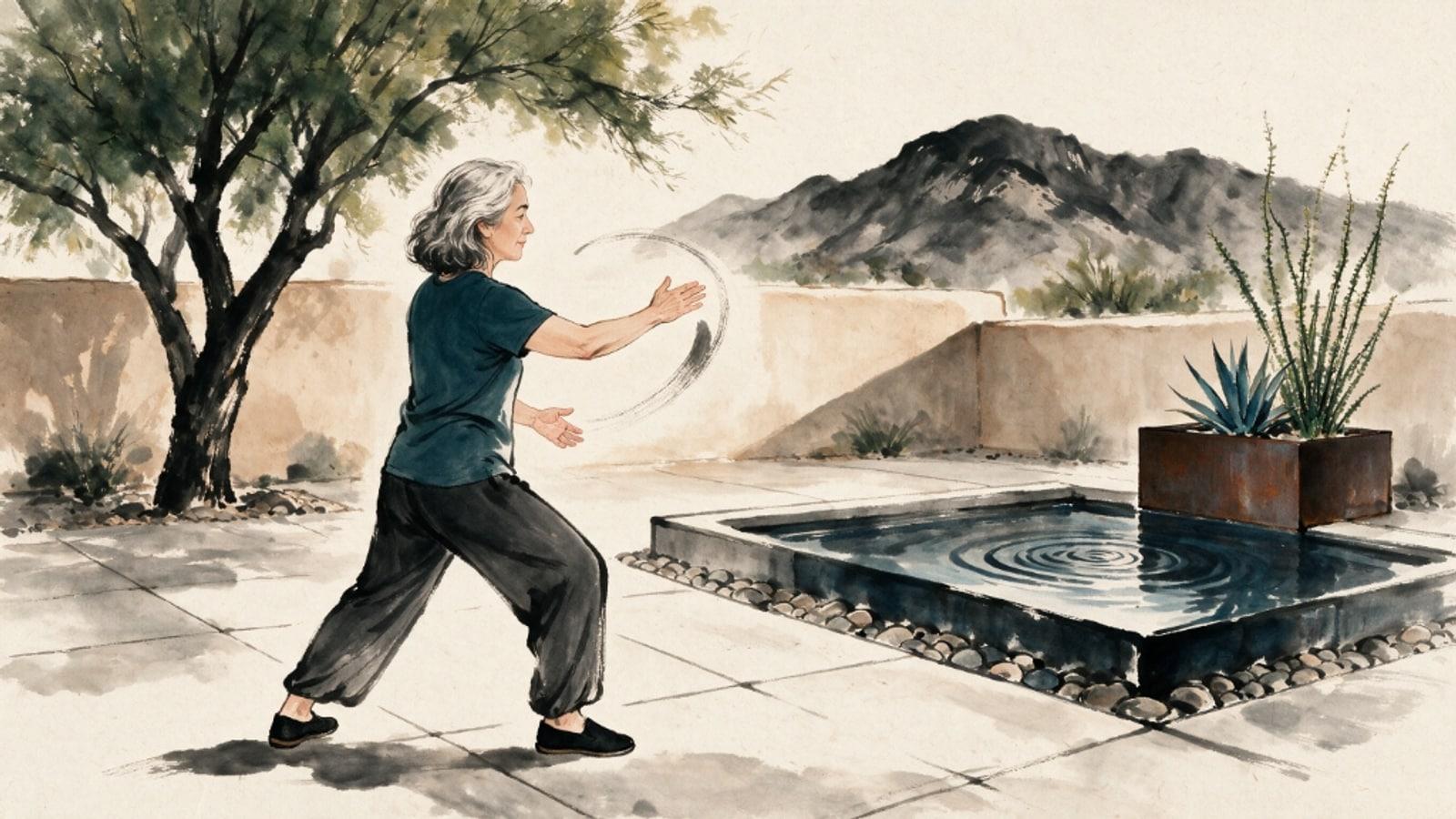
If you pull on one corner of a bedsheet, that gentle tug travels all the way to the opposite corner. In the same way, when you keep your joints unlocked and move in slow, rounded arcs, a gentle turn of your waist or hands ripples smoothly through your back, hips, and legs.
🌿 How It Feels in Movement: Three Simple Ways to Wake Up Whole-Body Flow
You do not need to memorize an anatomy chart to enjoy this connected feeling. In class, we focus on three everyday habits that help your whole body move together smoothly:
1. Let Your Waist and Hips Lead the Turn
Settle into a comfortable stance with your hands resting lightly on your thighs, as in Sway the Head and Shake the Tail from Eight Pieces of Brocade. As you slowly spiral your waist and look softly over one shoulder, you feel a soothing stretch travel from your ankles and hips all the way up your spine.
2. Keep Your Wrists and Fingers Softly Alive
Because the long muscle pathways of the arms start right at the fingertips, letting your hands go completely limp breaks the connection to your upper back. Keeping your palms gently open, as if resting on a beach ball floating in water, creates a supportive stretch across your arms and chest.
3. Round Every Corner Without Locking Your Joints
Think of your arms and legs like a garden hose. If you kink the hose by locking your elbows or knees straight, water cannot flow smoothly. Keeping a soft, natural curve in your elbows, wrists, and knees lets circulation and gentle warmth reach your hands and feet.
🥋 Studio Cue: Try the “Towel Wring” warm-up. Hold both arms out in front of you with soft elbows. As you slowly turn your waist to the left, let one palm gently spiral upward while the other spirals downward, feeling the gentle stretch travel across your shoulder blades.
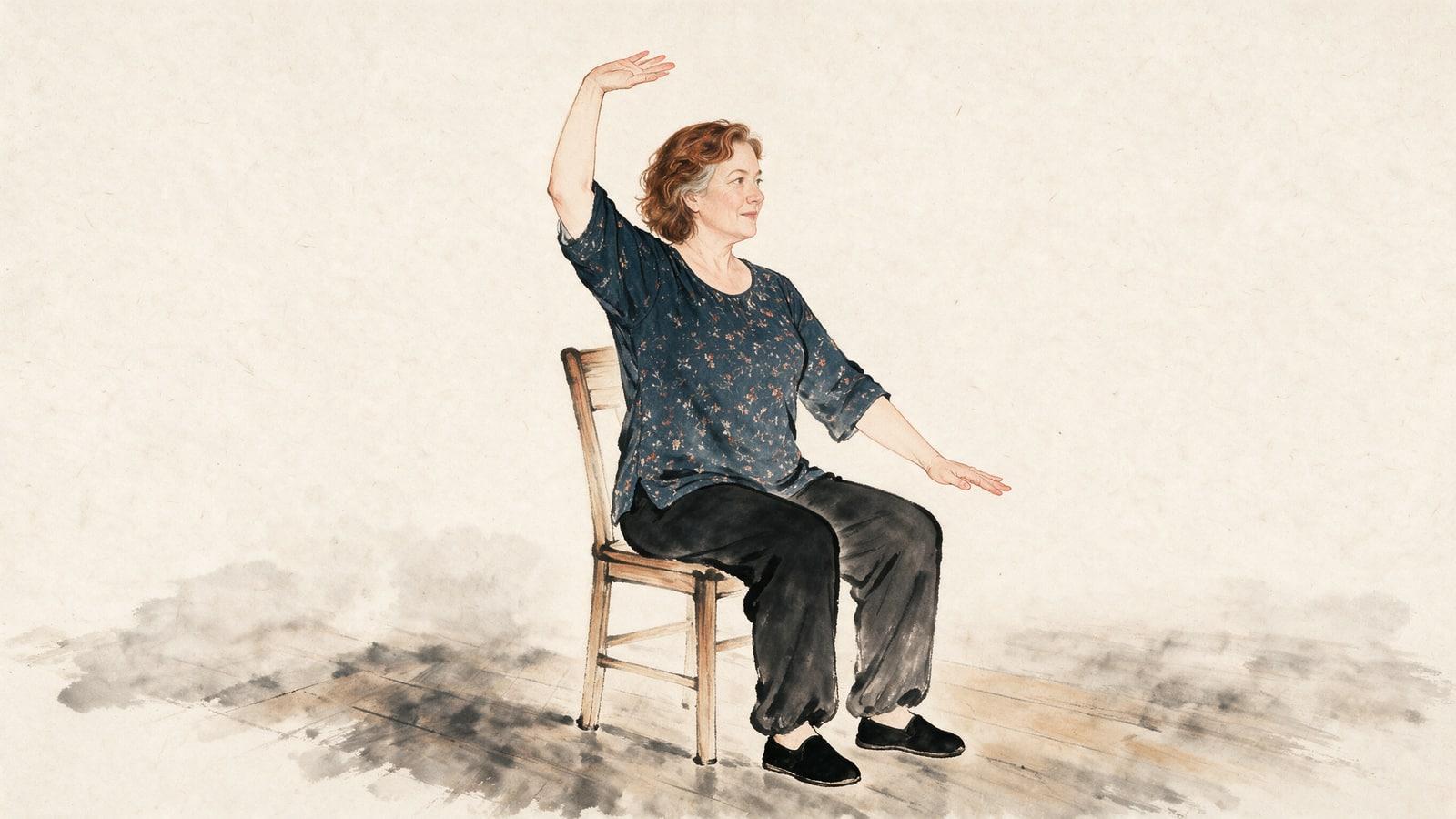
🪑 Gentle Adaptation: If your hips, shoulders, or knees feel stiff in the morning, make your circles smaller. Resting your hands on your thighs while seated in a chair and gently turning your ribs and shoulders from side to side loosens the entire spine without knee strain.
✨ Key Reflections to Carry With You
- Everything is connected: Gentle movements of the hands, waist, and feet help loosen stiffness in the neck, shoulders, and lower back.
- Soft curves beat hard stretches: Keeping your elbows and knees softly unlocked protects your joints and encourages warm circulation.
- Small movements go a long way: You never have to force a stretch in Tai Chi or Qigong to feel noticeably looser and more energized.
Old Pueblo Tai Chi — Traditional Yang & Sun Style Classes
Culture Connects Studio • 3000 E. 22nd Street, Tucson, AZ 85713 • https://oldpueblotaichi.com
Questions about classes? Contact Dan Kimball at dan@oldpueblotaichi.com