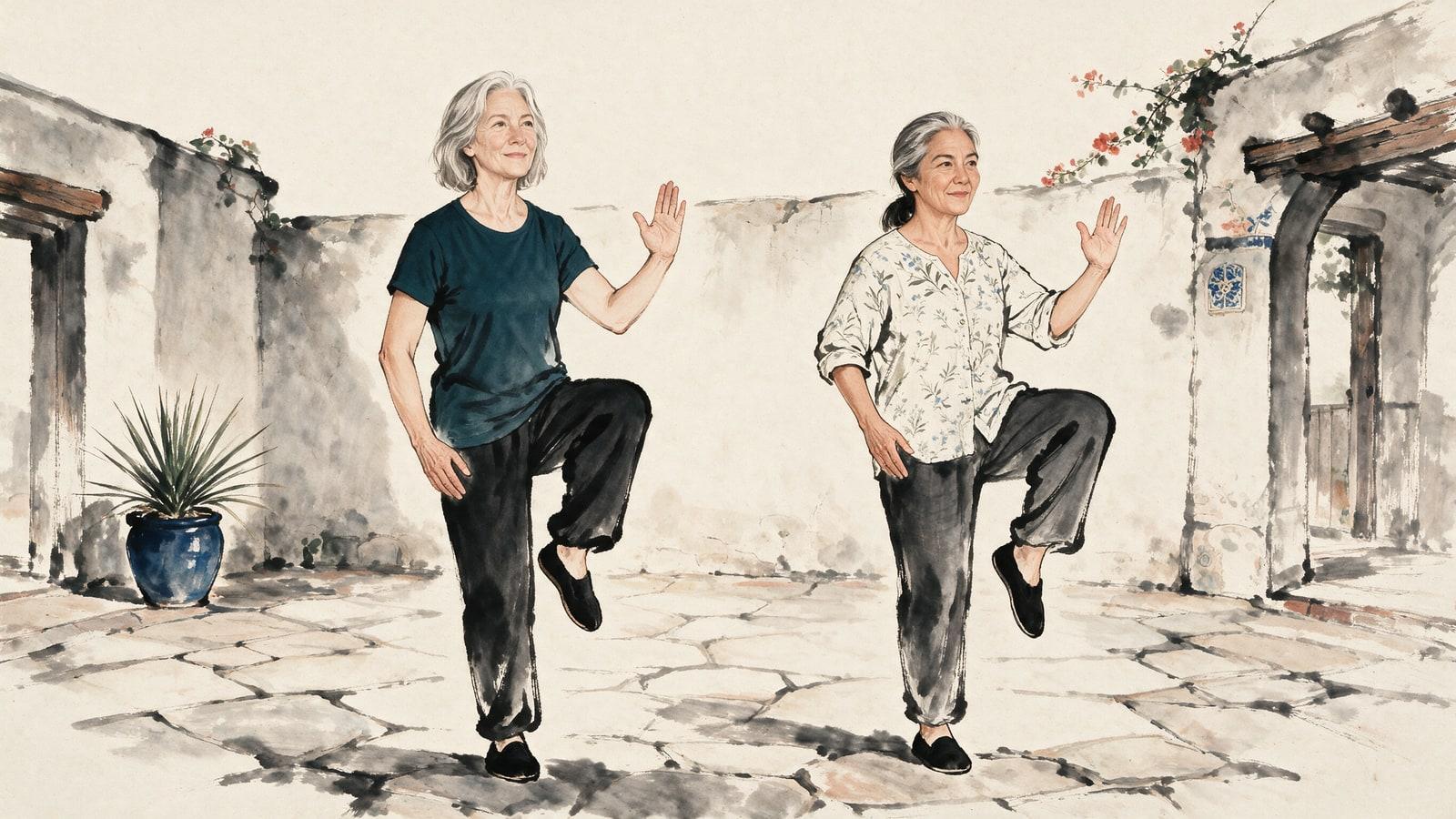

Among all the poetic movement names in traditional Tai Chi, few linger in the heart quite like Embrace Tiger, Return to Mountain. Even before you learn the steps, the name paints an unforgettable picture: wrapping your arms gently around the vibrant energy of everyday life and coming back home to quiet, steady stillness.
Practiced both as a flowing transition in Yang-style Tai Chi and as a beloved standalone breathing reset popularized in the West by teacher Chungliang Al Huang, Embrace Tiger, Return to Mountain takes less than two minutes and helps settle your shoulders and breath whenever your day feels busy.
☯️ Balancing Lively Energy and Quiet Stillness
In Chinese movement tradition, this posture is called Embrace Tiger, Return to Mountain (Bao Hu Gui Shan 抱虎歸山). The Tiger represents spirited strength, courage, and the active pulse of our day. Yet if we stay in high gear from morning until night—rushing from task to task and tensing our shoulders—we quickly feel worn out.
“When learning becomes you, then it appears as you need it, when you are being you.”
— Chungliang Al Huang, Embrace Tiger, Return to Mountain
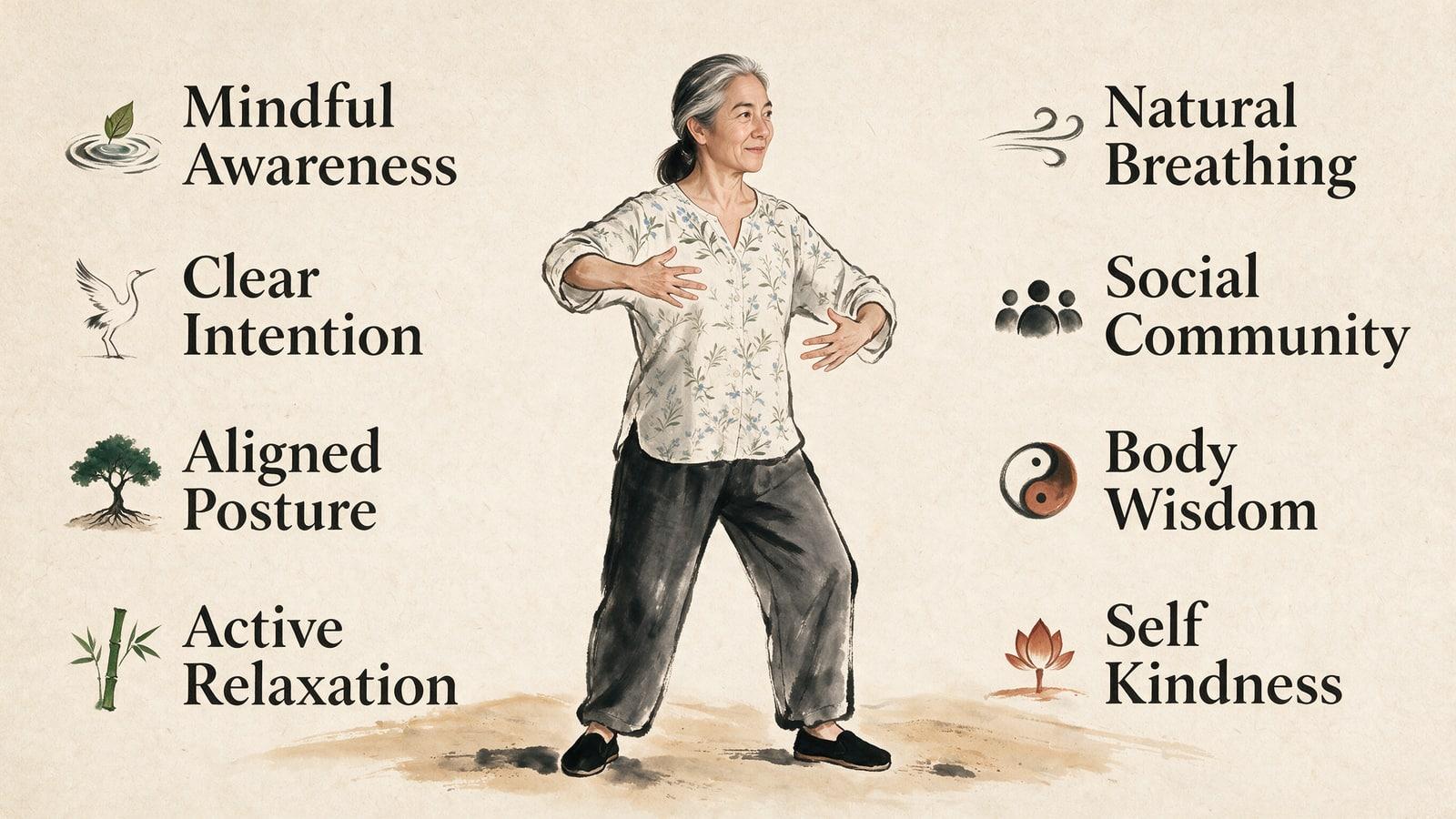
The Mountain represents the calm, grounded center to which every breath returns. In our Tucson classes, we love using this movement during our warm-up and closing circle: opening the arms wide to gather a full breath, then drawing the palms gently inward in front of the chest and lower belly.
🌿 How It Feels in Movement: Step-by-Step Studio Guide
1. Stand Tall and Rooted Like a Mountain
Stand with your feet comfortably shoulder-width apart, knees unlocked, and shoulders resting softly down away from your ears. Feel the weight of your body settle evenly across both feet on the floor.
2. Open Wide on a Slow Inhale
As you breathe in slowly through your nose, let both arms sweep outward and upward in a wide, welcoming circle. Keep your elbows softly rounded in front of your body as if gathering warm morning sunlight.
3. Gather Inward and Settle on the Exhale
As you breathe out, curve your arms gently inward as if hugging a wide pillar of air. Let your palms float down in front of your chest with your fingertips pointing softly upward, or rest one palm over the other across your lower belly for a quiet breath.
🥋 Studio Cue: When your arms open wide, keep your elbows slightly ahead of your shoulders rather than pulling your arms backward behind your back. Think of wrapping your arms around a wide saguaro or oak tree right in front of your chest.
🪑 Gentle Adaptation: If lifting your arms high causes any shoulder tightness, sweep your hands outward only to chest height before gathering them back toward your heart and belly. Practiced seated in a chair in the evening, three slow rounds are a wonderful way to unwind before sleep.
✨ Key Reflections to Carry With You
- We need both energy and rest: Lively movement and quiet stillness support each other on every single breath.
- Every exhale is a return home: Whenever your shoulders creep up during the day, let a slow exhale bring your attention back down to your feet and belly.
- Close your practice with calm: Ending any practice session with three slow gathering breaths helps carry that calm into the rest of your day.
You can also explore Chungliang Al Huang’s classic book on our Recommended Reading List.
Old Pueblo Tai Chi — Traditional Yang & Sun Style Classes
Culture Connects Studio • 3000 E. 22nd Street, Tucson, AZ 85713 • https://oldpueblotaichi.com
Questions about classes? Contact Dan Kimball at dan@oldpueblotaichi.com