
Early in almost every Yang and Sun style Tai Chi routine, you will hear the teacher call out a musical posture name: “Play the Pipa” (sometimes translated as Strum the Lute). Students often smile and ask: “What exactly is a Pipa, and how do you hold one?”
Once you see and hear a real Pipa—China’s beloved four-stringed wooden lute—the Tai Chi posture immediately makes sense. Picturing how a musician cradles that instrument upright in their lap gives your shoulders, elbows, and wrists the exact rounded alignment we look for in class.
☯️ A Two-Thousand-Year-Old Musical Treasure
For more than two thousand years, the pear-shaped Pipa (琵琶) has been one of the most expressive instruments in Chinese music. Tang-dynasty poets famously described its clear, ringing notes as sounding like “pearls, large and small, cascading onto a plate of jade.”
“Circular movements symbolise unity, continuity, interconnectedness, harmony, flexibility, gentleness, grace, completeness, and wholeness.”
— Dr. Zibin Guo, Adaptive Tai Chi
Even the instrument’s two-syllable name comes from the movement of the right hand. Pi means to brush the strings outward, and Pa means to pluck the strings inward toward the palm—just like the rhythmic opening and closing of our hands in Tai Chi.

🌿 How It Feels in Movement: Three Ways the Pipa Shapes Your Posture
1. Held Upright, Not Sideways Like a Guitar
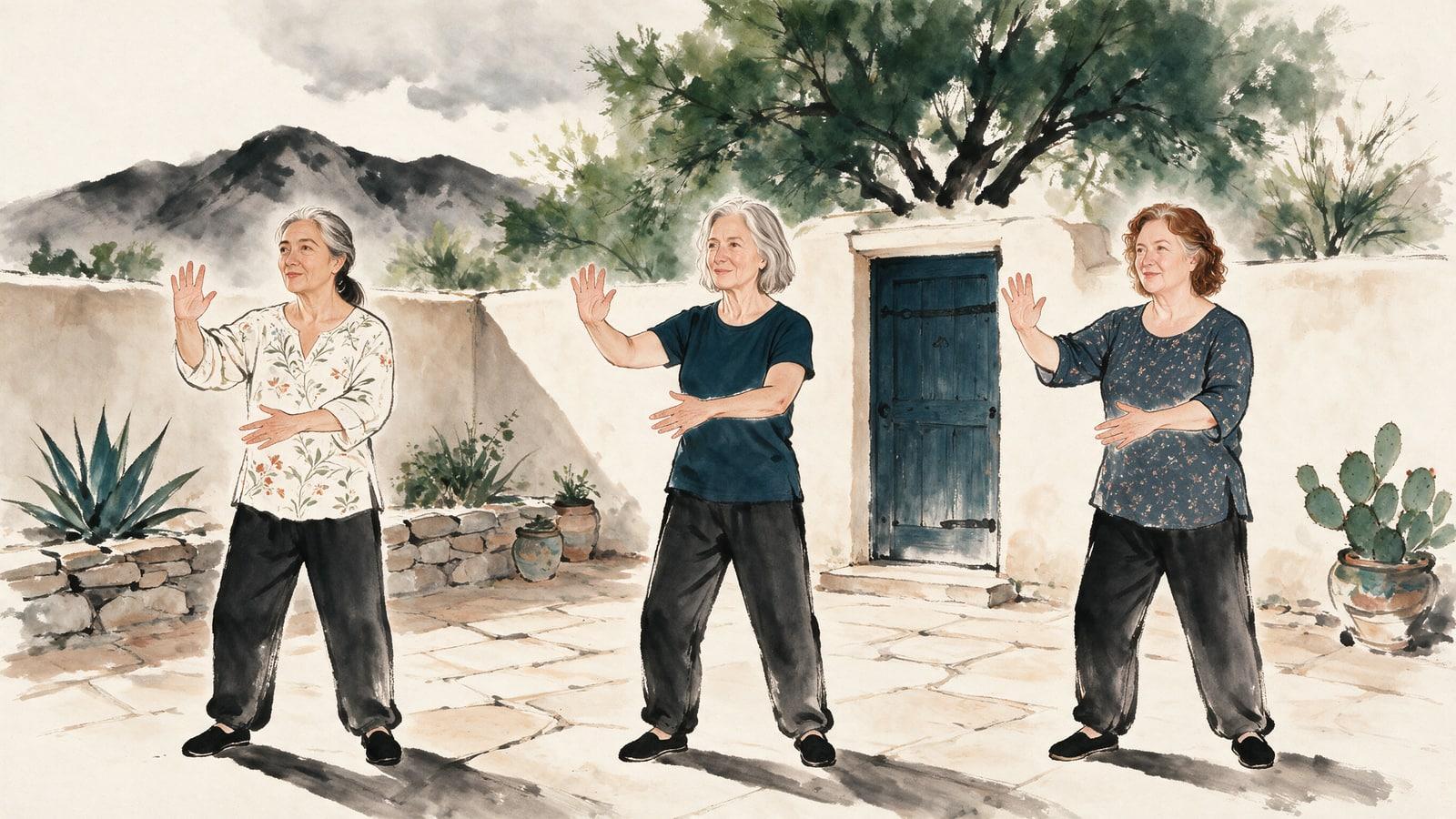
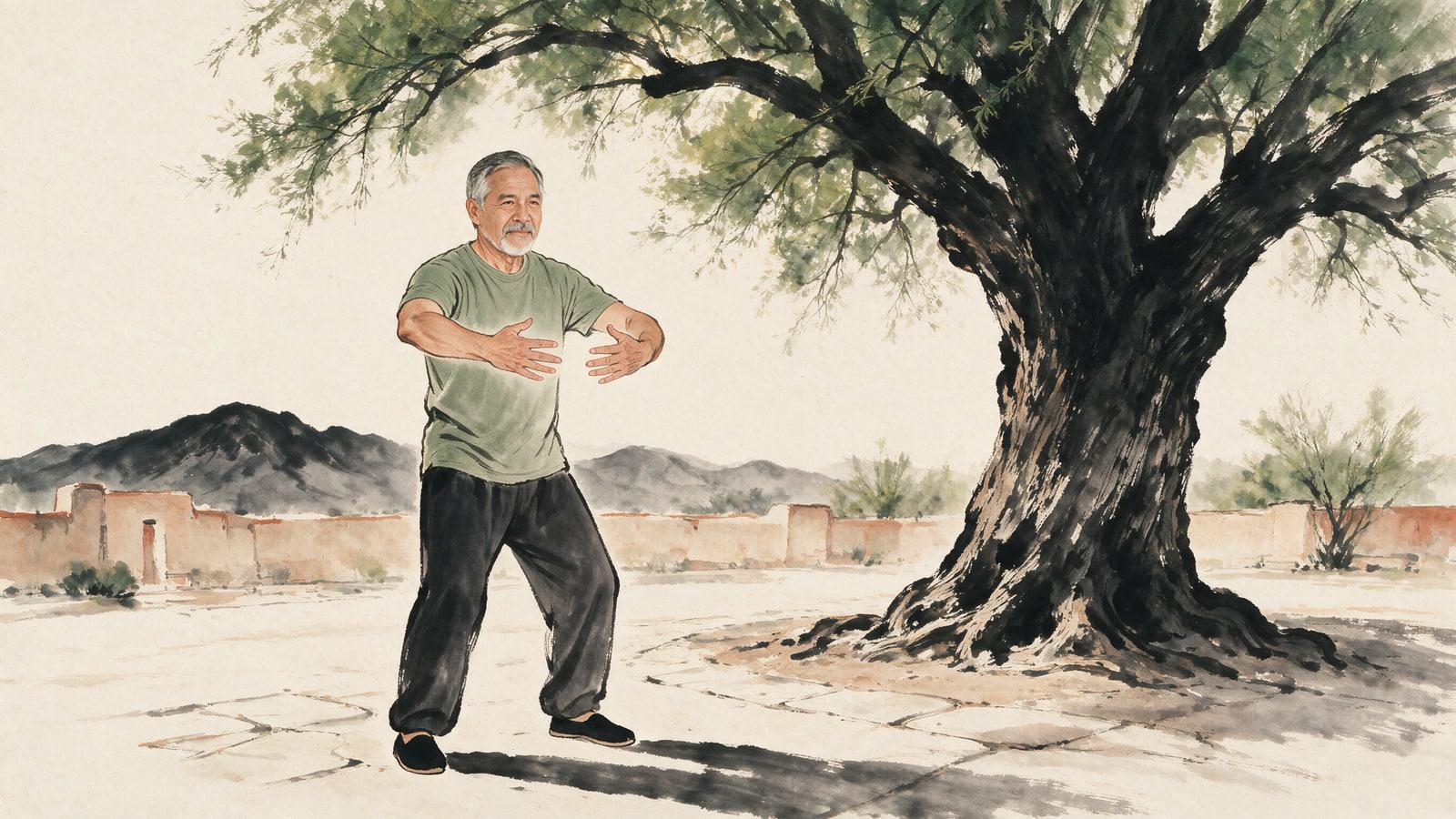
Unlike a modern acoustic guitar that rests horizontally across your ribs, a traditional Pipa is held nearly vertically. In the Tai Chi posture Play the Pipa, your lead hand rises to nose height as if holding the neck of the instrument, while your rear hand rests a few inches behind your lead elbow as if poised over the strings.
2. Rounded “Balloon Space” Under Your Armpits
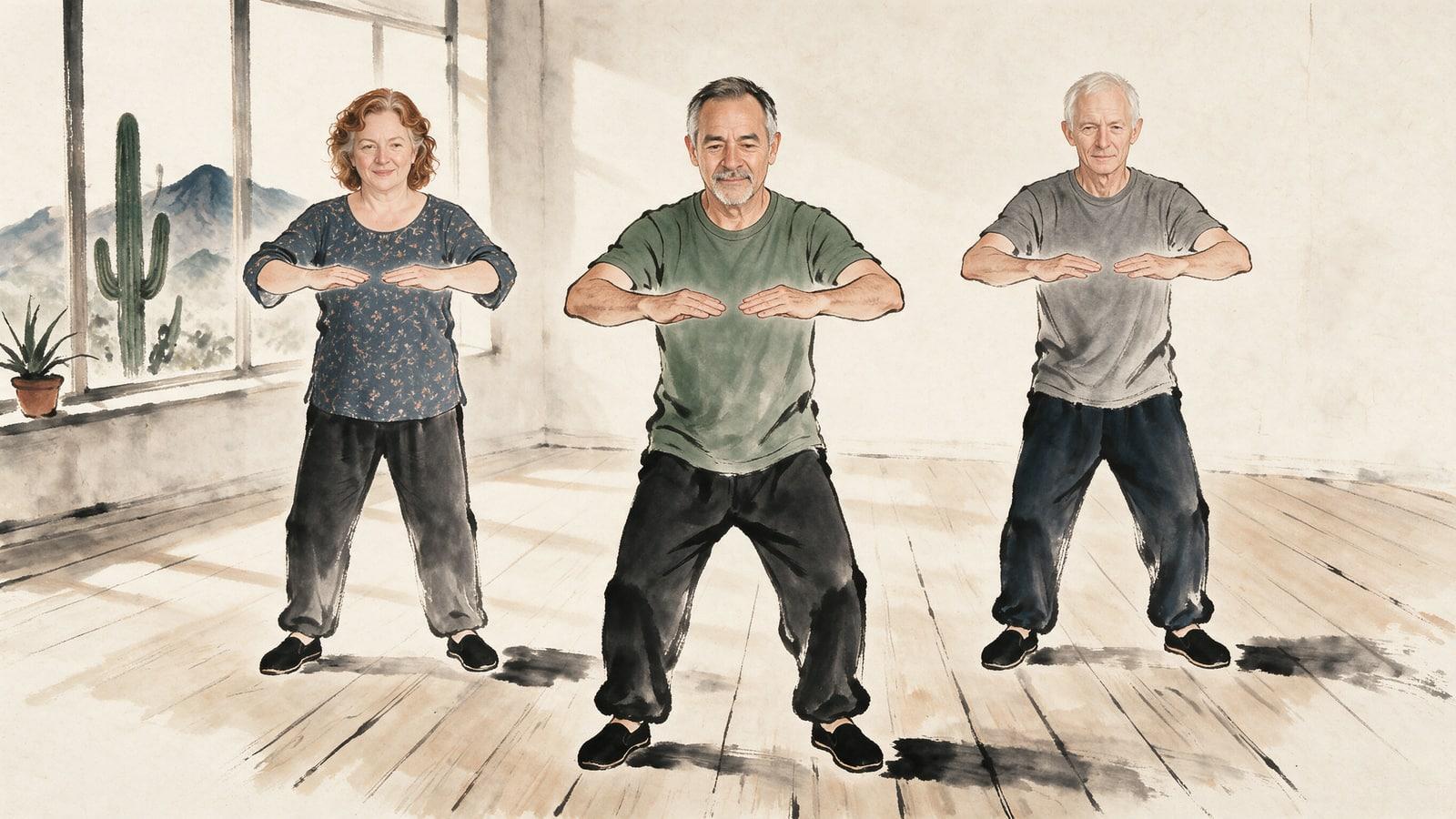
To cradle an instrument comfortably, you cannot pin your elbows tightly against your ribs. Keeping the space of a small grapefruit under each armpit lets your chest stay open and your shoulders stay relaxed.
3. The Light Heel-Touch Stance
As your hands come into position to “strum the lute,” most of your weight settles into your back leg while your front heel touches the floor lightly with the toes lifted. This quiet shift teaches calm, upright balance without leaning forward.
🥋 Studio Cue: When holding Play the Pipa, look through the window between your two hands: both palms face inward toward each other on an angle, with your elbows dropped softly downward and your wrists relaxed.
🪑 Gentle Adaptation: Because real Pipa musicians always play seated, practicing Play the Pipa in a chair feels completely natural! Sit tall near the front edge of your seat, extend one heel lightly forward on the floor, and cradle your imaginary lute with soft shoulders.
✨ Key Reflections to Carry With You
- Hold the instrument vertically: Let your front hand support the “neck” at nose level while your back hand guards near the elbow.
- Keep breathing room under your arms: Softly rounded elbows prevent upper-back and neck stiffness.
- Move with musical rhythm: Let the transition into Play the Pipa feel as smooth and unhurried as a quiet melody.
Old Pueblo Tai Chi — Traditional Yang & Sun Style Classes
Culture Connects Studio • 3000 E. 22nd Street, Tucson, AZ 85713 • https://oldpueblotaichi.com
Questions about classes? Contact Dan Kimball at dan@oldpueblotaichi.com