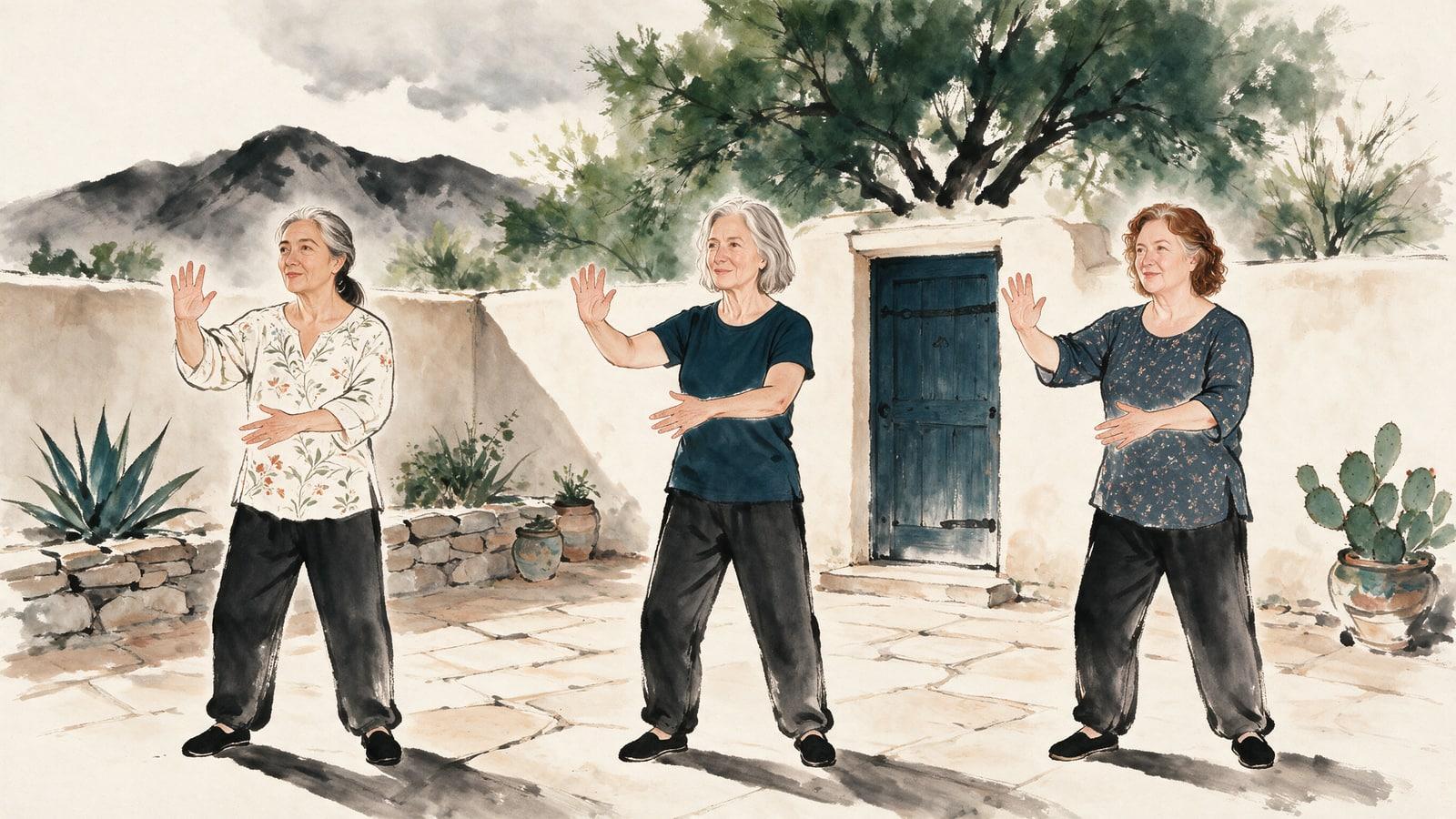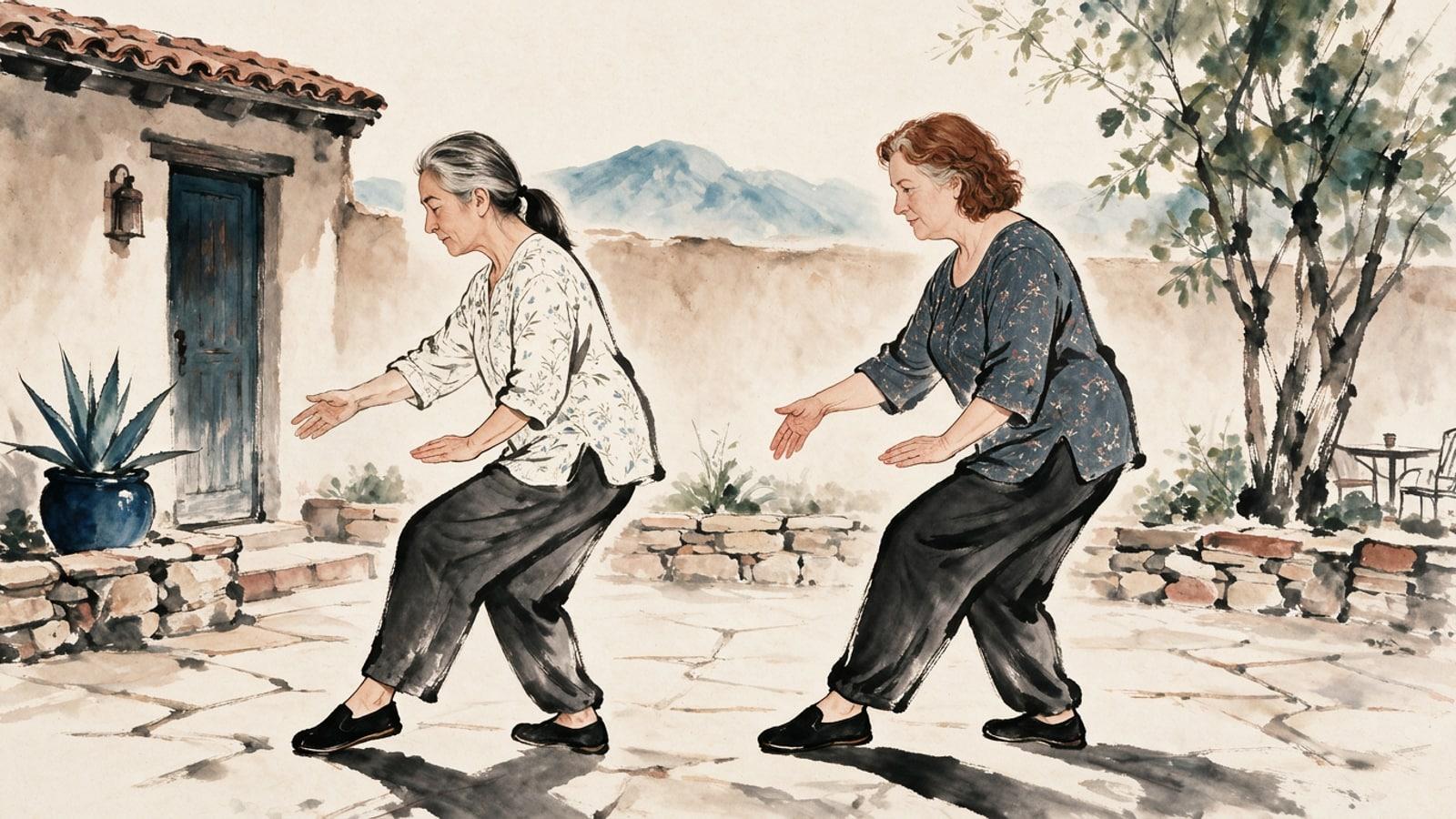

Doctors and physical therapists often use a ten-second one-legged stand to check overall balance and vitality. Yet if someone tells you to stand on one foot and stare at a stopwatch, your shoulders usually tighten right up. You hold your breath, and your ankle starts wobbling almost immediately.
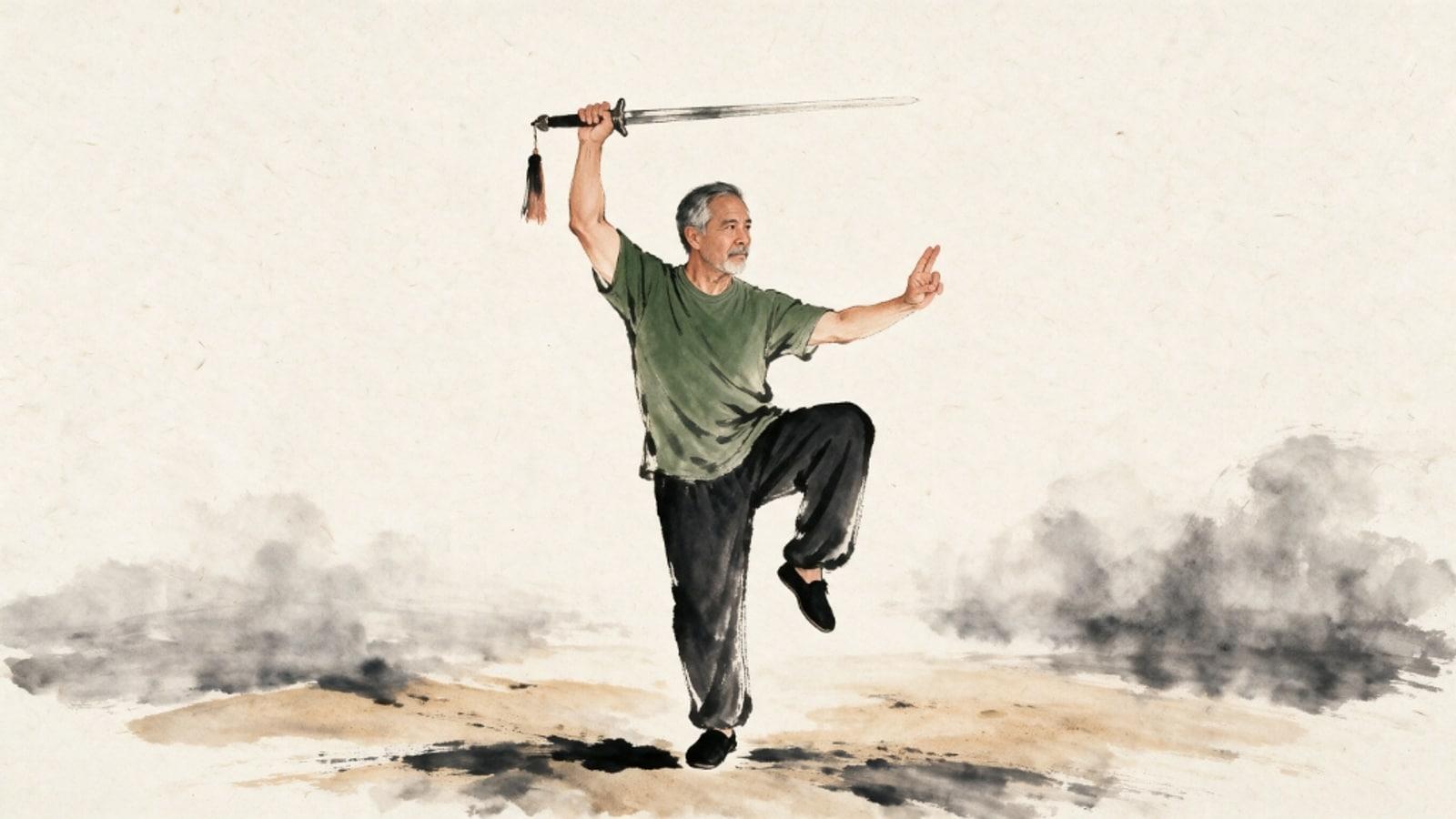
In Tai Chi, our classic single-leg posture, Golden Rooster Stands on One Leg, takes a completely different approach. Instead of stiffening up to hold a static pose, you rise smoothly on one leg while your hands move in opposite directions. Natural coordination and easy breathing make balancing on one foot feel light and calm.
☯️ Rising Up Only After You Root Down
Found across Yang, Sun, Wu, and Chen styles, this posture is known as Golden Rooster Stands on One Leg (Jin Ji Du Li 金雞獨立). It illustrates a favorite rule of traditional balance: to rise upward with ease, first root downward into the earth.
“Balance is the product of rooting and centering. Balance includes balancing the Qi and the physical body.”
— Dr. Yang, Jwing-Ming, Eight Simple Qigong Exercises for Health
Rather than pulling your knee up with tense hip muscles, you pour your weight completely into your standing leg. Keep that standing foot angled slightly outward with a soft, unlocked knee. Meanwhile, your opposite hand settles downward beside your hip like a steady outrigger.
🌿 How It Feels in Movement: Three Steps (Plus Our Three-Stage Safety Progression)
1. Same-Side Hand and Knee Rise Together
Once your weight is settled on your left leg, imagine a light silk string connecting your right wrist to your right knee. As your right hand floats up in front of your shoulder with the palm facing inward, it gently draws your right knee upward with it.
2. Opposite Hand Presses Downward for Stability
At the exact same moment your right hand and knee rise, your left palm settles downward beside your left hip. Imagine resting that lower palm on top of a sturdy fence post to give your upper body an instant anchor.
3. Relax Your Raised Foot and Ankle
Let the toes of your lifted foot hang naturally downward without stiffening your ankle. Rest your gaze calmly on a level point across the room.
🥋 Studio Cue: Never lock your standing knee! Keeping a tiny, half-inch bend in your standing leg lets the small muscles of your foot, ankle, and hip make smooth, quiet adjustments.
🪑 Gentle Adaptation (The 3-Stage Progression): In our Tucson classes, everyone practices at the stage that feels completely secure today:
• Stage 1 (Kickstand Toe Touch): Keep the toes of your lifted foot resting lightly on the floor beside your ankle while your arms perform the full movement.
• Stage 2 (Low Two-Inch Hover): Lift your foot just two inches off the floor, or rest one fingertip lightly on the back of a sturdy chair.
• Stage 3 (Comfortably Raised Knee): Float your knee up toward hip height for a calm breath before setting your foot down softly.
✨ Key Reflections to Carry With You
- Root down to float up: Pressing your standing foot and lower palm downward is what makes your lifted knee feel weightless.
- Keep your eyes level: Looking down at the floor tips your head forward, while looking calmly across the room keeps your spine tall.
- Every height counts: Even a one-inch hover or a light toe-touch builds real-world single-leg stability.
Old Pueblo Tai Chi — Traditional Yang & Sun Style Classes
Culture Connects Studio • 3000 E. 22nd Street, Tucson, AZ 85713 • https://oldpueblotaichi.com
Questions about classes? Contact Dan Kimball at dan@oldpueblotaichi.com