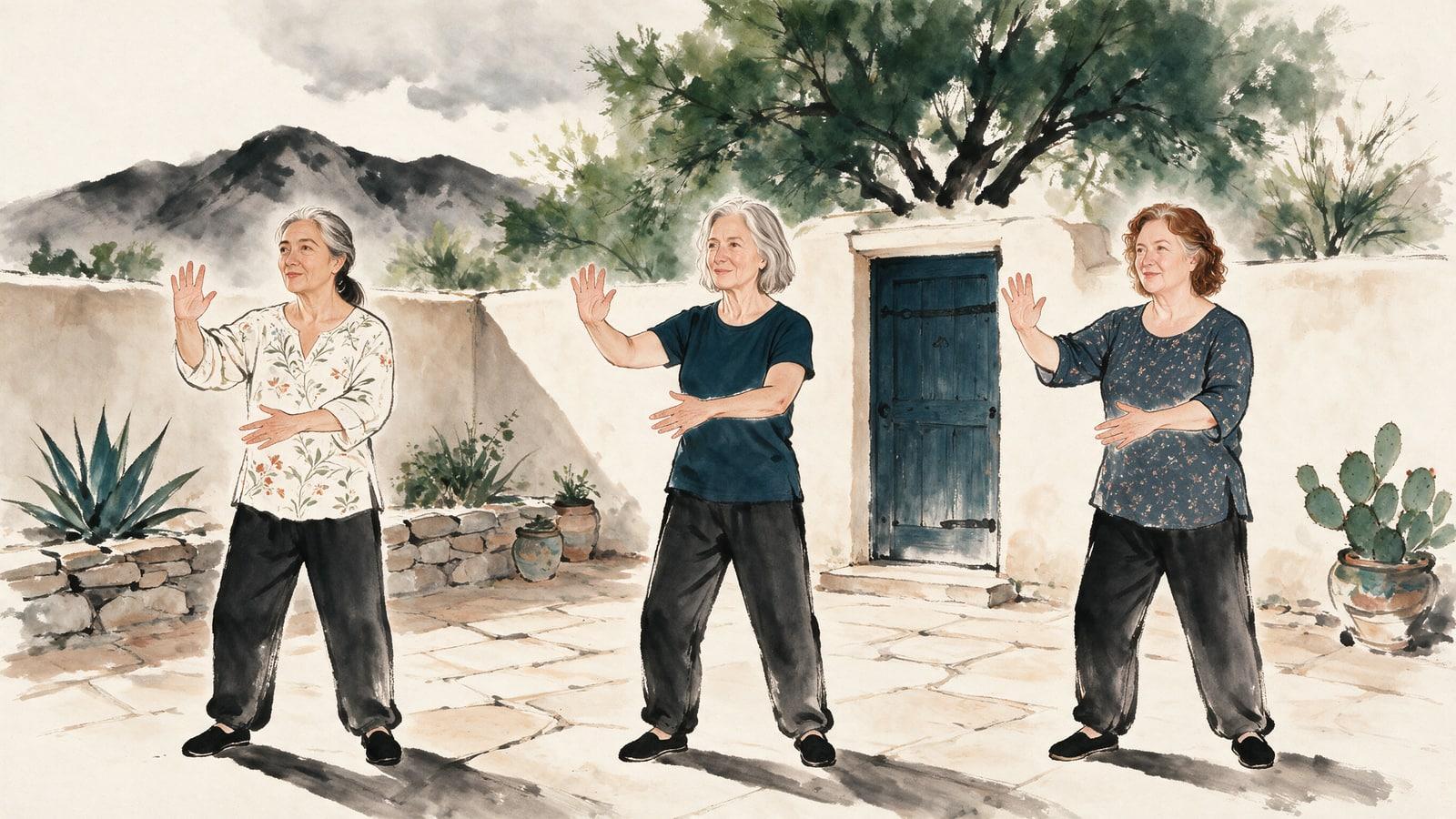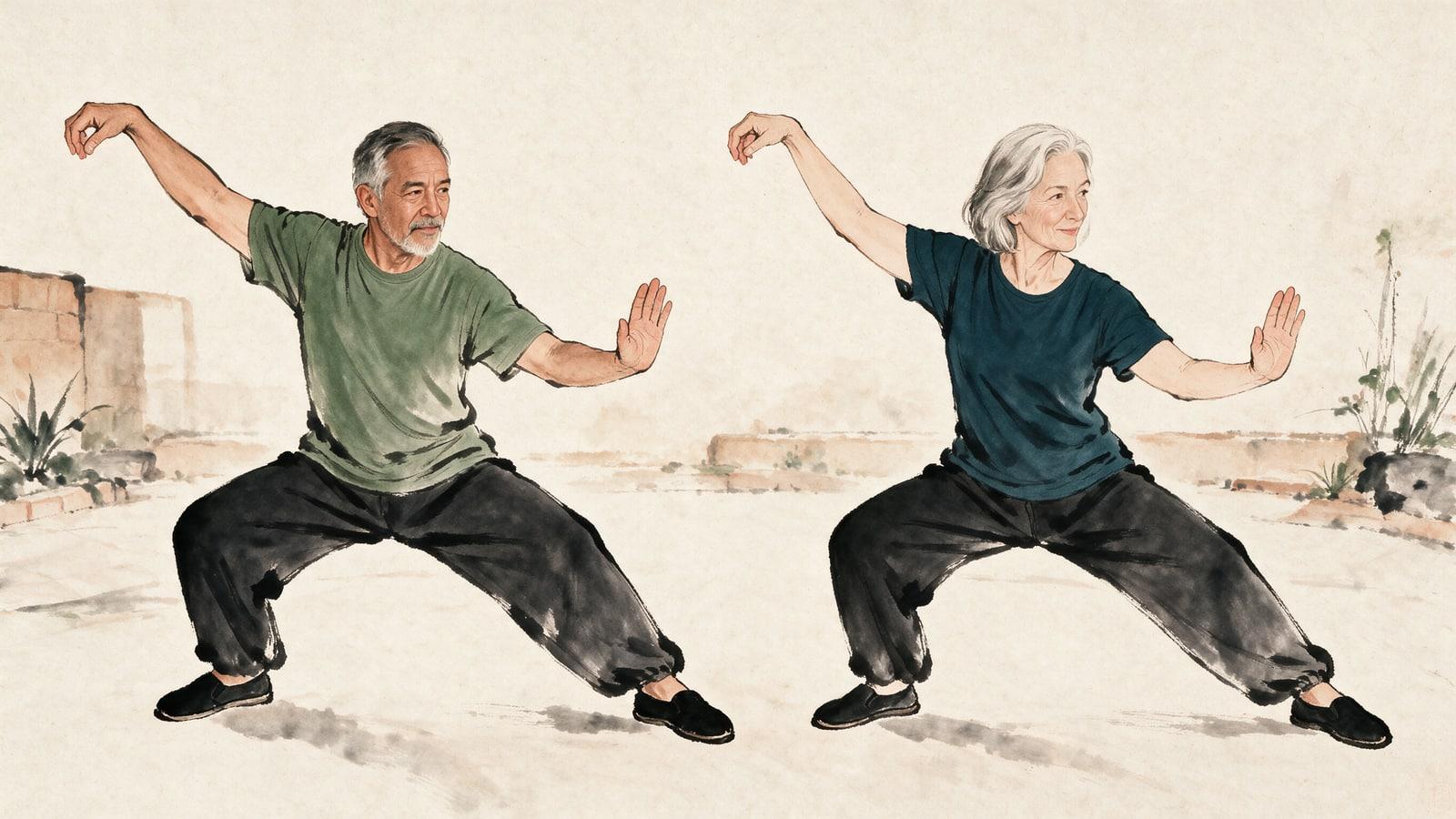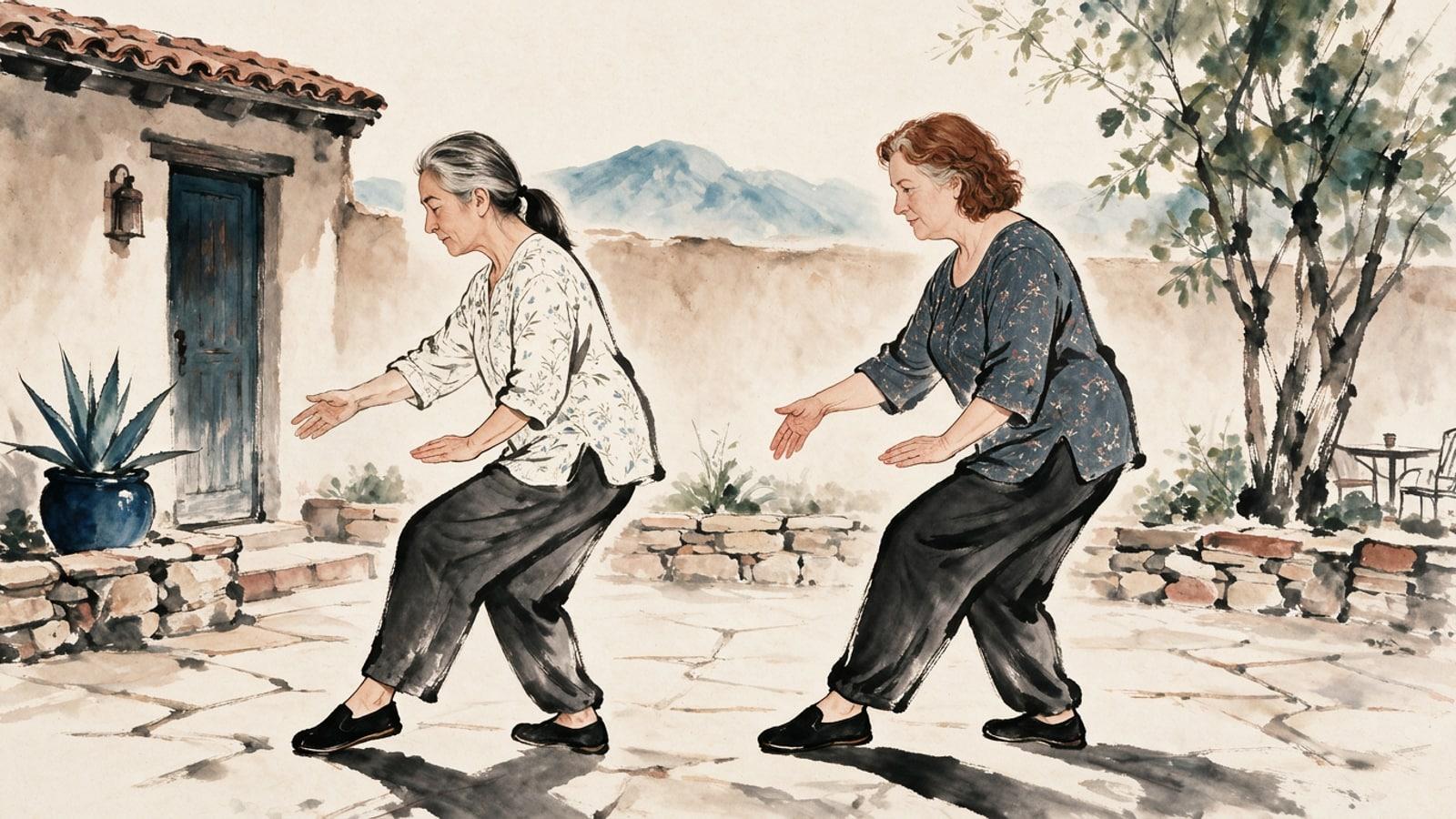

Think about how rarely we practice walking backward in daily life. Usually we only step back when moving away from an open refrigerator door or a narrow hallway. Because our eyes face forward, stepping backward can easily feel tentative or off-balance.
In the Yang-style Tai Chi routine, we train this exact real-life skill through a rhythmic sequence called Step Back and Repulse Monkey. You pair a gentle turn of the waist with a soft, toe-first retreat step. Soon, backing up feels just as comfortable and steady as walking forward.
☯️ Yielding Backward While Extending Forward
Known in Chinese as Step Back and Repulse Monkey (Dao Nian Hou 倒攆猴), this classical sequence expresses a timeless Tai Chi principle. Instead of bracing stiffly when life pushes toward you, you step smoothly back, turn your waist, and extend a calm hand forward.
“Unlike other exercise systems where you work hard at speeding up as you get better, in Tai Chi, as we slow down we improve!”
— Master Lam Kam Chuen, Step-by-Step Tai Chi
🌿 How It Feels in Movement: Three Keys to Effortless Backward Stepping
1. Step Back on “Railroad Tracks” (Ball of the Foot First)
The most common mistake when stepping backward is placing your back foot directly behind your front heel like a tightrope. Instead, keep your weight settled on your front leg and reach your moving foot straight back along its own shoulder-width track. Touch the ball of your foot down lightly first before lowering your heel.
2. Turn Your Front Foot Straight as Your Weight Shifts Back
Pour your weight smoothly onto your new back leg, which rests at a comfortable 45-degree angle. As you settle back, let your front foot pivot slightly on its heel so the toes point straight ahead. Leave most of your weight anchored in your back leg while your front foot rests lightly on the floor.
3. The “Swimming-Freestyle” Hand Exchange
As your waist turns toward your back leg, let your back hand swing gently down past your hip and float up beside your ear. Meanwhile, your front hand reaches quietly out in front with the palm facing up. As your waist turns forward again, your back hand glides forward past your ear at chest height while your front hand draws smoothly back to your hip.
🥋 Studio Cue: Keep your torso tall and upright as you step back! Never lean your head and shoulders backward before your foot finds the floor. Anchor on your standing leg first, place the ball of your back foot down, and then glide your center back.
🪑 Gentle Adaptation: If stepping backward across the room feels challenging today, you can practice Repulse Monkey right in place! Stand in a comfortable staggered stance and rock your weight gently from your front foot to your back foot while turning your waist and exchanging your hands, or enjoy the upper-body flow seated in a chair.
✨ Key Reflections to Carry With You
- Ball of the foot first when backing up: Touching the ball of your foot down before lowering your heel lets you feel the floor safely behind you.
- Keep your feet hip-width apart: Stepping back on two parallel tracks prevents side-to-side wobbling.
- Let your waist turn your hands: Turning your torso makes the alternating arm movements feel light and continuous.
Old Pueblo Tai Chi — Traditional Yang & Sun Style Classes
Culture Connects Studio • 3000 E. 22nd Street, Tucson, AZ 85713 • https://oldpueblotaichi.com
Questions about classes? Contact Dan Kimball at dan@oldpueblotaichi.com