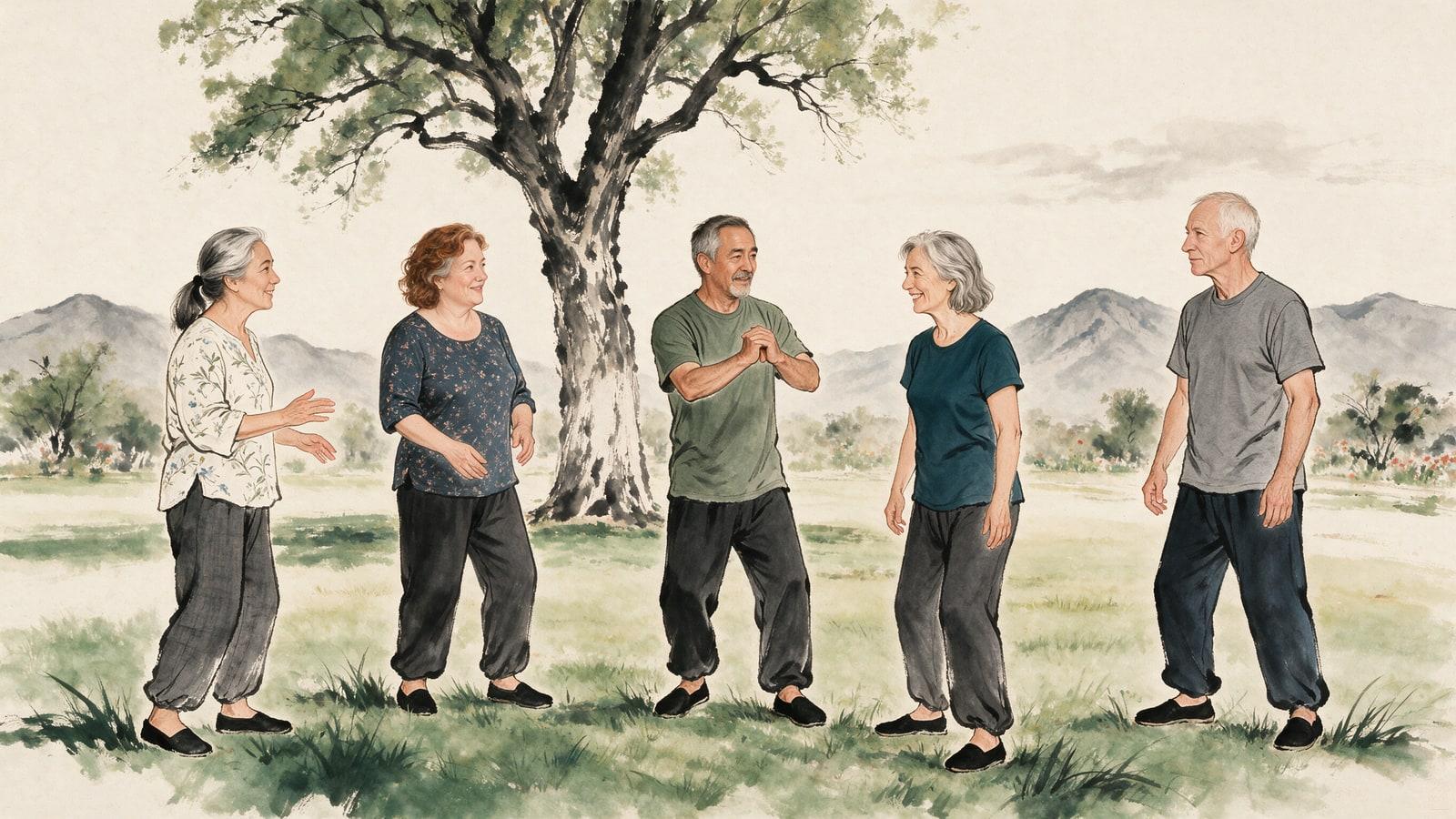

Many of the students who walk through the doors at Old Pueblo Tai Chi in Tucson already enjoy staying active. Some walk their neighborhood loop every morning, some lift light weights or swim, and others have tried yoga classes in the past.
Often, they ask us: “If I already walk every day—or if mat yoga started bothering my wrists and knees—what does Tai Chi give me that those other activities don’t?” Rather than competing with your favorite activities, Tai Chi fills a vital gap that walking, gym machines, and floor yoga rarely train: upright, moving balance on your feet.
☯️ Movement Designed for a Lifetime
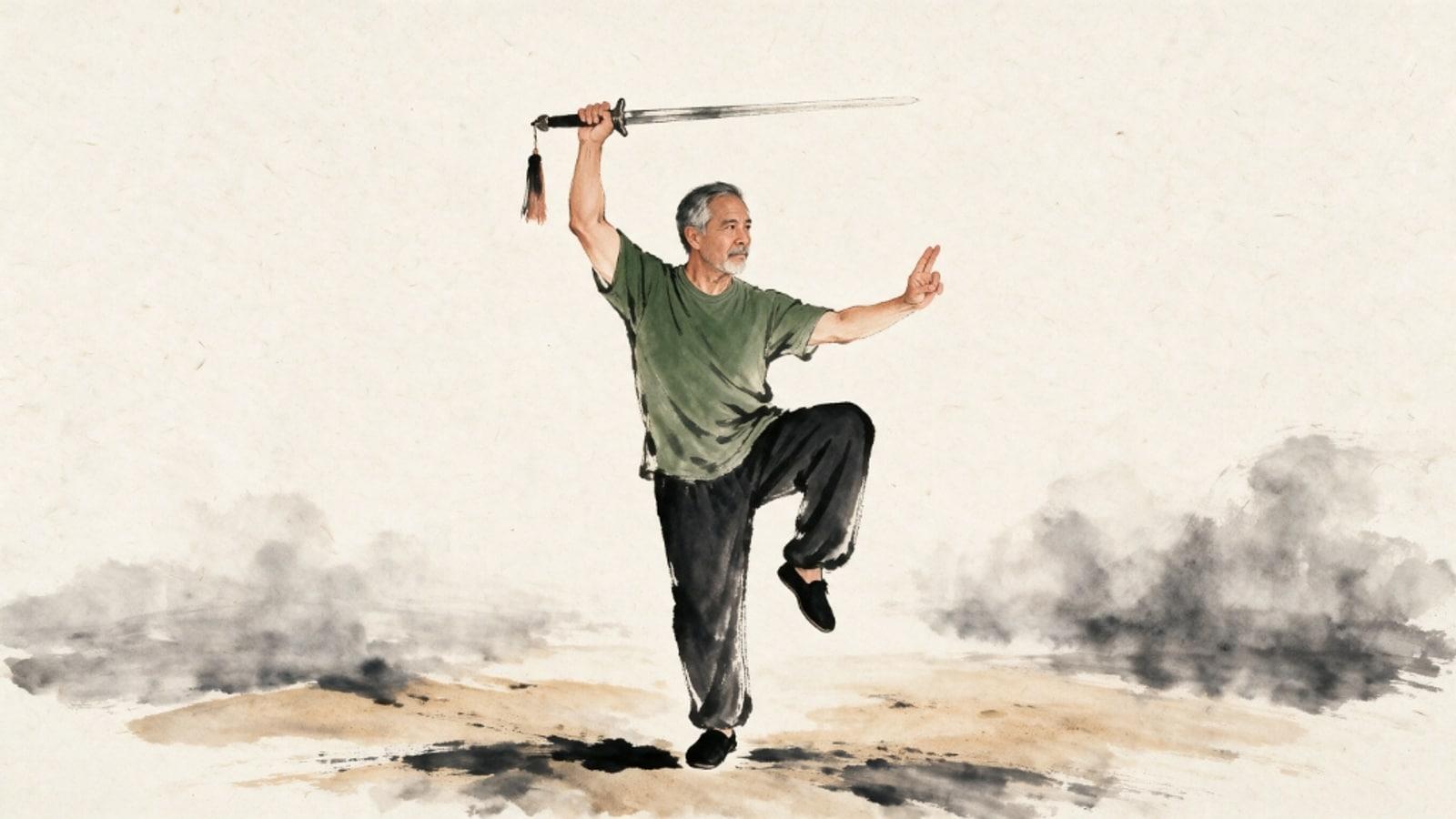
Many workouts were originally designed for twenty-year-old athletes and later scaled down for everyone else. Traditional Tai Chi (太極) and Qigong were built with the opposite goal in mind: creating a practice you can enjoy in your forties, sixties, eighties, and nineties—where your skill and ease actually grow deeper with every decade.
“Instead of tensing your muscles, you want to relax them so your body moves more freely. Instead of picking up the pace, you want to slow down. Tai chi shows you how to get more out of less.”
— Peter M. Wayne, PhD, An Introduction to Tai Chi
🌿 How It Feels in Movement: How Tai Chi Compares With Other Popular Exercises
1. Tai Chi vs. Mat Yoga (Zero Pressure on Wrists or Kneecaps)
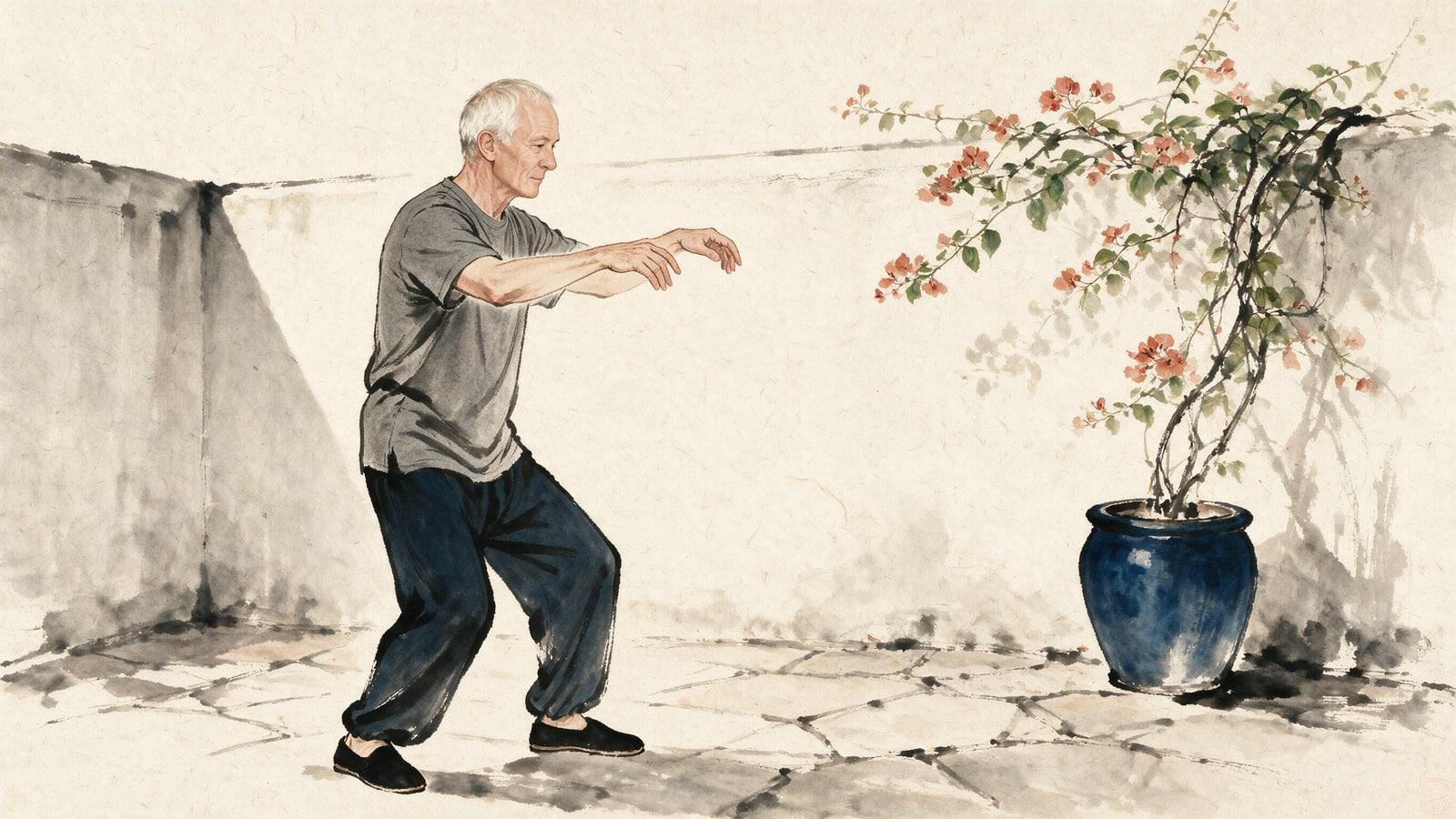
Yoga is wonderful for flexibility, but many mat classes require getting up and down off the floor, kneeling, or bearing heavy body weight on bent wrists in poses like Downward Dog. In Tai Chi, you stay on your feet (or in a chair) the entire time. Instead of holding static stretches, you move continuously in gentle circles—sparing sensitive wrists, shoulders, and knees.
2. Tai Chi vs. Daily Walking (Training Sideways & Turning Balance)
Walking is fantastic for your heart and lungs, yet it moves almost entirely in one straight line forward. Most everyday stumbles happen when we turn, sidestep around a pet, or reach for a shelf. Tai Chi trains smooth weight shifts forward, backward, sideways, and in gentle turns—making your daily walks much steadier.
3. Tai Chi vs. Gym Machines (Coordinating the Whole Body)
Weight machines build strong individual muscles while you sit supported on a padded seat. Tai Chi teaches your ankles, knees, hips, core, and shoulders how to work together as a team while you stand and move in real life.
🥋 Studio Cue: Think of Tai Chi as the “glue” that makes all your other activities feel better. Students who hike Sabino Canyon, play pickleball, golf, or garden tell us that learning to soften their shoulders and turn from their hips in Tai Chi keeps them injury-free all week.
🪑 Gentle Adaptation: If standing for an hour feels like too much right now, Tai Chi is one of the easiest practices to adapt—you can transition smoothly between standing and sitting in a chair without ever having to climb down onto a floor mat.
✨ Key Reflections to Carry With You
- No floor mats or wrist strain: Tai Chi gives you the calm breathing and flexibility of yoga while keeping you comfortably upright.
- Multi-directional balance: Slow side-steps, turns, and backward weight shifts train the exact balance skills that straight-line walking misses.
- Pairs beautifully with your favorite hobbies: Two mornings of Tai Chi a week supports walking, hiking, gardening, and everyday vitality.
Old Pueblo Tai Chi — Traditional Yang & Sun Style Classes
Culture Connects Studio • 3000 E. 22nd Street, Tucson, AZ 85713 • https://oldpueblotaichi.com
Questions about classes? Contact Dan Kimball at dan@oldpueblotaichi.com