Punch, Parry and Wipe the Sleeve
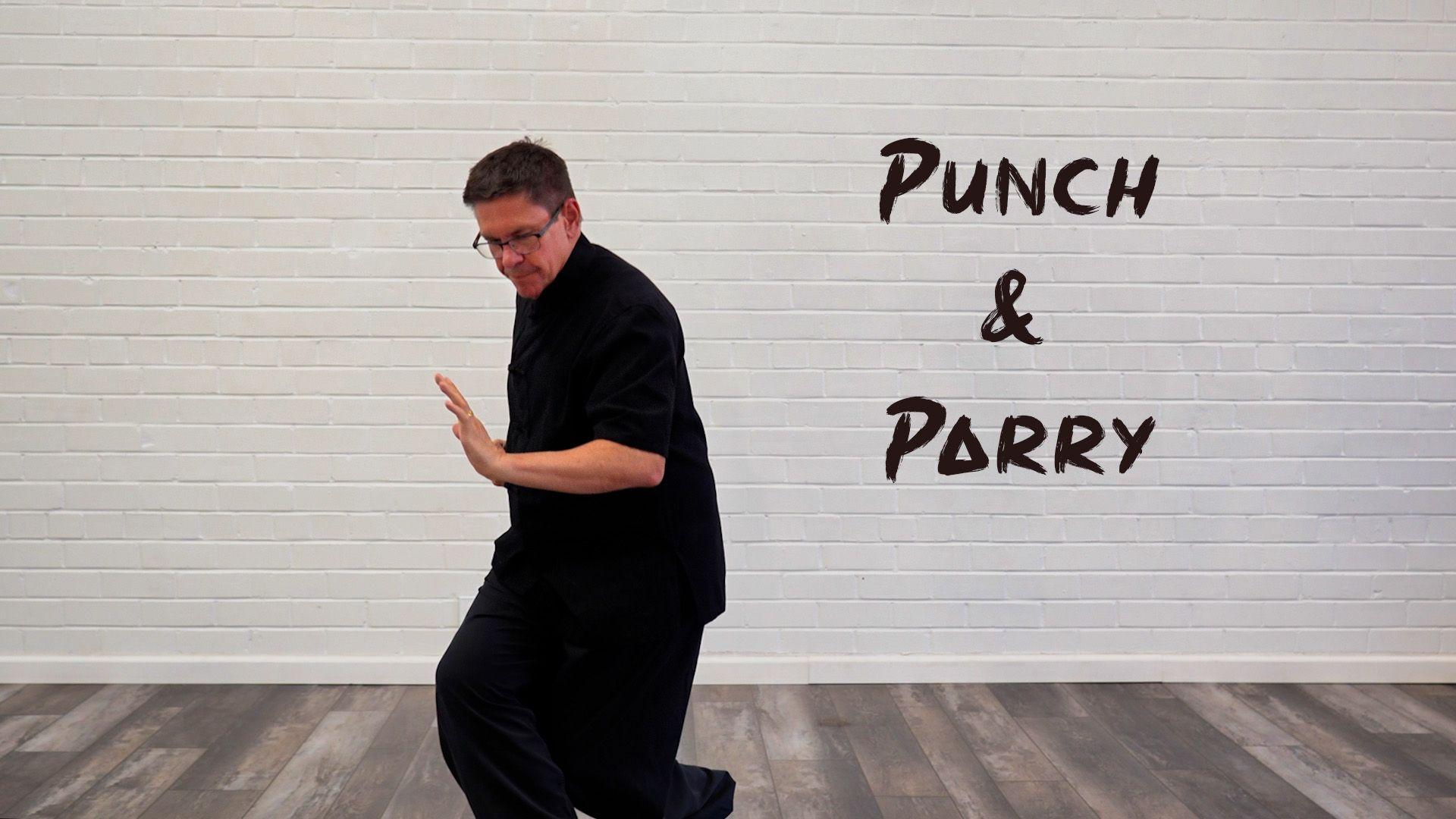
The Punch and Parry sequence is a compact but powerful section of Yang style Tai Chi that captures the art’s essence in just a few movements. Blending blocks, parries, strikes, and the graceful wipe-the-sleeve motion with coordinated footwork, it trains timing, balance, and whole-body integration. More than a martial drill, it embodies Tai Chi’s deeper philosophy—deflecting force with softness, striking with clarity, then releasing back into balance. Practiced consistently, this sequence strengthens posture, sharpens coordination, and teaches the yin–yang rhythm of action followed by release.
Overview
This sequence centers on the bow stance and alternates between defensive parries and offensive strikes. The key elements to focus on are:
- Clear hand roles — right hand leads with strikes, left hand supports with blocks and balance.
- Foot placement — shifting from bow stance to centered steps, then back to bow stance.
- Timing — striking and stepping together, using sink-and-rise on the ball of the foot for stability.
- Posture — keep your head up and spine aligned for balance.
Hand Sequence — Step by Step
Start by practicing the hand motions while standing in place. Once the rhythm feels natural, add the footwork.
- Begin with right hand forward, left hand down in bow stance (end of last brush the knee).
- Right hand lifts to “wipe the sleeve.”
- Right hand extends forward in a strike as the left hand draws back to balance.
- Left hand rises to block beside the face while the right hand circles outward in a fist
- Pull the right hand back; left hand pushes and blocks to secure position.
- Deliver a punch over the supporting left hand.
- As the punch completes, the left hand flips over in another sleeve wipe.
- Both hands pull back, then push forward to finish the cycle.
“Block. Wipe the sleeve. Strike. Block. Strike. Parry. Punch. Wipe. Pull. Push.”
Keep shoulders relaxed, wrists neutral, and let the body mechanics generate power rather than tightening the arms.
Footwork — How to Move
Footwork grounds the sequence. Begin in bow stance (front knee bent, back leg straight, rear foot angled ~45°).
- Step the left foot to the center line, turning toes slightly inward.
- Rise onto the ball of the rear foot as you prepare to sink.
- Sink down as far as comfortable, then rise back up.
- Step forward with the right foot onto the heel, adjust, and return the left foot to the ball.
- Sink and rise again, returning smoothly into bow stance.
Key cues:
- Keep your head lifted and torso upright — avoid leaning forward.
- Use ball and heel transitions to control speed and stability.
- Focus on alignment; depth of sink is less important than posture.
Combining Hands and Feet
Once both sequences feel steady, put them together. The critical timing is to strike while stepping.
- From bow stance, step the left foot to center as the left hand blocks and right hand pushes high.
- As you sink down, the right hand performs the wipe-the-sleeve motion.
- At the bottom of the sink, extend the right hand in a strike as the left shifts back to balance.
- Rise, lock the stance briefly, then step forward with another strike.
- As you turn, parry with the left and punch with the right.
- Finish with a left-hand wipe, both hands pull back, and then push forward to complete the cycle.
“As you step the left foot in, block. As you sink, wipe the sleeve. At the bottom, strike forward. Step again, parry, then punch. Wipe, pull, and push to close.”
Drills and Repetition
- Hand-only drill: Cycle through the hand sequence in place until smooth.
- Foot-only drill: Step and sink without arms to lock in balance.
- Combined drill: Slowly put hands and feet together, focusing on timing.
- Repetitions: 5–10 slow cycles per set; gradually build to more once movements feel stable.
- Mirror practice: Check hand positions (block outside, strike aligned) and posture.
Common Mistakes & Corrections
- Head pitching forward: Keep gaze level, neck tall.
- Rushed transitions: Slow the sink-and-rise; control comes before speed.
- Weak block: Ensure the block is on the outside with solid forearm structure.
- Over-rotating feet: Keep the rear foot near 45°—don’t torque the stance.
- Collapsed sink: Sink only as far as posture allows; never at the expense of alignment.
Training Tips
- Breathe with the form: Exhale on strikes and punches, inhale on wipes and sinks.
- Visualize an opponent: Give intent to your parries, wipes, and strikes.
- Film yourself: Catch posture issues, head position, and hand–foot timing.
- Drill symmetry: Train the sequence on both sides to balance the body.
FAQ
How many repetitions should I do per session?
Start with 3–5 sets of 10 slow reps. Build up to 20 reps per set as rhythm improves.
How low should I sink?
Sink only as far as posture allows — upright spine, hips under torso, stable stance.
What if I lose balance?
Slow down. Return to isolated drills (hands/feet separately) before combining.
Can this apply in sparring?
Yes, the principles—parry to strike transitions, stepping with intent, timing—translate directly. Adapt to distance and speed in partner work.
Bridging Theory to Practice
Try This Today: The Centering Breath of Stillness
60 seconds
Somatic Intent: Pause right now to anchor the wisdom of this article directly in your physical body.
- 1Rest both palms over your navel center (Dan Tian).
- 2Soften your gaze and allow your shoulders to drop away from your ears.
- 3Inhale softly into your palms, sensing warmth expanding in the lower abdomen.
- 4Exhale and feel your heels connect into the ground below.
* Always work within your personal comfort zone. There is never any forcing, straining, or breath-holding in Tai Chi.
Old Pueblo Tai Chi — Traditional Yang & Sun Style Classes
Culture Connects Studio • 3000 E. 22nd Street, Tucson, AZ 85713 • https://oldpueblotaichi.com
Questions about classes? Contact Dan Kimball at dan@oldpueblotaichi.com or (520) 222-8232
Practice Newsletter
Stay Connected with Old Pueblo Tai Chi
Get new articles, practical movement guides, seasonal health insights, and Tucson class announcements delivered to your inbox.
Experience the Practice in Person
Reading about Tai Chi is great, but the true benefits come from moving. Join our welcoming morning classes at Culture Connects Studio in Midtown Tucson.
Culture Connects Studio • 3000 E 22nd St, Tucson, AZ 85713 • Mondays & Wednesdays 10:00 AM – 11:00 AM (Doors open 9:45 AM, arrive 10–15 min early)