The Tai Chi Ruler: A Tool for Energy Cultivation and Tranquility
In Wudang Tai Chi, the Tai Chi Ruler (Taiji Bang, 太极棒) is a profound tool, embodying centuries of wisdom and tradition. This seemingly simple wooden instrument offers practitioners an avenue to explore the depths of their energy, health, and tranquility. Its lineage reaches deep into Daoist mythology and classical health cultivation, making it one of the most accessible and spiritually rich practices for individuals seeking mindful movement, energetic balance, and low-impact exercise.
Origins of the Tai Chi Ruler: Myth and Medicine
The Tai Chi Ruler is part of a broader tradition of Daoist energy work, blending intention (yi) and breath (qi) to guide vitality through the body. Though separate from the more well-known Taijiquan hand forms, the ruler’s roots are no less ancient or powerful.
The Legend of "The Sleeping Immortal"
The tale of Chen Tuan, also known as Chen Xiyi or Chen Dan, infuses the use of the Tai Chi Ruler with mysticism. Referred to as "The Sleeping Immortal," Chen Tuan lived during the late Tang and early Song dynasties (~900–990 AD). He retreated into the mountains, including Wudang, to study internal alchemy, meditation, and Daoyin (breathing and stretching) practices. His teachings—passed down orally and through small Daoist circles—included the Sleeping Immortal Taiji Stick and Ruler Neigong, precursors to what would evolve into modern Tai Chi Ruler methods.
Historical Transmission
By the mid-20th century, the Tai Chi Ruler gained broader recognition in China for its therapeutic potential. In the West, pioneers such as Sifu B.P. Chan, Fong Ha, and Ken Cohen helped bring the practice to new audiences. Cohen has identified three distinct lineages, all tracing back to Chen Tuan, preserving the ruler’s role as a classical health-preserving art.
Health Benefits of the Tai Chi Ruler
The Tai Chi Ruler integrates Daoist qigong, acupressure, and mindful breathing, offering multidimensional benefits:
✅ Enhancing Qi Flow
- Encourages deep breathing patterns that stimulate the lungs and heart
- Promotes circulation through major energy meridians, particularly the Ren and Du channels
✅ Stimulating Acupoints
- Gentle rocking and circular movements activate key points like KD1 (Yongquan) and KD6 (Zhaohai), supporting kidney and adrenal function
- Improves balance and organ harmony
✅ Improving Organ Function
- Internal spiraling motions massage the liver, spleen, stomach, and intestines
- Reduces energetic stagnation and supports detoxification
✅ Ideal for Low-Impact Wellness
- Suitable for seniors, those recovering from injury, or people with limited space and equipment
- Movements can be performed seated or standing
✅ Stress Reduction and Mental Clarity
- Rhythm and repetition activate the parasympathetic nervous system
- Breath-movement synchronization cultivates presence and calm
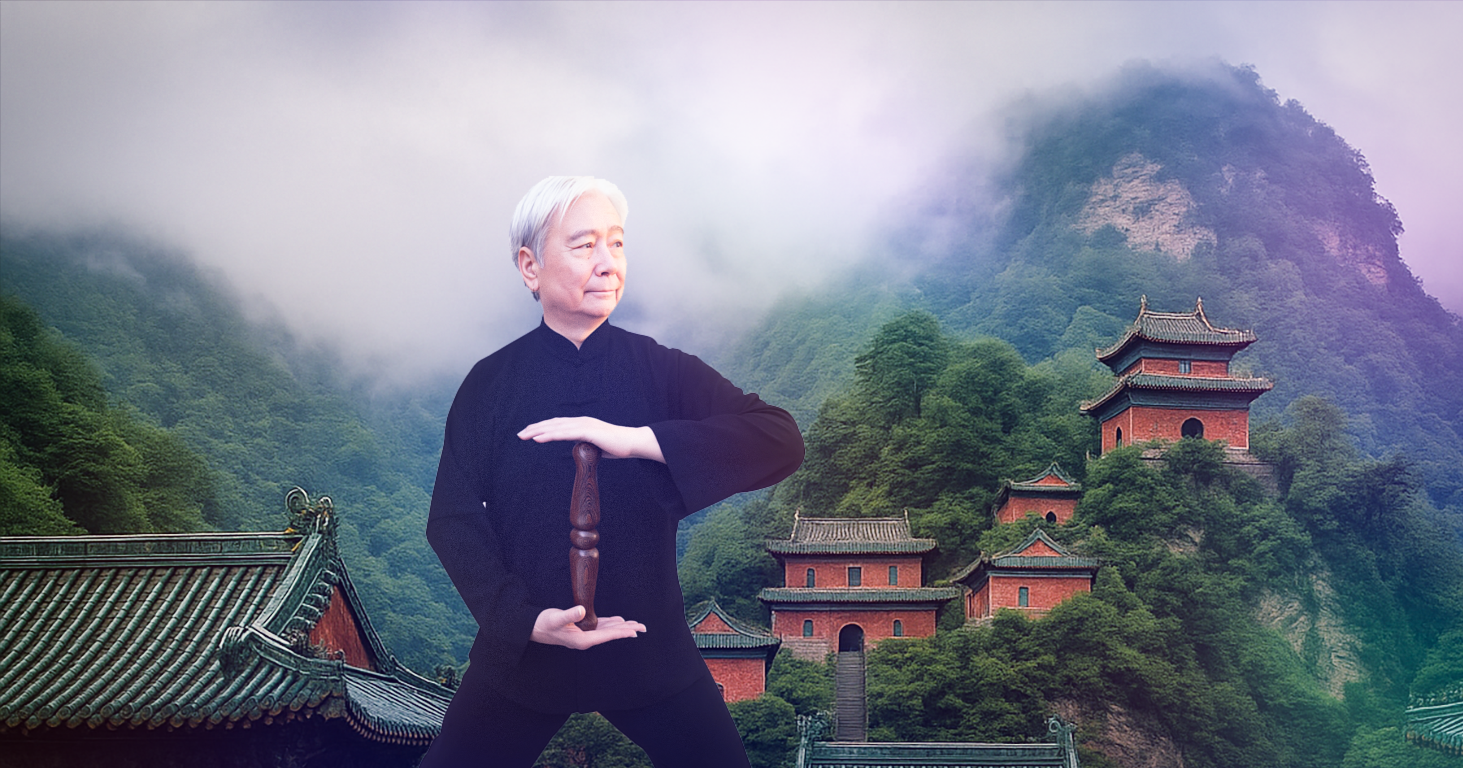
Tai Chi Ruler demonstrated By Taoist Grandmaster Franklin Wood
Basic Techniques and Movements
At the heart of Tai Chi Ruler practice are circular, flowing movements:
- Posture: Begin in a relaxed stance (Wuji). The spine is straight, knees slightly bent.
- Holding the Ruler: Lightly grip the wooden stick between both palms at chest level.
- Rocking & Circling: Step one foot out slightly. Shift your weight rhythmically while moving the arms in a smooth, circular path.
- Breathing: Inhale as you open or rise, exhale as you close or lower. Let the breath lead the motion.
Key tip: Avoid gripping too tightly, tensing the shoulders, or holding the breath. Relaxation is central.
Incorporating Tai Chi Ruler into Daily Life
The beauty of the Tai Chi Ruler lies in its simplicity and adaptability:
- Practice 5–10 minutes in the morning to awaken your body
- Use it midday for a calming energy reset at work
- End your day with a seated version to ease tension and prepare for rest
Common Mistakes to Avoid
- Gripping too hard: Prevents energy flow
- Forgetting to breathe: Disrupts qi circulation
- Poor posture: Misaligns the spine and blocks energy movement
- Rushing movements: Undermines the meditative aspect. Be sure to slow down. Breathe. Feel.
Bridging Theory to Practice
Try This Today: The Centering Breath of Stillness
60 seconds
Somatic Intent: Pause right now to anchor the wisdom of this article directly in your physical body.
- 1Rest both palms over your navel center (Dan Tian).
- 2Soften your gaze and allow your shoulders to drop away from your ears.
- 3Inhale softly into your palms, sensing warmth expanding in the lower abdomen.
- 4Exhale and feel your heels connect into the ground below.
* Always work within your personal comfort zone. There is never any forcing, straining, or breath-holding in Tai Chi.
Old Pueblo Tai Chi — Traditional Yang & Sun Style Classes
Culture Connects Studio • 3000 E. 22nd Street, Tucson, AZ 85713 • https://oldpueblotaichi.com
Questions about classes? Contact Dan Kimball at dan@oldpueblotaichi.com or (520) 222-8232
Practice Newsletter
Stay Connected with Old Pueblo Tai Chi
Get new articles, practical movement guides, seasonal health insights, and Tucson class announcements delivered to your inbox.
Experience the Practice in Person
Reading about Tai Chi is great, but the true benefits come from moving. Join our welcoming morning classes at Culture Connects Studio in Midtown Tucson.
Culture Connects Studio • 3000 E 22nd St, Tucson, AZ 85713 • Mondays & Wednesdays 10:00 AM – 11:00 AM (Doors open 9:45 AM, arrive 10–15 min early)