Grasp the Bird’s Tail in Tai Chi: Mastering Peng, Lu, Ji & An
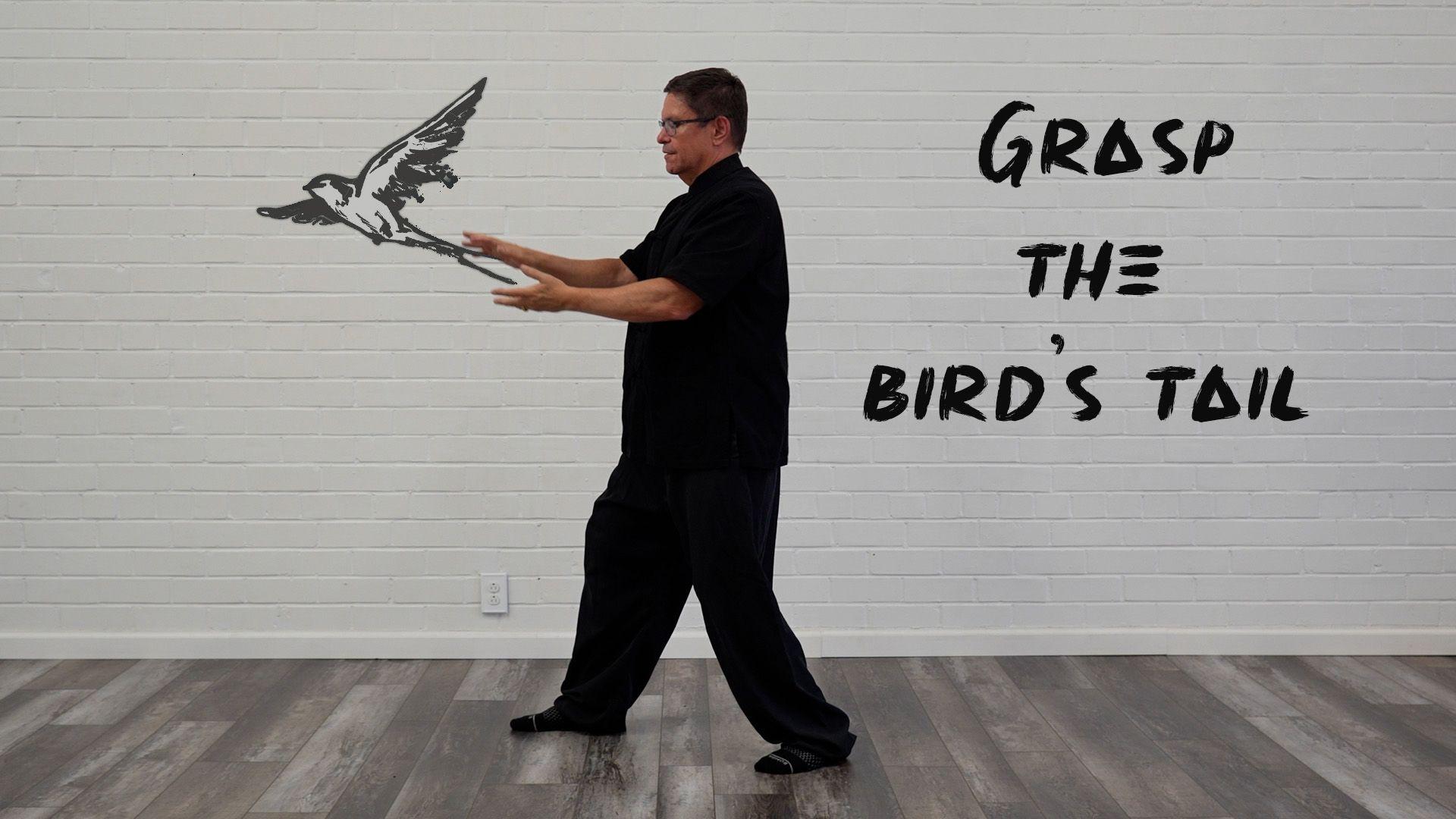
If you’ve watched a full Tai Chi form, you’ve probably noticed one sequence that repeats again and again: Grasp the Bird’s Tail (攬雀尾 Lǎn Què Wěi).
It’s a foundational teaching sequence that trains four core “energies” (jins) in Tai Chi—Peng (Ward Off), Lu (Roll Back), Ji (Press), and An (Push)—and it gives beginners a clear way to practice balance, relaxed structure, and timing.
This guide is for newer students (and anyone reviewing fundamentals). Use the video for the overall feel, then work through the step-by-step breakdown slowly. Focus on posture, weight shifting, and softness before trying to add power.
Quick Answer / Key Takeaways
- Grasp the Bird’s Tail is a foundational Tai Chi sequence that appears in many Tai Chi forms and curricula.
- It trains four core energies: Peng, Lu, Ji, and An.
- Practicing it helps students refine balance, waist-led movement, relaxed structure, and timing.
- For beginners, the priority is posture, smooth weight shifting, and softness before power.
- In Tai Chi theory, this sequence is also traditionally used to develop coordinated whole-body movement (often described as “internal” connection).
If you are newer to Tai Chi, you may also want to start with our beginner Tai Chi guide for Tucson students:
What Is Grasp the Bird’s Tail?
“Grasp the Bird’s Tail” is a poetic name that points to a key Tai Chi idea: being firm enough to stay connected, and soft enough not to force anything. A common image is holding a bird—steady, but not crushing.
In practice, it’s a short series of movements that cycles through four primary jins (trained qualities of force). Because the pattern shows up repeatedly in many Tai Chi forms, it’s often used as a “mini lesson” in Tai Chi fundamentals—and it’s commonly followed by transitions like White Crane Spreads Wings in many forms.
The Four Energies: Peng, Lu, Ji, An
At the heart of Grasp the Bird’s Tail is a cycle of four core energies (jins):
Peng (掤) — Ward Off
- How it feels: buoyant, expanding, spring-like (not tense)
- Practice cue: keep the body “rounded” and supported, like holding a ball
- Traditional martial interpretation: helps you maintain structure while meeting incoming force
Lu (捋) — Roll Back
- How it feels: yielding and redirecting (not collapsing)
- Practice cue: turn the waist and let the arms follow; don’t yank with the arms
- Traditional martial interpretation: leads force off your centerline
Ji (擠) — Press
- How it feels: focused, converging, forward intent (without stiffening)
- Practice cue: press as a whole body action—feet, waist, hands connected
- Traditional martial interpretation: a direct issuing of unified force into the center
An (按) — Push
- How it feels: sink and then express forward (grounded, wave-like)
- Practice cue: feel the weight settle before the push; keep shoulders relaxed
- Traditional martial interpretation: one way to understand it is a rooted push that disrupts balance
Step-by-Step Practice
Before you start, aim for a calm, upright posture and an easy breath. Move slowly enough that you can stay relaxed.
1) Set your foundation (posture and stance)
- Stand naturally, then sink slightly (soft knees, not squatting).
- Step out to a comfortable width so you feel stable.
- Tuck the tailbone gently, soften the belly, and let the chest relax.
- Lengthen the back of the neck as if the crown is lightly suspended.
2) Yin-Yang hands (holding the ball)
- Raise the hands into a relaxed “holding a ball” shape.
- Keep the arms rounded, shoulders down, and breath smooth.
3) Ward Off (Peng)
- Shift weight and step/turn into ward off.
- Keep the feeling of rounded support through the arms and back.
- Avoid locking the elbows—leave “a little play” in the joints.
4) Roll Back (Lu)
- Let the waist turn as you shift weight back.
- Hands stay soft; the body does the work.
- Think “receive and guide” rather than “pull.”
5) Press (Ji)
- Reconnect the hands into a unified forward press.
- Keep the back foot rooted and let the waist support the press.
- Knees track comfortably (avoid letting the front knee push far past the toes).
6) Pull back and Push (An)
- Let the arms and elbows soften down as you shift back (gather).
- Then push forward from the ground: back foot, waist, hands connected.
- Keep the shoulders relaxed and the spine tall.
Breath and Timing
Keep breathing simple and natural. Many students find this helpful:
- Inhale on the “gathering” or opening phases (setting, holding the ball, preparing).
- Exhale on the expressing phases (ward off, press, push).
- If coordinating breath makes you tense, drop the rule and return to smooth, quiet breathing.
In Tai Chi theory, coordinated breath, posture, and intention are traditionally described as supporting qi awareness—often experienced as better connection, timing, and whole-body “togetherness,” rather than something you have to force.
Common Mistakes
- Knee drifting too far forward: keep the stance comfortable and the knee tracking over the foot.
- Arms doing all the work: let the waist lead and the arms follow.
- Stiff shoulders or locked elbows: stay rounded and relaxed; keep a little play in the joints.
- Rushing: slow down until the transitions feel continuous and balanced.
- Chasing “power” too soon: prioritize alignment, softness, and timing first.
Short FAQ
What are the four energies in Grasp the Bird’s Tail?
Peng (Ward Off), Lu (Roll Back), Ji (Press), and An (Push). They’re trained qualities of force and coordination, practiced through the sequence.
Is Grasp the Bird’s Tail good for beginners?
Yes. It’s one of the best ways to practice posture, weight shifting, and coordinated movement—if you go slowly and stay relaxed.
What is the most common mistake?
Using the arms instead of the waist. If the torso leads and the arms stay soft, the movement usually becomes smoother and more stable.
How should I coordinate breath?
Use easy breathing. A simple pattern is inhale to prepare and exhale to express, but don’t force it—relaxation comes first.
Can I practice this sequence on its own?
Absolutely. Practicing a few slow, mindful repetitions is a classic way to build fundamentals.
Learn Tai Chi in Tucson, Arizona
If you’d like help practicing foundational movements like Grasp the Bird’s Tail with hands-on feedback, join a beginner-friendly Tai Chi class in Tucson, Arizona.
This is how we approach the sequence at Old Pueblo Tai Chi in Tucson, with an emphasis on relaxed structure, clear fundamentals, and steady practice.
View the current class schedule here:
New to Tai Chi? Start here:
Bridging Theory to Practice
Try This Today: The Centering Breath of Stillness
60 seconds
Somatic Intent: Pause right now to anchor the wisdom of this article directly in your physical body.
- 1Rest both palms over your navel center (Dan Tian).
- 2Soften your gaze and allow your shoulders to drop away from your ears.
- 3Inhale softly into your palms, sensing warmth expanding in the lower abdomen.
- 4Exhale and feel your heels connect into the ground below.
* Always work within your personal comfort zone. There is never any forcing, straining, or breath-holding in Tai Chi.
Old Pueblo Tai Chi — Traditional Yang & Sun Style Classes
Culture Connects Studio • 3000 E. 22nd Street, Tucson, AZ 85713 • https://oldpueblotaichi.com
Questions about classes? Contact Dan Kimball at dan@oldpueblotaichi.com or (520) 222-8232
Practice Newsletter
Stay Connected with Old Pueblo Tai Chi
Get new articles, practical movement guides, seasonal health insights, and Tucson class announcements delivered to your inbox.
Experience the Practice in Person
Reading about Tai Chi is great, but the true benefits come from moving. Join our welcoming morning classes at Culture Connects Studio in Midtown Tucson.
Culture Connects Studio • 3000 E 22nd St, Tucson, AZ 85713 • Mondays & Wednesdays 10:00 AM – 11:00 AM (Doors open 9:45 AM, arrive 10–15 min early)