If you’re new to the art, start here: What is Tai Chi?
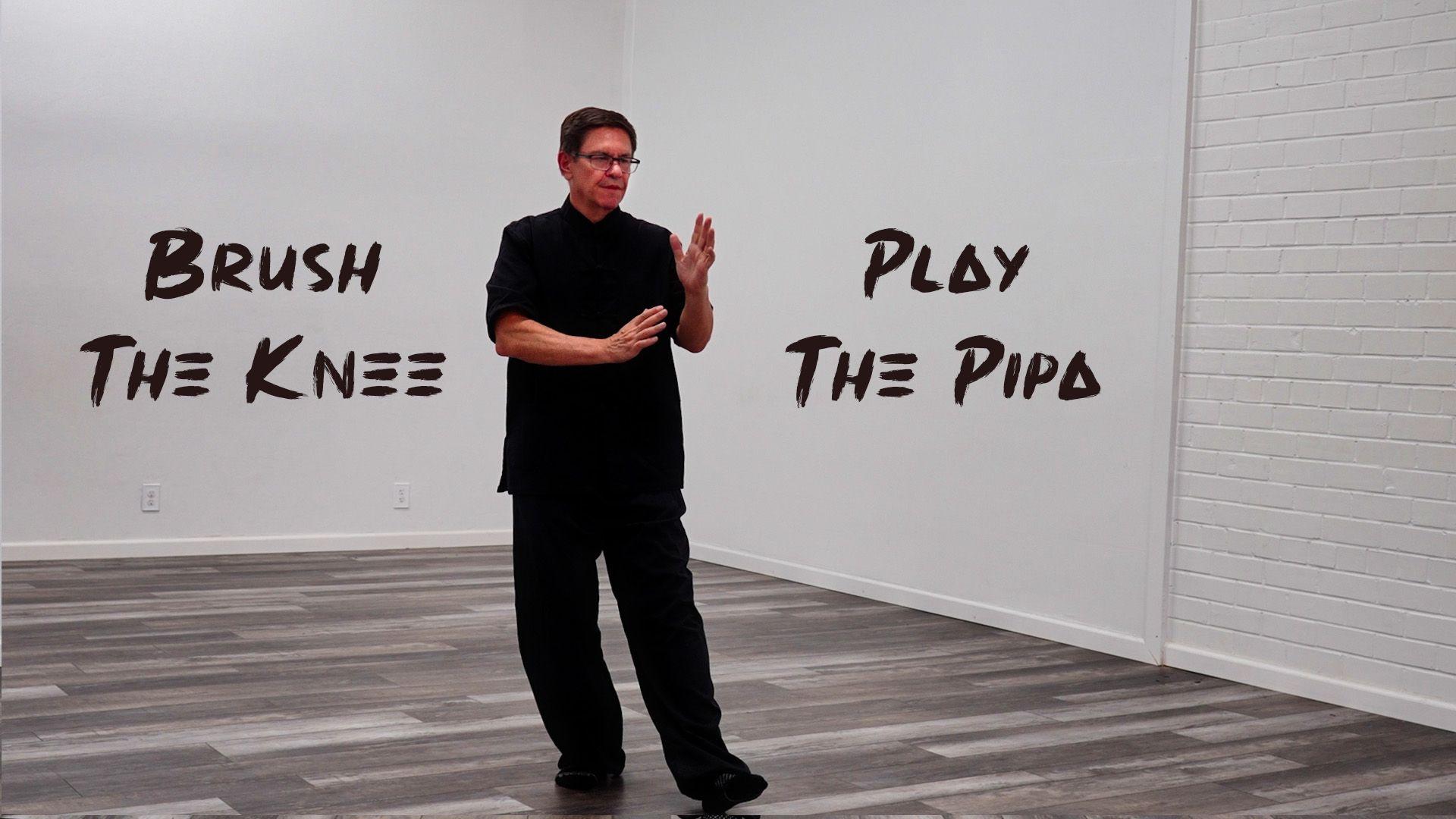
Brush the Knee and Play Pipa in Yang Style Tai Chi
Tai Chi is often described as a moving meditation—combining breath, balance, and intention with practical martial structure. Brush the Knee (sometimes shortened to Brush Knee) and Play Pipa (also called “Strum the Lute”) are two classic Yang-style postures that often appear together as a training sequence. If you’re reviewing core sequences, Grasp the Bird’s Tail is another foundational set that shows up throughout many forms.
In this guide, you’ll learn what the sequence is, why it matters, and how to practice it with clear stepping, coordinated torso rotation, and calm upright alignment.
If you’re new to the art, start here: What is Tai Chi?
You may also see similar postures in Wudang-influenced sets, but this guide focuses on the Yang-style sequence. (For context, see Wudang Yang Style Tai Chi.)
Quick Answer: Brush the Knee + Play Pipa
- What it is: A foundational Yang-style Tai Chi sequence that combines stepping, brushing, pushing, and a balanced “Play the Pipa” reset posture.
- What it trains: Weight shifting, hip rotation, coordination, rooted stepping, and calm upright structure.
- Key cues: Keep the knees soft, step with control, let the torso guide the arms, and avoid forcing the push.
- Best focus for beginners: Move slowly enough to feel the transition from Brush the Knee into Play the Pipa.
Historical and Philosophical Background
Brush the Knee (Lou Xi Ao Bu, 搂膝拗步) is one of the most repeated movements in Tai Chi forms. Its origins trace back to martial techniques of deflecting and countering. The “brush” refers to sweeping away an incoming attack, often directed at the torso or thigh, while the opposite hand strikes forward. This movement demonstrates Tai Chi’s principle of combining defense and offense in one smooth gesture—redirecting energy with one hand while issuing force with the other.
Play Pipa (Shou Hui Pipa, 手挥琵琶) is named after the traditional Chinese lute-like instrument, the pipa. (If you’re curious, see: What is a pipa?.) The posture resembles the musician’s seated playing stance, with hands delicately balanced. In the form, the position represents a moment of soft interception: one hand controls distance while the other stabilizes, embodying the Tai Chi concept of yin and yang in poised readiness. Though less common than Brush the Knee, Play Pipa often appears as a transitional posture, introducing balance, sensitivity, and elegance into the sequence.
Why Brush the Knee Matters
The Brush the Knee posture is not just beautiful — it develops a range of physical and internal skills:
- Dynamic balance: smooth weight-shifting between legs while keeping posture.
- Hip and trunk rotation: coordinated torso turning linked with stepping.
- Upper-lower integration: hands and feet work together in precise timing.
- Foot mechanics: corkscrew action on the back foot and proper heel placement.
- Martial function: brush clears or redirects, push issues force or control.
- Mind-body connection: calm gaze, relaxed knees, focused intention.
Because it integrates so many principles, Brush the Knee is often seen as a benchmark of Tai Chi skill. Once you can perform it with accuracy and flow, the quality of your whole form improves.
Where Brush the Knee + Play Pipa Shows Up in the Form
The version I teach uses a simple rhythm: five Brush the Knee repetitions, with two Play Pipa transitions used as balanced “reset” moments:
- Lift Hands & Press Heel – preparatory movement, setting intention.
- White Crane Spreads Wings – graceful opening, body alignment.
- Transition & Heel Touch – regather balance for stepping.
- Step, Brush, Push – the main Brush the Knee movement.
- Play Pipa – transitional reset; poised and balanced, like strumming a lute.
This rhythm repeats left and right, training smooth weight shifts and coordination between hands and feet.
Video demo: Full sequence example.
Step-by-Step Breakdown
1. Lift Hands & Press Heel
Raise hands as if holding a round ball. Shift slightly back into the rear heel. This action sets balance for the next opening posture.
2. White Crane Spreads Wings
Hands separate, one rising, the other sinking. Imagine a crane unfurling its wings — soft, expansive, and balanced. Inhale as you open.
3. Heel Touch & Transition
Touch the front heel down lightly while shifting weight. This prepares the next step. Think of it as a “reset” moment before committing weight.
4. Step, Brush, Push
- Step in a small arc (“C” shape) so the knee tracks correctly.
- Brush down across the knee with one hand.
- Push forward with the opposite hand from the shoulder (not just the arm).
Exhale as you issue force through the torso rotation.
5. Play Pipa (Strum the Lute)
Shift back, bring hands into a lute-playing shape: one forward, one supporting, weight mostly on the rear leg, front heel touching. This transition creates balance, readiness, and flow before repeating Brush the Knee.
After the push, soften the elbows, shift back without collapsing the chest, and let the hands settle into the Play Pipa shape. The transition should feel like a calm reset, not a stop.
6. Repeat the Cycle
Alternate sides with Brush the Knee, using Play Pipa transitions to reset and rebalance before repeating.
Practice Drills
Drill 1 – Feet Only
Trace the C-shaped step slowly. Practice weight transfer and corkscrewing the back foot without using the hands.
Drill 2 – Hands Only
Practice lifting hands, brushing, and pushing while standing still. Keep hands rounded, brush controlled, and push from the shoulder.
Drill 3 – Full Integration
Combine feet and hands. Move slowly and breathe naturally.
Drill 4 – Rhythm Set
Practice five Brush the Knee repetitions with two Play Pipa transitions. Focus on timing and flow.
Alignment, Posture, and Breathing Tips
- Keep soft knees — never locked.
- Corkscrew the back foot to align with direction.
- Maintain pelvic neutrality for stability.
- Push from the shoulder lever, not just the arm.
- Inhale during openings (Lift Hands, White Crane).
- Exhale during brush and push.
For more on posture fundamentals, see: Tai Chi posture.
Common Mistakes (and Fixes)
- Locked front knee → Keep it bent, soft, springy.
- Hands flailing → Hold the “ball” shape, keep movements rounded.
- Back foot stuck → Practice corkscrewing the rear foot on turns.
- Pushing from the arm → Use shoulder and torso rotation.
Martial Applications
- Brush = clearing an incoming strike or unbalancing an opponent’s limb.
- Push = issuing force through structure and weight transfer.
- Play Pipa = reset and readiness posture, intercepting or controlling space.
Teaching Cues & Metaphors
- “Hold the ball” → rounded hands, relaxed shoulders.
- “Trace a little C” → correct foot arc.
- “Push from the shoulder” → structural power.
- “Soft knees, steady gaze” → stability and calm.
Practice Tai Chi in Tucson
If you’re in Tucson and want help learning Brush the Knee, Play the Pipa, and other Yang-style Tai Chi transitions, Old Pueblo Tai Chi offers beginner-friendly classes with step-by-step instruction.
Bridging Theory to Practice
Try This Today: The Centering Breath of Stillness
60 seconds
Somatic Intent: Pause right now to anchor the wisdom of this article directly in your physical body.
- 1Rest both palms over your navel center (Dan Tian).
- 2Soften your gaze and allow your shoulders to drop away from your ears.
- 3Inhale softly into your palms, sensing warmth expanding in the lower abdomen.
- 4Exhale and feel your heels connect into the ground below.
* Always work within your personal comfort zone. There is never any forcing, straining, or breath-holding in Tai Chi.
Old Pueblo Tai Chi — Traditional Yang & Sun Style Classes
Culture Connects Studio • 3000 E. 22nd Street, Tucson, AZ 85713 • https://oldpueblotaichi.com
Questions about classes? Contact Dan Kimball at dan@oldpueblotaichi.com or (520) 222-8232
Practice Newsletter
Stay Connected with Old Pueblo Tai Chi
Get new articles, practical movement guides, seasonal health insights, and Tucson class announcements delivered to your inbox.
Experience the Practice in Person
Reading about Tai Chi is great, but the true benefits come from moving. Join our welcoming morning classes at Culture Connects Studio in Midtown Tucson.
Culture Connects Studio • 3000 E 22nd St, Tucson, AZ 85713 • Mondays & Wednesdays 10:00 AM – 11:00 AM (Doors open 9:45 AM, arrive 10–15 min early)